'/%3e%3cpath%20d='M59.9558%200H51.6287C51.6287%200%2045.5566%2034.1414%2045.7996%2039.9704C48.4659%20103.923%20122.41%2090.4886%20159.049%2075.7773L159.882%2071.6137C72.4464%20100.759%2053.2939%2059.9557%2054.1268%2039.9704C54.7163%2025.8265%2059.9558%200%2059.9558%200Z'%20fill='url(%23paint1_linear_658_5274)'/%3e%3cpath%20d='M180.7%2050.7959L180.845%2049.8037C184.282%2054.4129%20189.53%2057.458%20195.688%2057.458C206.726%2057.458%20217.339%2046.0121%20217.339%2034.9746C217.339%2023.9371%20211.722%2015.8223%20200.685%2015.8223C195.356%2015.8223%20189.544%2018.1027%20184.957%2021.7031L185.696%2016.6543H177.369L168.209%2075.7773H176.536L180.7%2050.7959ZM194.023%2049.9629C183.198%2049.1302%20183.198%2041.6353%20183.198%2037.4717C183.198%2028.3123%20190.455%2023.3157%20197.354%2023.3154C204.252%2023.3154%20208.18%2027.6155%20208.18%2034.9736C208.18%2044.1334%20200.922%2049.9627%20194.023%2049.9629Z'%20fill='%23FBFBFB'/%3e%3cpath%20d='M221.503%2050.7954C226.722%2063.8433%20244.819%2055.7917%20248.982%2050.7954C247.65%2056.7908%20255.088%2057.1796%20258.974%2056.6245L259.807%2049.1304C258.697%2049.1304%20256.476%2048.6308%20256.476%2046.6323C256.476%2044.1342%20260.451%2031.2297%20258.974%2025.814C253.978%207.49469%20228.164%2015.8221%20225.666%2024.9819L231.495%2028.312C242.32%2016.6545%20253.146%2024.9814%20249.815%2031.6431C239.823%2029.1449%20214.842%2034.1413%20221.503%2050.7954ZM248.982%2038.3052C250.648%2045.7997%20233.994%2056.6248%20229.83%2046.6323C227.054%2039.9706%20241.488%2037.4725%20248.982%2038.3052Z'%20fill='%23FBFBFB'/%3e%3cdefs%3e%3clinearGradient%20id='paint0_linear_658_5274'%20x1='333.92'%20y1='70.601'%20x2='188.194'%20y2='70.601'%20gradientUnits='userSpaceOnUse'%3e%3cstop%20stop-color='%23EB5455'/%3e%3cstop%20offset='0.0001'%20stop-color='%23EF733E'/%3e%3cstop%20offset='1'%20stop-color='%23FFD461'/%3e%3c/linearGradient%3e%3clinearGradient%20id='paint1_linear_658_5274'%20x1='139.897'%20y1='83.2717'%20x2='53.2939'%20y2='3.33085'%20gradientUnits='userSpaceOnUse'%3e%3cstop%20stop-color='%23FFD461'/%3e%3cstop%20offset='0.9999'%20stop-color='%23EF733E'/%3e%3c/linearGradient%3e%3c/defs%3e%3c/svg%3e)


How Much Money to Start Dropshipping & Tips to Reduce Costs
FlowpalletAurora ShawJun. 11, 2026

One of the biggest reasons people like you wonder how to make money from dropshipping is the promise of low startup costs. You don't need a warehouse. You don't need to buy inventory in bulk. And you don't need a physical storefront.
How much money do you really need for dropshipping in summary? -reddit.com
But "low cost" doesn't mean "no cost".
If you're serious about building a real e-commerce business, you'll need some budget for tools, marketing, and testing products. In this guide, we'll break down exactly how much money you need to start dropshipping, what the essential expenses are, and how to keep your costs under control.
1. Can I start dropshipping with $0?
Technically? Almost.
Realistically? Not if you want to succeed.
You can open social media accounts for free and try organic marketing. You can use free trials on platforms like Shopify. You can list products without buying inventory upfront.
But here's the truth: running a sustainable dropshipping business usually requires at least some investment. Why?
- You'll need a domain name to look professional
- You'll likely need paid apps or tools
- You'll need a marketing budget to test products
- You may want product samples to check quality
Doing dropshipping with $0 severely limits your ability to test, learn, and scale. Most beginners who try to build a "free" store end up stuck because they can't afford proper advertising or optimization.
A small but realistic budget gives you breathing room—and a much better chance at success.
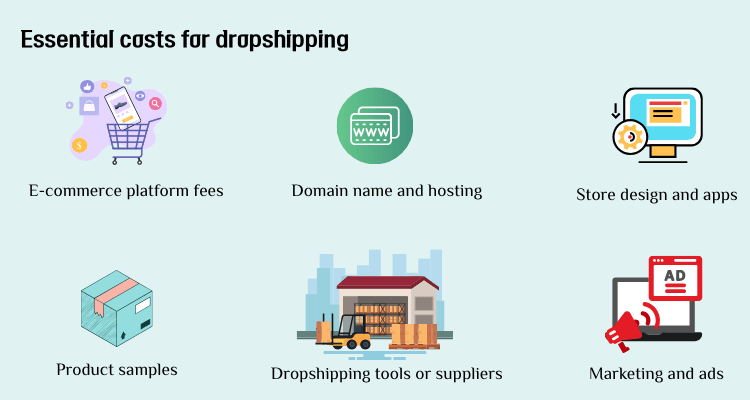
2. How much money for dropshipping (essential costs)
Let's break down the real expenses you should expect.
1️⃣E-commerce platform fees
Most beginners choose platforms like Shopify because they are beginner-friendly and don't require technical skills. Plans typically start around $29–$39 per month.
If you prefer more control, you can use WooCommerce dropshipping, which is technically free but requires hosting and some setup work. You may spend $30–$40/month for a hosted platform or hosting + plugin costs if using WordPress.
2️⃣Domain name and hosting
A custom domain makes your store look legitimate. Domains usually cost $10–$20 per year. If you're not using an all-in-one platform, you'll also need hosting, $5–$20/month, depending on the provider
This is a small expense, but it's non-negotiable if you want customers to trust your store.
3️⃣Store design and apps
You can start with a free theme, but many stores eventually upgrade. Possible costs include:
- Premium theme: $100–$300 (one-time)
- Essential apps (reviews, upsells, email capture): $20–$100/month
You don't need everything at the beginning—but some tools significantly improve conversion rates.
4️⃣Product samples
You should never sell a product you haven't personally seen or inspected. Ordering product samples lets you: verify product quality, test actual shipping speeds, and produce your own original photos and videos.
Depending on your dropshipping niches, you can expect to spend roughly $50–$200 on samples. This is a worthwhile investment that boosts your business's credibility and improves your marketing materials.
5️⃣Dropshipping tools or suppliers
As your store starts receiving orders, manual work quickly becomes overwhelming. Copying customer details, placing orders one by one, updating tracking numbers—it's manageable at the beginning, but not sustainable. That’s where dropshipping tools and integrations come in.
When you move beyond basic supplier platforms and want more stable logistics, working with a fulfillment partner becomes important. A supplier like Flowpallet can help you source products online, inspect quality, store inventory if needed, and handle international shipping more efficiently. This is especially useful once you start scaling and need faster delivery times or branded packaging.
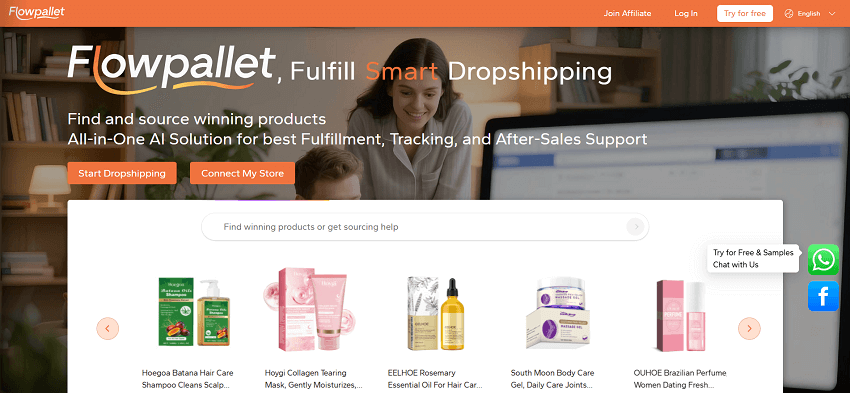
In many cases, fulfillment partners don't charge high upfront fees. Instead, you'll pay per order for product cost, handling, and shipping. That means your expenses grow alongside your revenue, which helps manage risk in the early stages.
Typical budget expectations:
- $0–$50 per month for automation tools
- Per-order fulfillment and shipping fees (varies by product and destination)
In dropshipping, efficiency directly impacts profit margins. The smoother your operations run, the easier it is to scale confidently.
6️⃣Marketing and advertising
This is where most of your budget will go. Paid ads on platforms like Facebook, Google, and TikTok. Testing products without an ad budget is extremely difficult. Realistic testing budget: $300–$1,000 minimum
Marketing is not optional. It's the engine of your store.
Hope these recommended costs can help you to decide how much money to start dropshipping.
3. How much money for dropshipping (budget scenarios)
Not everyone starts with the same budget—and that's okay. Your starting capital will affect how fast you can test products, optimize your store, and scale. Here’s what different budget levels realistically look like.
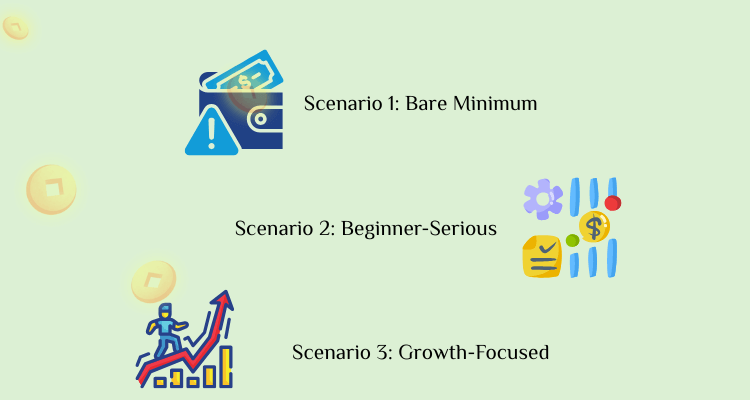
🆕Scenario 1: Bare Minimum ($200–$300)
If you're starting with very limited funds, this is the survival mode version of dropshipping. The goal here isn't rapid growth—it's simply getting your store live and testing cautiously without overspending.
- Basic Shopify plan
- Free theme
- A few essential apps
- Very limited ad testing
You can start, but growth will be slow and risky.
🆒Scenario 2: Beginner-Serious ($500–$1,000)
This is where dropshipping starts to feel like a real business rather than an experiment. You have enough budget to test properly, make small mistakes, and adjust without running out of money immediately.
- Platform + domain
- Product samples
- Proper ad testing budget
- Essential automation tools
This is the most realistic range for beginners who want a real chance at success.
🆙Scenario 3: Growth-Focused ($1,500+)
With this level of budget, you're not just testing—you're building with intent. You can run stronger ad campaigns, test multiple products quickly, and optimize operations from the beginning.
- Strong ad testing
- Professional branding
- Multiple product tests
- Fulfillment optimization
This allows faster scaling and more serious experimentation. Now you must know about the detailed costs. Let's see some tips to save some expenses.
4. Tips to reduce dropshipping startup costs
Starting smart matters more than starting big. Here's how to lower your costs:
- Focus on one niche: Don't build a general store with 50 products. Start narrow.
- Use free tools first: Only upgrade apps when revenue justifies it.
- Test with small ad budgets: Validate products before scaling aggressively.
- Improve organic marketing: TikTok content, SEO, and email marketing reduce reliance on paid ads.
- Choose reliable fulfillment partners: Working with efficient providers like Flowpallet can reduce shipping problems, refunds, and long-term losses.
So, how much money do you need to start dropshipping? If you want a realistic answer, $500–$1,000 is a healthy starting range for most beginners.
Could you start with less? Yes. Should you expect results with $0? Probably not.
Dropshipping isn't expensive compared to traditional businesses—but it still requires investment, patience, and smart testing. Treat it like a real business from day one, and your budget will work for you instead of against you.
