'/%3e%3cpath%20d='M59.9558%200H51.6287C51.6287%200%2045.5566%2034.1414%2045.7996%2039.9704C48.4659%20103.923%20122.41%2090.4886%20159.049%2075.7773L159.882%2071.6137C72.4464%20100.759%2053.2939%2059.9557%2054.1268%2039.9704C54.7163%2025.8265%2059.9558%200%2059.9558%200Z'%20fill='url(%23paint1_linear_658_5274)'/%3e%3cpath%20d='M180.7%2050.7959L180.845%2049.8037C184.282%2054.4129%20189.53%2057.458%20195.688%2057.458C206.726%2057.458%20217.339%2046.0121%20217.339%2034.9746C217.339%2023.9371%20211.722%2015.8223%20200.685%2015.8223C195.356%2015.8223%20189.544%2018.1027%20184.957%2021.7031L185.696%2016.6543H177.369L168.209%2075.7773H176.536L180.7%2050.7959ZM194.023%2049.9629C183.198%2049.1302%20183.198%2041.6353%20183.198%2037.4717C183.198%2028.3123%20190.455%2023.3157%20197.354%2023.3154C204.252%2023.3154%20208.18%2027.6155%20208.18%2034.9736C208.18%2044.1334%20200.922%2049.9627%20194.023%2049.9629Z'%20fill='%23FBFBFB'/%3e%3cpath%20d='M221.503%2050.7954C226.722%2063.8433%20244.819%2055.7917%20248.982%2050.7954C247.65%2056.7908%20255.088%2057.1796%20258.974%2056.6245L259.807%2049.1304C258.697%2049.1304%20256.476%2048.6308%20256.476%2046.6323C256.476%2044.1342%20260.451%2031.2297%20258.974%2025.814C253.978%207.49469%20228.164%2015.8221%20225.666%2024.9819L231.495%2028.312C242.32%2016.6545%20253.146%2024.9814%20249.815%2031.6431C239.823%2029.1449%20214.842%2034.1413%20221.503%2050.7954ZM248.982%2038.3052C250.648%2045.7997%20233.994%2056.6248%20229.83%2046.6323C227.054%2039.9706%20241.488%2037.4725%20248.982%2038.3052Z'%20fill='%23FBFBFB'/%3e%3cdefs%3e%3clinearGradient%20id='paint0_linear_658_5274'%20x1='333.92'%20y1='70.601'%20x2='188.194'%20y2='70.601'%20gradientUnits='userSpaceOnUse'%3e%3cstop%20stop-color='%23EB5455'/%3e%3cstop%20offset='0.0001'%20stop-color='%23EF733E'/%3e%3cstop%20offset='1'%20stop-color='%23FFD461'/%3e%3c/linearGradient%3e%3clinearGradient%20id='paint1_linear_658_5274'%20x1='139.897'%20y1='83.2717'%20x2='53.2939'%20y2='3.33085'%20gradientUnits='userSpaceOnUse'%3e%3cstop%20stop-color='%23FFD461'/%3e%3cstop%20offset='0.9999'%20stop-color='%23EF733E'/%3e%3c/linearGradient%3e%3c/defs%3e%3c/svg%3e)


How to Start A Dropshipping Business for Beginners in 6 Steps
FlowpalletAurora ShawJun. 11, 2026

Looking for a straightforward way to earn money online? Dropshipping is a top contender. Instead of holding inventory or handling shipping yourself, you partner with suppliers who store and ship products directly to your customers.
With it, you can focus on product selection, marketing, and customer experience - rather than logistics. Ready to begin? We'll provide the roadmap. Follow our 6 steps on how to start a dropshipping business, it can be a profitable and scalable venture~
Part 1: Before starting: What is dropshipping?
What is dropshipping? In short, you focus on the sales and marketing, and your supplier takes care of the storage and shipping.
Here's how a typical dropshipping process works:
- A customer orders a product from your store.
- You send the order to your supplier. (You can connect your store to it.)
- The supplier packs and ships the product directly to the customer.
- You keep the price difference as profit.
Since you don't have to buy stock in advance or manage a warehouse, dropshipping is a low-risk way to start. You can try out ideas, find what sells, and grow your business without big startup costs.
Moreover, dropshipping is not a "get-rich-quick" model. Success depends on choosing the right products, working with reliable dropshipping suppliers, and building a trustworthy brand, not just launching a store.
Part 2: How to start a dropshipping business?
Understanding how dropshipping works is the first step. Let's learn a clear breakdown of how to start a dropshipping business: a step-by-step guide:
| Step | Focus On | You'll Achieve |
|---|---|---|
| 1. Market Analysis & Product Selection | Find demand | Profitable product list |
| 2. Choose Platform | Select your e-commerce platform | Build a scalable store |
| 3. Build Store | Design, list, and import products | High-converting storefront |
| 4. Find Suppliers (Flowpallet) | Partner with fulfillment | Reliable product sourcing & Sync to your store |
| 5. Automated fulfillment | Set up order automation | Time-saving operations |
| 6. Brand & Market store | Marketing & Optimization | Traffic and sales growth |
Look at the details one by one:
#Step 1: Analyze market and select profitable products
The foundation of any successful dropshipping business is choosing the right products. Rather than picking items on a whim, start with real market research and product analysis. To narrow the process, you can follow:
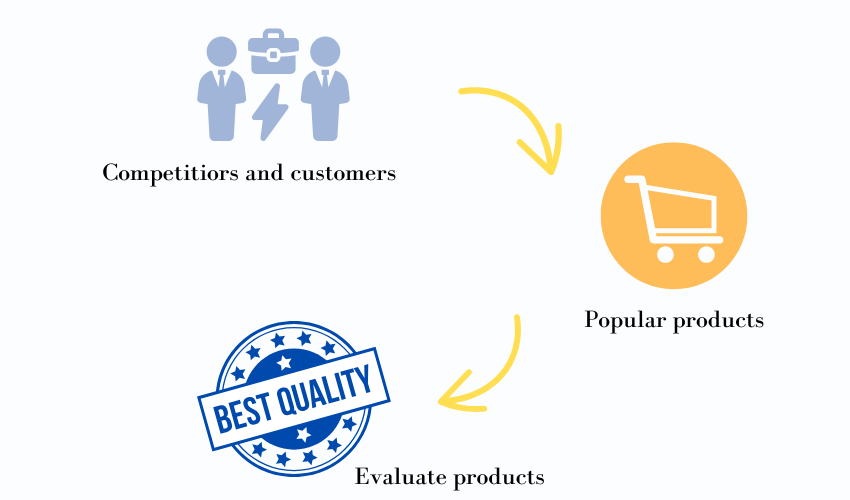
(1) Analyze your customers and competitors: Study what your target customers like, need, and buy. Choose a specific field you're interested in, not a broad category. And identify your main competitors with tools like SEMrush or SimilarWeb, figuring out what you can do better.
(2) Identify popular products: Determine which categories and specific items are trending with your intended customers. Tools like Google Trends, Google Keyword Planner, Amazon Best Sellers, and social listening platforms can help you.
(3) Evaluate and select products: Consider demand, shipping cost, weight, and profit margins. Remember to avoid fragile or overly complex products that are costly to ship or return.
You can learn more about dropshipping business ideas or find out the best items to dropship.
#Step 2: Choose the right e-commerce platform
Once you know you'll sell, you need to choose an e-commerce platform. The "best" platform depends on your budget, technical skills, and long-term goals, and there are two types:
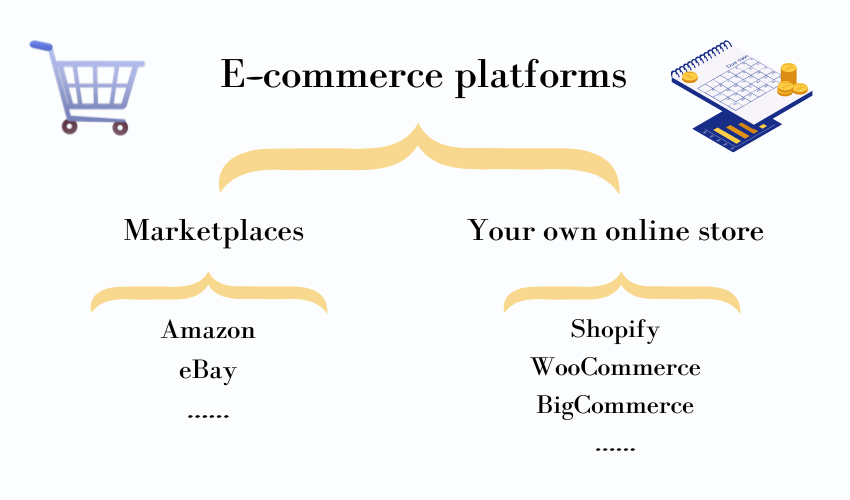
1️⃣Marketplaces (like Amazon or eBay): You sell alongside other stores. The benefit is instant access to a large, trusting audience.
2️⃣Your own online store (using platforms like Shopify): You build a custom website for full control, better branding, and a shopping experience focused only on your products. Some of them you can refer to:
- Shopify: is often the go-to choice for first-time dropshippers who want to launch quickly and scale without technical headaches.
- WooCommerce: works well for sellers who are comfortable with WordPress and want maximum customization, especially for content-driven or SEO-heavy strategies.
- BigCommerce: is a solid option for sellers planning to scale but who want fewer third-party apps.
- Wix eCommerce: is suitable for small-scale dropshipping stores or sellers valuing simplicity and design.
For most beginners, Shopify is the easiest starting point. As your business grows, you can always expand to additional platforms or sales channels.
#Step 3: Build a high-converting store
After choosing the platform, let's build your store. A successful store focuses on clarity, speed, and trust -- not just product listing. Your goal is to make it easy for visitors to understand what you sell and feel confident checking out.
- Store essentials: A clear homepage explaining your offer, well-structured product pages focused on benefits, an about page to build credibility, shipping and return policies to set expectations, a contact page for trust and support...
- Product page basics: A benefit-driven title, high-quality images or short videos, scannable and original descriptions, and so on...
For specific setup methods and details, please refer to the user guide of your chosen platform.
#Step 4: Find a reliable dropshipping partner
Choosing the right dropshipping website is one of the most critical decisions you'll make. But not all dropshipping websites are created equal, so when evaluating potential partners, please focus on:
- Consistent sourcing products to sell online
- Stable inventory availability
- Scalable fulfillment capacity
- Fast and transparent shipping times
- Clear communication and support
- Additional services like ODM, POD, and so on.
As your store grows, many sellers prefer a dedicated dropshipping system, which can connect sourcing, fulfillment, and automation. This is where platforms like Flowpallet become a practical choice for stably starting a dropshipping business.
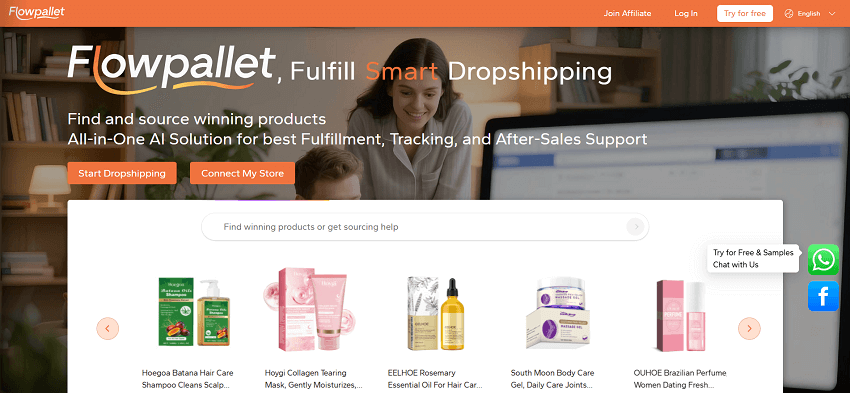
Instead of dealing with multiple disconnected suppliers, Flowpallet helps streamline the entire sourcing and fulfillment process with:
- Whole automated order process
- Easier scale during promotions or peak seasons
- Smooth transitions from product sourcing to importing
- Reliable suppliers suited for cross-border shipping
- Cheaper suppliers, thoughtful services, and worry-free after-sales services
- Ready-made product descriptions, images, and videos.
For beginners who want more control over fulfillment without managing inventory themselves, this all-in-one AI Flowpallet dropshipping will be perfect for you.
#Step 5: Automate order fulfillment and operations
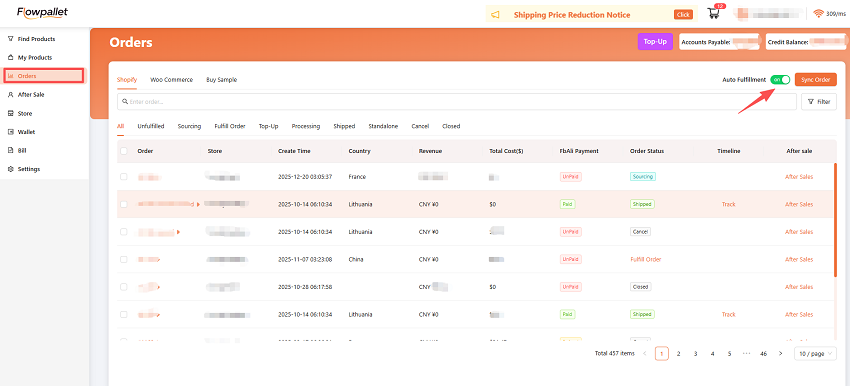
Automation is what makes starting a dropshipping business to scale without adding unnecessary workload. As order volume grows, manually processing orders and updating tracking numbers becomes inefficient and error-prone.
Connecting your store with Flowpallet auto fulfillment helps streamline these processes in one place. Then you free up time to focus on product testing, marketing, and customer experience, which are far more important for long-term growth than manual order handling.
#Step 6: Brand, market, and optimize your store
A brand is more than a logo - it's your store's identity and promise to the customer. Craft a compelling value proposition and consistent messaging across your website and social channels.
Marketing strategies to consider:
- SEO: Optimize product titles, meta descriptions, and site content to improve organic rankings.
- Social media: Use platforms where your audience spends time.
- Paid ads: Start with small budgets on platforms like Facebook, Instagram, TikTok, or Google.
Track key metrics like traffic, conversion rates, and average order value to understand what's working and what needs improvement.
Part 3: Bonus: Common dropshipping mistakes to avoid
Is dropshipping worth it? Starting a dropshipping business isn't without pitfalls. Being aware of common mistakes helps you avoid failures and build long-term success. Frequent mistakes beginners make:
- Skipping product research
- Using unreliable suppliers
- Not being clear about shipping times
- Copying supplier descriptions
- Relying only on paid ads
- Scaling too fast
Avoid these mistakes, focus on solid basics, and your dropshipping will be much easier to grow.
Prat 4: Conclusion
Learning how to start a dropshipping business is straightforward in concept but requires thoughtful research, smart tools, and consistent optimization. Do these steps and partner with the reliable platform Flowpallet, and you can set yourself up for long-term growth rather than short-lived success.
Hope you can build your dropshipping business smoothly.
