'/%3e%3cpath%20d='M59.9558%200H51.6287C51.6287%200%2045.5566%2034.1414%2045.7996%2039.9704C48.4659%20103.923%20122.41%2090.4886%20159.049%2075.7773L159.882%2071.6137C72.4464%20100.759%2053.2939%2059.9557%2054.1268%2039.9704C54.7163%2025.8265%2059.9558%200%2059.9558%200Z'%20fill='url(%23paint1_linear_658_5274)'/%3e%3cpath%20d='M180.7%2050.7959L180.845%2049.8037C184.282%2054.4129%20189.53%2057.458%20195.688%2057.458C206.726%2057.458%20217.339%2046.0121%20217.339%2034.9746C217.339%2023.9371%20211.722%2015.8223%20200.685%2015.8223C195.356%2015.8223%20189.544%2018.1027%20184.957%2021.7031L185.696%2016.6543H177.369L168.209%2075.7773H176.536L180.7%2050.7959ZM194.023%2049.9629C183.198%2049.1302%20183.198%2041.6353%20183.198%2037.4717C183.198%2028.3123%20190.455%2023.3157%20197.354%2023.3154C204.252%2023.3154%20208.18%2027.6155%20208.18%2034.9736C208.18%2044.1334%20200.922%2049.9627%20194.023%2049.9629Z'%20fill='%23FBFBFB'/%3e%3cpath%20d='M221.503%2050.7954C226.722%2063.8433%20244.819%2055.7917%20248.982%2050.7954C247.65%2056.7908%20255.088%2057.1796%20258.974%2056.6245L259.807%2049.1304C258.697%2049.1304%20256.476%2048.6308%20256.476%2046.6323C256.476%2044.1342%20260.451%2031.2297%20258.974%2025.814C253.978%207.49469%20228.164%2015.8221%20225.666%2024.9819L231.495%2028.312C242.32%2016.6545%20253.146%2024.9814%20249.815%2031.6431C239.823%2029.1449%20214.842%2034.1413%20221.503%2050.7954ZM248.982%2038.3052C250.648%2045.7997%20233.994%2056.6248%20229.83%2046.6323C227.054%2039.9706%20241.488%2037.4725%20248.982%2038.3052Z'%20fill='%23FBFBFB'/%3e%3cdefs%3e%3clinearGradient%20id='paint0_linear_658_5274'%20x1='333.92'%20y1='70.601'%20x2='188.194'%20y2='70.601'%20gradientUnits='userSpaceOnUse'%3e%3cstop%20stop-color='%23EB5455'/%3e%3cstop%20offset='0.0001'%20stop-color='%23EF733E'/%3e%3cstop%20offset='1'%20stop-color='%23FFD461'/%3e%3c/linearGradient%3e%3clinearGradient%20id='paint1_linear_658_5274'%20x1='139.897'%20y1='83.2717'%20x2='53.2939'%20y2='3.33085'%20gradientUnits='userSpaceOnUse'%3e%3cstop%20stop-color='%23FFD461'/%3e%3cstop%20offset='0.9999'%20stop-color='%23EF733E'/%3e%3c/linearGradient%3e%3c/defs%3e%3c/svg%3e)


How to Start Dropshipping for Free Step by Step?
FlowpalletAurora ShawJun. 10, 2026

📃Can I really start Shopify dropshipping for free? I've watched so many YouTube videos saying you can launch with zero dollars, but honestly, that feels unrealistic - most of them are just lying for views. So is it really free? -reddit.com
If you have the same doubt about whether it is free to do dropshipping, the answers are usually mixed. Some people swear it's possible. Others say you need at least a few hundred dollars to get started. The truth sits somewhere in between.
You can start dropshipping for free - but you'll need to trade money for time, effort, and consistency. This guide walks you through exactly how to do it, step by step, without upfront investment.
1. What is dropshipping & how does it work?
What is dropshipping? Dropshipping is a business model where you sell products online without holding any inventory. Here's how it works in simple terms:
- You list a product in your online store
- A customer places an order
- You forward that order to a dropshipping supplier
- The supplier picks, packs, and ships the product directly to the customer
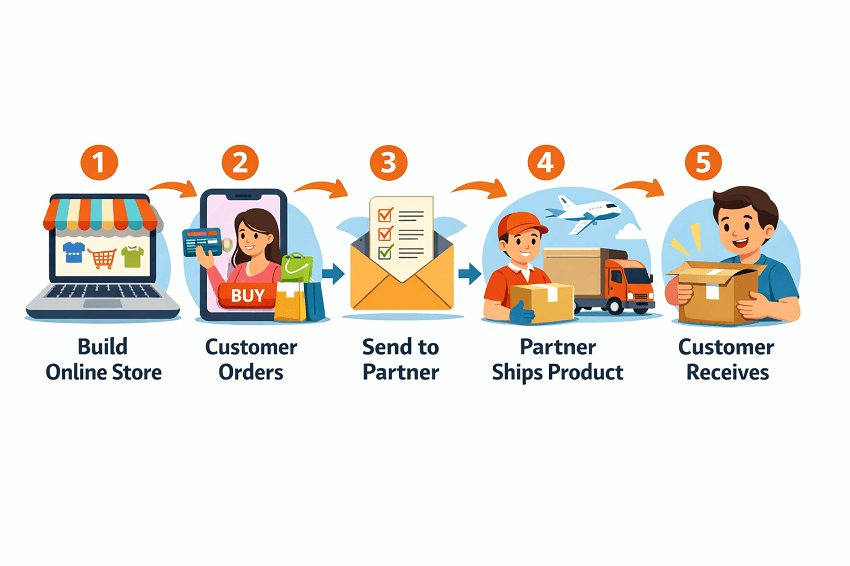
You never touch the product yourself (samples except). Your job is mainly product selection, testing, marketing, and customer experience.
2. Is it really possible to start dropshipping for free?
Yes, but with a few realistic expectations.
Starting "for free" usually means: no upfront inventory costs, no paid ads at the beginning, and using free tools and trials
What you will invest is time - researching products, creating content, and building traffic organically.
| About the upside? | About the downside? |
|---|---|
| Low risk | Slower growth |
| Beginner-friendly | More manual work |
| No need for large capital | Requires patience |
If you're okay with that trade-off, you're in a good position to start. Let's do free dropshipping next.
3. How to start dropshipping with no money?
Getting started with dropshipping without spending money might sound unrealistic at first, but it's actually a practical way for many beginners to test the waters. Here, we list the whole process instead of relying on paid tools or ads, but focusing on using free resources, organic traffic, and smart product selection to realize.
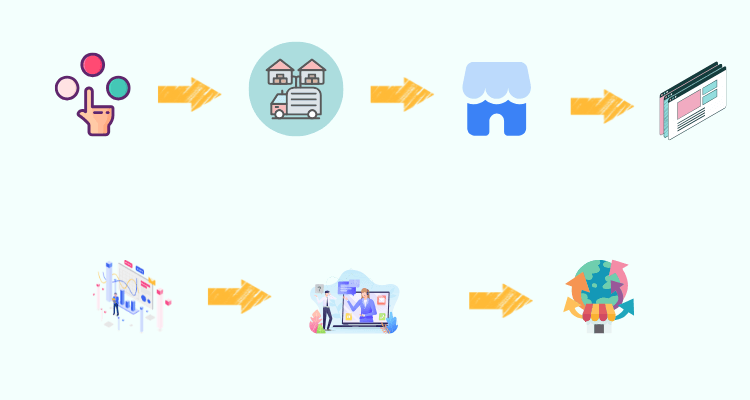
#1 Choose a profitable niche
Your dropshipping niche is the foundation of everything. If you pick the wrong one, even great marketing won't save you. A good niche usually has three things: Clear demand (people actively searching or buying), problem-solving products or strong emotional appeal, and room for differentiation (not completely saturated).
You don't need paid tools to find this. Just free to spend time observing:
- TikTok "problem-solution" videos that get high engagement
- Amazon or marketplace best-seller lists
- Reddit threads where people complain about everyday problems
Instead of chasing random trending items, try to understand why something is selling.
#2 Find free dropshipping suppliers
At the beginning, your supplier matters more than your website design. A reliable supplier can save you from refunds, delays, and unhappy customers. When looking for free suppliers, focus on:
- No upfront fees or monthly subscriptions
- Decent shipping times to your target market
- Real product reviews or sample proof
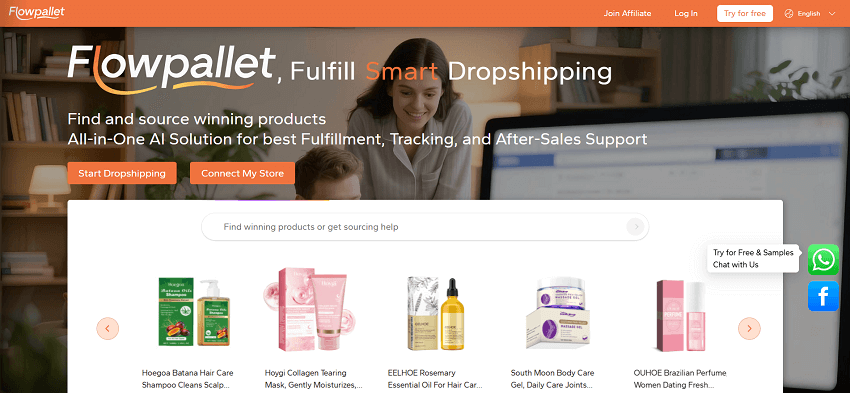
You can start with platforms that allow direct sourcing without initial costs. For example, Flowpallet helps beginners source items from various suppliers, provide product customization, and simplify order fulfillment without a heavy upfront investment. This kind of support is especially useful when you're still learning how everything works.
Always test communication with suppliers early. A quick response now usually means fewer problems later.
#3 Create a store for free
You don't need a fully branded website on day one. The goal is to get something simple live as quickly as possible. There are some free options available for you:
- Free trials on e-commerce platforms
- Marketplace selling (like eBay or Facebook Marketplace)
- WooCommerce with free themes
For these, please focus on the basics: a clean homepage (no clutter), clear product pages, and a simple logo and consistent colors.
#4 Add products without inventory
Once your store is set up, you can start listing products directly from your supplier (some automated dropshipping can complete it). No inventory, no upfront purchase. What matters here is presentation:
- Use high-quality images (avoid blurry or overly generic ones)
- Write descriptions that explain benefits, not just features
- Answer common questions in advance (shipping, usage, etc.)
A simple but clear product page often performs better than something overly complicated. The goal is to make buying feel easy and low-risk for the customer. The images and descriptions can be directly adopted from Flowpallet.
#5 Market your store for free
This is where most of your effort will go. For free, without paid ads, organic traffic becomes your main growth driver. Focus on platforms that reward consistency:
- TikTok (short-form product videos)
- Instagram Reels
- Pinterest (great for certain niches)
- Online communities
Instead of trying to go viral instantly, aim to post regularly and test different angles:
- Problem → solution
- Before → after
- Product demonstration
Over time, you'll notice patterns - what works, what doesn't. That's how you improve without spending money.
#6 Handle orders and customer service
When you get your first order, the process is straightforward but important to handle properly. Steps here:
- Forward the order to your supplier
- Double-check shipping details
- Send confirmation and updates to your customer
Customer service is where you build trust. Even if shipping takes longer, clear communication can turn a potential complaint into a positive experience. So respond quickly, be honest, and keep things simple.
#7 Scale without spending money
Once you start getting sales, your goal is not to rush - it's to build on what's already working. Focus on:
- Repeating successful content formats
- Improving product pages based on feedback
- Expanding within the same niche
Instead of jumping to new products constantly, try to maximize one winning product first.
By following the process below, you'll learn how to launch, run, and grow a dropshipping store with minimal risk. It may take more effort upfront, but it gives you a solid foundation - and once you start generating sales, scaling becomes much easier.
4. Common mistakes to avoid
Here we list some general mistakes to try to avoid:
1. Choosing the wrong niche
If there's no demand, no marketing strategy will save it.
2. Ignoring product quality
Bad products lead to refunds and kill your store quickly.
3. Expecting instant results
Most "overnight success" stories skip months of testing.
4. Overcomplicating everything
You don't need a perfect website to make your first sale.
5. Giving up too early
This is probably the biggest one. Consistency beats everything else.
Starting dropshipping for free isn't a shortcut - it's a slower, smarter way to learn the business with minimal risk. If you stay consistent and focus on what actually works, your first sale is only a matter of time.
We hope your dropshipping journey brings both learning and success.
