'/%3e%3cpath%20d='M59.9558%200H51.6287C51.6287%200%2045.5566%2034.1414%2045.7996%2039.9704C48.4659%20103.923%20122.41%2090.4886%20159.049%2075.7773L159.882%2071.6137C72.4464%20100.759%2053.2939%2059.9557%2054.1268%2039.9704C54.7163%2025.8265%2059.9558%200%2059.9558%200Z'%20fill='url(%23paint1_linear_658_5274)'/%3e%3cpath%20d='M180.7%2050.7959L180.845%2049.8037C184.282%2054.4129%20189.53%2057.458%20195.688%2057.458C206.726%2057.458%20217.339%2046.0121%20217.339%2034.9746C217.339%2023.9371%20211.722%2015.8223%20200.685%2015.8223C195.356%2015.8223%20189.544%2018.1027%20184.957%2021.7031L185.696%2016.6543H177.369L168.209%2075.7773H176.536L180.7%2050.7959ZM194.023%2049.9629C183.198%2049.1302%20183.198%2041.6353%20183.198%2037.4717C183.198%2028.3123%20190.455%2023.3157%20197.354%2023.3154C204.252%2023.3154%20208.18%2027.6155%20208.18%2034.9736C208.18%2044.1334%20200.922%2049.9627%20194.023%2049.9629Z'%20fill='%23FBFBFB'/%3e%3cpath%20d='M221.503%2050.7954C226.722%2063.8433%20244.819%2055.7917%20248.982%2050.7954C247.65%2056.7908%20255.088%2057.1796%20258.974%2056.6245L259.807%2049.1304C258.697%2049.1304%20256.476%2048.6308%20256.476%2046.6323C256.476%2044.1342%20260.451%2031.2297%20258.974%2025.814C253.978%207.49469%20228.164%2015.8221%20225.666%2024.9819L231.495%2028.312C242.32%2016.6545%20253.146%2024.9814%20249.815%2031.6431C239.823%2029.1449%20214.842%2034.1413%20221.503%2050.7954ZM248.982%2038.3052C250.648%2045.7997%20233.994%2056.6248%20229.83%2046.6323C227.054%2039.9706%20241.488%2037.4725%20248.982%2038.3052Z'%20fill='%23FBFBFB'/%3e%3cdefs%3e%3clinearGradient%20id='paint0_linear_658_5274'%20x1='333.92'%20y1='70.601'%20x2='188.194'%20y2='70.601'%20gradientUnits='userSpaceOnUse'%3e%3cstop%20stop-color='%23EB5455'/%3e%3cstop%20offset='0.0001'%20stop-color='%23EF733E'/%3e%3cstop%20offset='1'%20stop-color='%23FFD461'/%3e%3c/linearGradient%3e%3clinearGradient%20id='paint1_linear_658_5274'%20x1='139.897'%20y1='83.2717'%20x2='53.2939'%20y2='3.33085'%20gradientUnits='userSpaceOnUse'%3e%3cstop%20stop-color='%23FFD461'/%3e%3cstop%20offset='0.9999'%20stop-color='%23EF733E'/%3e%3c/linearGradient%3e%3c/defs%3e%3c/svg%3e)


Dropshipping Is It Worth It in 2026? Can You Make Money?
FlowpalletAurora ShawJun. 11, 2026

If you've spent any time researching online business models, you've probably come across dropshipping. It's often promoted as a low-risk, beginner-friendly way to start an e-commerce store.
But with rising ad costs, stronger competition, and more sophisticated consumers, many entrepreneurs are asking a fair question: Is dropshipping worth it nowadays?
Is dropshipping worth it? How much do we need to invest in it? -reddit.com
I wanna know whether this year is a good time to start dropshipping, is it still worth it? -quora.com
The short answers? It depends on how you approach it. Let's take a closer look at what dropshipping really is, its pros and cons, and whether it still makes sense today.
1. What is dropshipping?
First, know what is dropshipping: Dropshipping is an e-commerce business model where you sell products online without holding inventory. Here is how dropshipping works:
- You set up an online store.
- A customer places an order.
- You forward the order to a dropshipping supplier.
- The supplier ships the product directly to the customer.
You don't buy stock upfront, manage a warehouse, or handle shipping yourself. Your profit is the difference between the retail price you charge and the supplier's price.
Because the barrier to entry is relatively low, dropshipping has become one of the most popular ways for beginners to test online selling.
2. Advantages and challenges of dropshipping
Like any business model, you need to know both upsides and downsides of dropshipping:
Advantages of dropshipping
😊Low startup costs
You don't need to invest thousands of dollars in inventory. This makes it accessible to people with limited capital.
😊Minimal operational complexity
No warehousing, no packing boxes, and no bulk purchasing. You can focus on marketing and customer acquisition.
😊Flexible to run
You can run your store from anywhere with an internet connection. It's a location-independent business.
😊Easy product testing
Because you don't hold stock, you can quickly test new products or niches without major financial risk.
Challenges of dropshipping
😟High competition
The low barrier to entry means many people are selling similar products. Competing on price alone often leads to thin margins.
😟Lower profit margins
Compared to private label or wholesale models, dropshipping margins can be tighter, especially when ad costs increase.
😟Supplier dependency
You rely heavily on your supplier for product quality, stock availability, and shipping speed. If they make mistakes, your brand takes the hit.
😟Customer service pressure
Returns, delays, and damaged goods still fall under your responsibility—even if you never touch the product.
Understanding these trade-offs is key to deciding whether dropshipping is worth it for you.
3. Is dropshipping still worth and profitable in 2026?
Is dropshipping profitable? Yes, dropshipping can still be profitable and worth it in 2026 - but under certain conditions.
The global e-commerce market continues to grow, and online shopping is now standard consumer behavior. Demand is not the issue. The real difference in 2026 is maturity. Customers expect:
- Faster shipping
- Transparent tracking
- Clear return policies
- Strong branding
Generic "one-product" stores with copied descriptions rarely last long. However, niche-focused and brand-driven stores can still achieve healthy profit margins - especially when operations are optimized. Profitability today depends on:
- Choosing less saturated niches
- Building brand trust
- Controlling fulfillment quality
- Managing advertising costs carefully
In other words, dropshipping still works, but it works best when treated like a real business - not a quick cash experiment.
4. Who and what to consider before dropshipping?
Before jumping into dropshipping, it's important to ask two questions:
1️⃣Is this business model suitable for you?
2️⃣Are you prepared for what it actually requires?
Dropshipping isn't for everyone. But for the right person, under the right conditions, it can be a smart entry point into e-commerce.
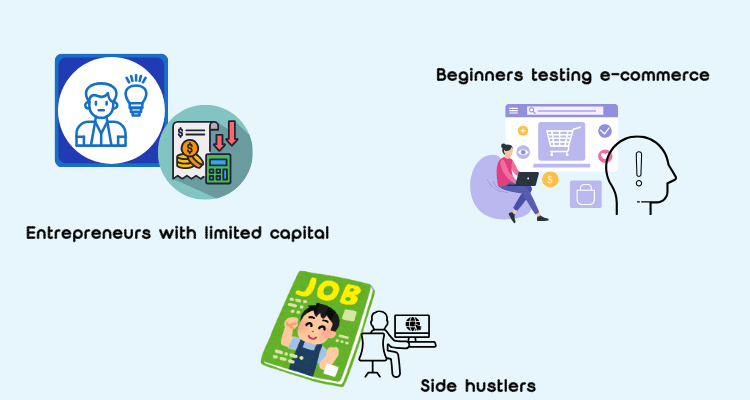
Those who should consider dropshipping:
- Entrepreneurs with limited capital: If you don't have the budget for bulk inventory or warehousing, dropshipping lowers the financial barrier and lets you start lean.
- Beginners testing e-commerce: It's a practical way to validate product ideas before committing to private label or wholesale. Learn how to do dropshipping for beginners.
- Side hustlers: If you want flexible online income without a heavy operational setup, dropshipping can fit around a full-time job.
That said, it's not ideal for people expecting fast, passive income with little effort.
Even if dropshipping sounds appealing, you need to evaluate several practical factors:
- Marketing ability: Traffic is everything. Without strong marketing - paid ads, SEO, or content - sales won't happen.
- Profit margins: Calculate all costs carefully: product price, shipping, fees, ad spend, and refunds. Thin margins can quickly disappear.
- Supplier reliability: Your reputation depends on fulfillment quality. Delays and product issues directly impact customer trust.
- Customer service responsibility: Even if you don't ship the product, you handle complaints, returns, and refunds.
- Long-term mindset: Short-term trend chasing rarely works now. Sustainable stores focus on branding and customer experience.
If you're prepared to invest time in marketing, manage operations carefully, and build trust with customers, dropshipping can still be a worthwhile starting point in eCommerce.
5. Tips to make dropshipping worth it
If you want dropshipping to remain profitable, focus on building a real system.
1️⃣Choose the right niche
Avoid overly saturated products. Look for specific audiences with clear pain points.
2️⃣Prioritize reliable fulfillment
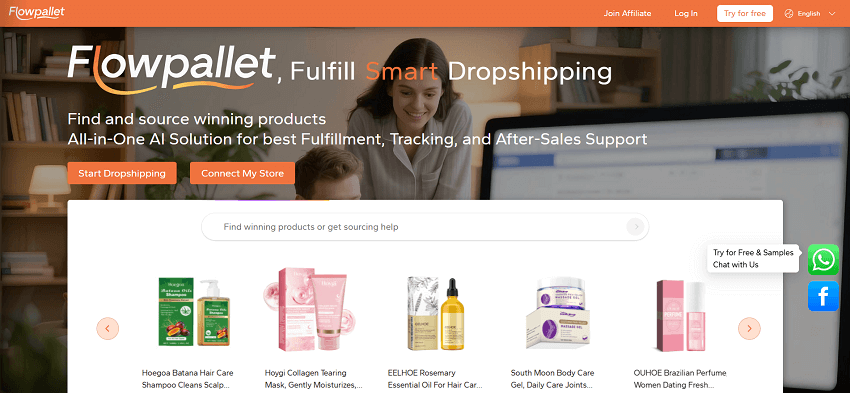
Shipping speed and stability directly affect customer satisfaction. Working with a dependable sourcing and fulfillment partner like Flowpallet can help you manage reliable product sourcing, supplier coordination, inventory flow, and order processing or services like 3PL logistics more efficiently—reducing operational risks as you scale.
3️⃣Focus on branding
Invest in clean design, strong product pages, and consistent messaging. Customers are more likely to buy from stores that feel trustworthy.
4️⃣Diversify traffic sources
Relying only on paid ads increases risk. Combine SEO, influencer collaborations, short-form video content, and email marketing to build more stable traffic channels.
5️⃣Track numbers carefully
Monitor profit margins, ad costs, refund rates, and average order value. Sustainable profitability comes from disciplined financial management.
6. Final thoughts
So, is dropshipping worth it and profitable in 2026?
For those willing to treat it like a real business - yes. It offers low entry risk, flexibility, and scalable potential.
For those expecting fast, effortless money - no.
Dropshipping is no longer about chasing trends. It's about building systems, managing operations wisely, and creating genuine value for customers. If approached strategically, it can still be a profitable path in today's competitive e-commerce landscape.
