'/%3e%3cpath%20d='M59.9558%200H51.6287C51.6287%200%2045.5566%2034.1414%2045.7996%2039.9704C48.4659%20103.923%20122.41%2090.4886%20159.049%2075.7773L159.882%2071.6137C72.4464%20100.759%2053.2939%2059.9557%2054.1268%2039.9704C54.7163%2025.8265%2059.9558%200%2059.9558%200Z'%20fill='url(%23paint1_linear_658_5274)'/%3e%3cpath%20d='M180.7%2050.7959L180.845%2049.8037C184.282%2054.4129%20189.53%2057.458%20195.688%2057.458C206.726%2057.458%20217.339%2046.0121%20217.339%2034.9746C217.339%2023.9371%20211.722%2015.8223%20200.685%2015.8223C195.356%2015.8223%20189.544%2018.1027%20184.957%2021.7031L185.696%2016.6543H177.369L168.209%2075.7773H176.536L180.7%2050.7959ZM194.023%2049.9629C183.198%2049.1302%20183.198%2041.6353%20183.198%2037.4717C183.198%2028.3123%20190.455%2023.3157%20197.354%2023.3154C204.252%2023.3154%20208.18%2027.6155%20208.18%2034.9736C208.18%2044.1334%20200.922%2049.9627%20194.023%2049.9629Z'%20fill='%23FBFBFB'/%3e%3cpath%20d='M221.503%2050.7954C226.722%2063.8433%20244.819%2055.7917%20248.982%2050.7954C247.65%2056.7908%20255.088%2057.1796%20258.974%2056.6245L259.807%2049.1304C258.697%2049.1304%20256.476%2048.6308%20256.476%2046.6323C256.476%2044.1342%20260.451%2031.2297%20258.974%2025.814C253.978%207.49469%20228.164%2015.8221%20225.666%2024.9819L231.495%2028.312C242.32%2016.6545%20253.146%2024.9814%20249.815%2031.6431C239.823%2029.1449%20214.842%2034.1413%20221.503%2050.7954ZM248.982%2038.3052C250.648%2045.7997%20233.994%2056.6248%20229.83%2046.6323C227.054%2039.9706%20241.488%2037.4725%20248.982%2038.3052Z'%20fill='%23FBFBFB'/%3e%3cdefs%3e%3clinearGradient%20id='paint0_linear_658_5274'%20x1='333.92'%20y1='70.601'%20x2='188.194'%20y2='70.601'%20gradientUnits='userSpaceOnUse'%3e%3cstop%20stop-color='%23EB5455'/%3e%3cstop%20offset='0.0001'%20stop-color='%23EF733E'/%3e%3cstop%20offset='1'%20stop-color='%23FFD461'/%3e%3c/linearGradient%3e%3clinearGradient%20id='paint1_linear_658_5274'%20x1='139.897'%20y1='83.2717'%20x2='53.2939'%20y2='3.33085'%20gradientUnits='userSpaceOnUse'%3e%3cstop%20stop-color='%23FFD461'/%3e%3cstop%20offset='0.9999'%20stop-color='%23EF733E'/%3e%3c/linearGradient%3e%3c/defs%3e%3c/svg%3e)


A Full Guide to Becoming a Successful Wholesaler
FlowpalletAurora ShawJul. 23, 2026

If you've ever wondered how products make their way onto store shelves or online marketplaces, wholesalers play a key role. They connect manufacturers with retailers by purchasing goods in bulk and reselling them to businesses at competitive prices.
The wholesale industry has evolved rapidly in recent years. Today, you don't need a large warehouse or significant capital to get started. With access to global sourcing platforms, fulfillment services, and ecommerce tools, entrepreneurs can launch and run a wholesale business from almost anywhere.
How much, how to, what I need to start a wholesale distributor business? -reddit.com
In this guide, you'll discover what wholesalers do, how to become a wholesaler, the costs involved, and the tools you need to grow successfully.
1. What does a wholesaler do?
A wholesaler buys products in large quantities from manufacturers or suppliers and resells them to retailers, distributors, or other businesses rather than directly to consumers.
Their core responsibilities include:
- Sourcing reliable suppliers
- Negotiating competitive pricing
- Purchasing inventory in bulk
- Managing storage and stock levels
- Shipping products to business customers
- Building and maintaining long-term supplier relationships
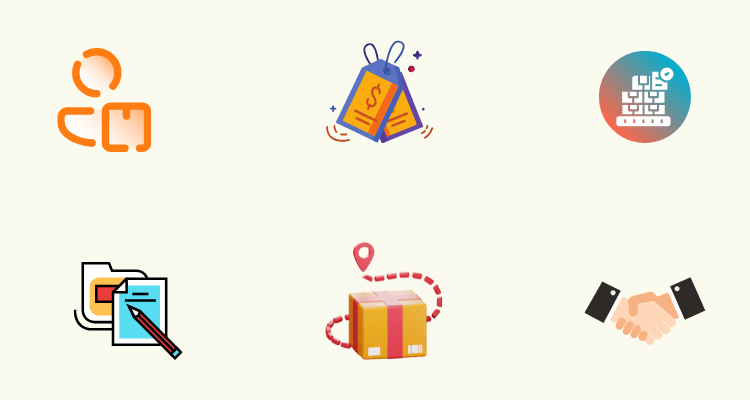
Unlike retailers, wholesalers prioritize high sales volume over large profit margins on individual items, making efficiency and strong supplier partnerships essential to their success.
Wholesale vs. Retail vs. Dropshipping
| Wholesale | Retail | Dropshipping |
|---|---|---|
| Buys products in bulk | Sells directly to consumers | Doesn't keep inventory |
| Usually serves businesses | Serves individual shoppers | Supplier ships orders |
| Lower prices, larger orders | Higher prices, smaller orders | Low startup cost |
Today, many wholesalers also combine traditional wholesale with e-commerce by selling through platforms like Shopify, Amazon, or wholesale marketplaces.
2. How to become a wholesaler?
Starting a wholesale business doesn't have to be overwhelming. When you break it down into clear steps, the process becomes much more manageable. Let's follow:
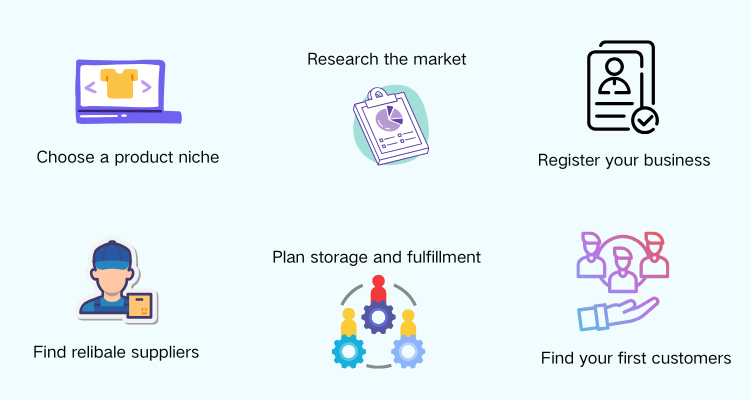
1️⃣Choose a product niche
Instead of trying to sell everything, focus on a category or e-commerce trends you understand well. This helps you stand out and build expertise.
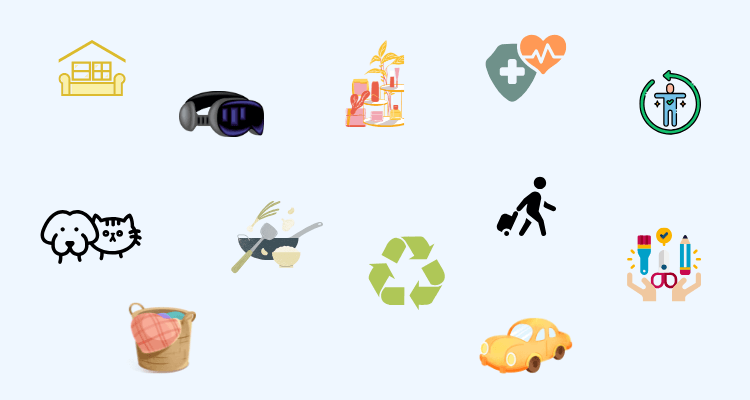
Popular wholesale niches include:
- Beauty products
- Home goods
- Pet supplies
- Electronics accessories
- Kitchen products
- Fitness equipment
- Office supplies
A focused niche makes it easier to source products and attract repeat customers. You can wholesale makeup as an option.
2️⃣Research the market
Before investing, take time to understand the market.
Key questions to ask:
- Who are your competitors?
- Which products are in demand?
- What price range are customers willing to pay?
- Are there seasonal trends?
Tools like Google Trends, Amazon Best Sellers, and industry reports can help you validate demand before placing large orders.
3️⃣Register your business
Make sure your business is set up legally and professionally. This typically includes:
- Registering your business
- Obtaining necessary licenses
- Applying for a tax ID or reseller certificate
- Opening a business bank account
A registered business also builds trust with suppliers and makes partnerships easier.
4️⃣Find reliable suppliers
Your supplier plays a critical role in your success. Look for suppliers that offer:
- Consistent product quality
- Competitive pricing
- Reasonable minimum order quantities (MOQs)
- Fast and clear communication
- Reliable shipping
- Quality control support
Always request samples before placing large orders to avoid costly mistakes.
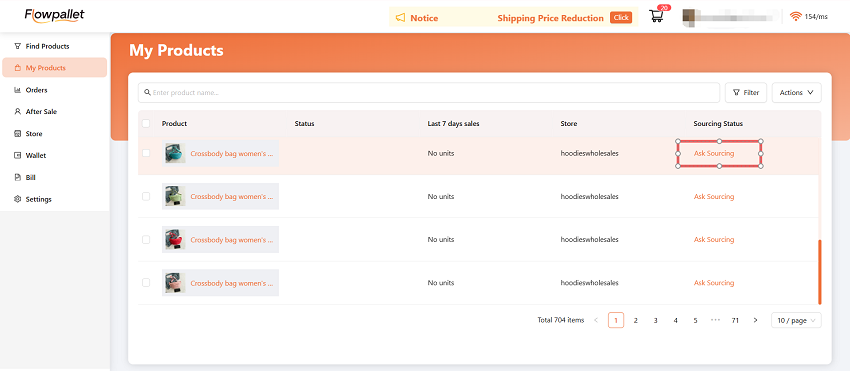
If you're sourcing products globally, using a platform like Flowpallet makes the process much more efficient. Instead of contacting suppliers individually, you can connect with verified manufacturers, compare different sourcing options, and handle quality checks and fulfillment in one place. This not only saves time but also minimizes the risks of dealing with unknown suppliers.
5️⃣Plan storage and fulfillment
Decide how you will store and deliver your products. Common options include:
- Renting warehouse space
- Working with third-party logistics (3PL) order fulfillment providers
- Partnering with fulfillment services
- Combining wholesale with dropshipping for flexibility
- Outsourcing fulfillment can help you scale faster without a heavy upfront investment.
6️⃣Find your first customers
Once your products are ready, focus on generating sales and building relationships.
Popular sales channels include:
- Your own e-commerce website
- Shopify stores
- B2B marketplaces
- Amazon Business
- Local retailers
- Trade shows
- Social media outreach
Long-term relationships are often more valuable than one-time transactions, so prioritize trust and consistency.
3. How much does it cost to start a wholesale business
Startup costs vary depending on the products you sell and your business model.
| Expense | Estimated Cost |
|---|---|
| Business registration | $50–$500 |
| Product samples | $100–$500 |
| Initial inventory | $1,000–$10,000+ |
| Website and branding | $100–$1,000 |
| Marketing | $200–$2,000 |
| Warehousing (if needed) | Varies |
Many small wholesalers can start with around $2,000–$5,000, while larger operations may require significantly more.
If your budget is limited, consider working with lower MOQs or using fulfillment partners instead of renting warehouse space immediately.
Learn more about how much you have to put into dropshipping.
4. Tools and platforms for new wholesalers
Running a wholesale business becomes far simpler when you have the right tools in place.
Product sourcing platforms help you find reliable suppliers, compare pricing, and source goods from manufacturers around the world.
Inventory management software keeps track of stock levels, purchase orders, and product availability. This reduces manual work and helps prevent running out of stock.
E-commerce platforms like Shopify and WooCommerce make it easy to build a professional online store and manage customer orders efficiently.
Shipping and fulfillment services handle storage, packing, and delivery, so you can focus on growing your business instead of logistics.
How Flowpallet supports new wholesalers
If you're sourcing products from China or aiming to build a scalable wholesale business, Flowpallet simplifies many of the most time-consuming processes. With Flowpallet, you can:
- Source products directly from verified manufacturers
- Check supplier credibility before placing orders
- Access competitive factory pricing
- Combine orders from multiple suppliers into one shipment
- Use integrated warehousing and inventory management
- Automate order fulfillment
- Seamlessly connect to your Shopify or WooCommerce store
- Have branding options like white labeling
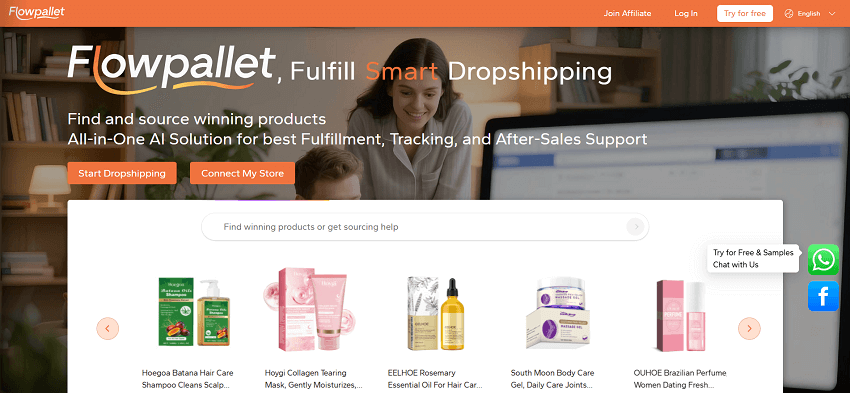
Instead of dealing with multiple suppliers and shipping providers separately, Flowpallet brings sourcing, fulfillment, and logistics into one unified platform. This allows new wholesalers to spend less time on operations and more time acquiring customers and scaling their business.
5. Conclusion
Starting a wholesale business does not require years of experience or a large upfront investment. Success depends on selecting the right products, working with reliable suppliers, and building efficient systems for inventory and fulfillment.
Begin with a focused niche, test demand before purchasing in bulk, and use modern tools to streamline your workflow. As your business grows, you can expand your product range and scale with confidence.
Whether you are supplying local retailers or selling globally, wholesale remains a proven business model with strong long-term potential.
