'/%3e%3cpath%20d='M59.9558%200H51.6287C51.6287%200%2045.5566%2034.1414%2045.7996%2039.9704C48.4659%20103.923%20122.41%2090.4886%20159.049%2075.7773L159.882%2071.6137C72.4464%20100.759%2053.2939%2059.9557%2054.1268%2039.9704C54.7163%2025.8265%2059.9558%200%2059.9558%200Z'%20fill='url(%23paint1_linear_658_5274)'/%3e%3cpath%20d='M180.7%2050.7959L180.845%2049.8037C184.282%2054.4129%20189.53%2057.458%20195.688%2057.458C206.726%2057.458%20217.339%2046.0121%20217.339%2034.9746C217.339%2023.9371%20211.722%2015.8223%20200.685%2015.8223C195.356%2015.8223%20189.544%2018.1027%20184.957%2021.7031L185.696%2016.6543H177.369L168.209%2075.7773H176.536L180.7%2050.7959ZM194.023%2049.9629C183.198%2049.1302%20183.198%2041.6353%20183.198%2037.4717C183.198%2028.3123%20190.455%2023.3157%20197.354%2023.3154C204.252%2023.3154%20208.18%2027.6155%20208.18%2034.9736C208.18%2044.1334%20200.922%2049.9627%20194.023%2049.9629Z'%20fill='%23FBFBFB'/%3e%3cpath%20d='M221.503%2050.7954C226.722%2063.8433%20244.819%2055.7917%20248.982%2050.7954C247.65%2056.7908%20255.088%2057.1796%20258.974%2056.6245L259.807%2049.1304C258.697%2049.1304%20256.476%2048.6308%20256.476%2046.6323C256.476%2044.1342%20260.451%2031.2297%20258.974%2025.814C253.978%207.49469%20228.164%2015.8221%20225.666%2024.9819L231.495%2028.312C242.32%2016.6545%20253.146%2024.9814%20249.815%2031.6431C239.823%2029.1449%20214.842%2034.1413%20221.503%2050.7954ZM248.982%2038.3052C250.648%2045.7997%20233.994%2056.6248%20229.83%2046.6323C227.054%2039.9706%20241.488%2037.4725%20248.982%2038.3052Z'%20fill='%23FBFBFB'/%3e%3cdefs%3e%3clinearGradient%20id='paint0_linear_658_5274'%20x1='333.92'%20y1='70.601'%20x2='188.194'%20y2='70.601'%20gradientUnits='userSpaceOnUse'%3e%3cstop%20stop-color='%23EB5455'/%3e%3cstop%20offset='0.0001'%20stop-color='%23EF733E'/%3e%3cstop%20offset='1'%20stop-color='%23FFD461'/%3e%3c/linearGradient%3e%3clinearGradient%20id='paint1_linear_658_5274'%20x1='139.897'%20y1='83.2717'%20x2='53.2939'%20y2='3.33085'%20gradientUnits='userSpaceOnUse'%3e%3cstop%20stop-color='%23FFD461'/%3e%3cstop%20offset='0.9999'%20stop-color='%23EF733E'/%3e%3c/linearGradient%3e%3c/defs%3e%3c/svg%3e)


What Is 3PL Fulfillment: Benefits, Costs & How It Works
FlowpalletAurora ShawJun. 29, 2026

Customers today expect fast shipping, accurate orders, and easy returns. That's just the baseline now. As order volume grows, handling warehousing and shipping in-house gets harder - and for a lot of businesses, it eventually stops making sense.
That's where 3PL fulfillment comes in.
What does 3PL mean? And who is the best 3PL fulfillment? -reddit.com
A 3PL (Third-party logistics) provider takes the logistics work off your plate. Instead of managing your own storage, packing, and shipping, you hand that off to a specialized company - and redirect your time toward sales, marketing, and building your product.
1. 3PL fulfillment: Meaning
3PL, basically, means handing off some or all of your shipping and fulfillment operations to an outside company. A 3PL fulfillment service typically takes care of:
- Inventory storage
- Warehouse management
- Picking and packing orders
- Shipping products to customers
- Delivery tracking
- Returns processing
Here's how it works in practice: instead of storing products yourself, you send your inventory to a 3PL order fulfillment center. When a customer places an order, the 3PL picks, packs, and ships it on your behalf automatically.
It's a model used across a wide range of businesses, including e-commerce brands, Shopify stores, Amazon sellers, subscription box companies, and growing DTC brands.
The core idea is simple: let someone else handle the logistics so you can focus on actually running your business.
2. 3PL fulfillment: Process
Every provider does things a little differently, but the core process usually follows the same steps.
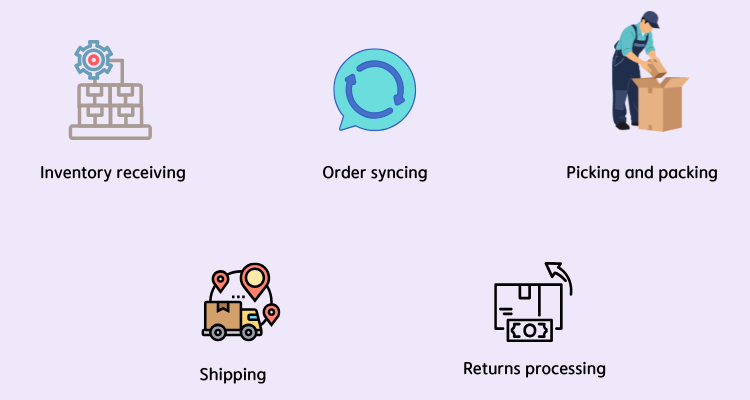
Inventory receiving
You ship your products to the 3PL's warehouse. When they arrive, the team checks quantities, inspects the goods, and places everything into designated storage locations. Most modern providers also update inventory levels in real time, so you can monitor stock through a dashboard without having to call anyone. (Or you can buy the orders directly from inventory; you don't need to handle the goods yourself.)
Order syncing
Most 3PL providers connect directly with platforms like Shopify, WooCommerce, Amazon, and TikTok Shop. When a customer places an order, it gets sent to the fulfillment center automatically - no manual input needed. That automation alone cuts down on delays and errors significantly.
Picking and packing
Once an order comes in, warehouse staff locate the item, pull it from storage, and pack it for shipment. If you want a more branded experience, many providers also offer custom packaging, branded inserts, or kitting services.
Shipping
Packed orders go out through carriers like UPS, FedEx, DHL, or regional delivery partners. Because 3PLs ship in bulk, they often negotiate better rates than most businesses could get on their own, which can meaningfully lower your per-order shipping cost. Customers typically get tracking info automatically once the order ships.
Returns processing
Returns are part of the job, too. A good 3PL will inspect returned items, restock what's still sellable, and handle damaged goods based on your instructions. Having someone manage this properly makes a real difference — both for customer satisfaction and for keeping your operations clean.
The 3PL fulfillment process is designed to make order handling faster and more efficient, from inventory storage to final delivery and returns. By automating key logistics tasks, businesses can reduce manual work, improve shipping accuracy, and create a smoother customer experience as they scale.
3. 3PL fulfillment: Pros and cons
Like any business solution, 3PL fulfillment has both advantages and disadvantages.
| Aspect | Pros of 3PL fulfillment | Cons of 3PL fulfillment |
|---|---|---|
| Operations | Reduces the workload of managing warehousing, packing, and shipping internally. | Businesses lose some direct control over fulfillment operations. |
| Shipping | Faster delivery through multiple warehouse locations and carrier partnerships. | Shipping quality and speed may vary depending on the provider. |
| Scalability | Easier to handle business growth and seasonal order spikes. | Switching providers later can be time-consuming and disruptive. |
| Expertise | Access to professional logistics systems and fulfillment experience. | Businesses rely heavily on the provider’s systems and support quality. |
| Costs | Potential savings on labor, warehousing, and bulk shipping rates. | Extra fees for storage, returns, packaging, and special services may add up. |
| Customer experience | Better fulfillment efficiency can improve customer satisfaction. | Poor communication or fulfillment errors can negatively impact customers. |
| Suitability | Ideal for growing ecommerce brands looking to scale efficiently. | May not be cost-effective for businesses with very low order volume. |
Overall, 3PL fulfillment service has real advantages - it helps you scale, ships faster, and takes the daily logistics grind off your hands. But it's not a perfect fit for everyone. You're adding a cost layer, and you're giving up some direct control over how orders are handled.
4. 3PL fulfillment: Differences
Many people confuse 3PL fulfillment with other e-commerce logistics models. However, there are several important differences.
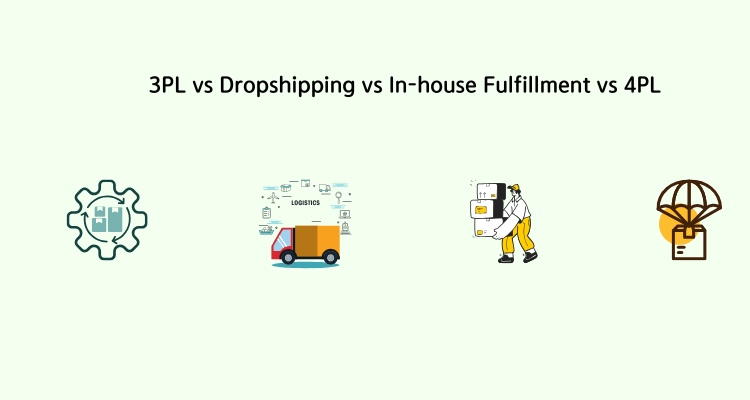
3PL vs Dropshipping
The biggest difference is inventory ownership. With 3PL fulfillment, the business purchases inventory upfront and stores it in a warehouse. With dropshipping, products are shipped directly from suppliers after customers place orders. But now, some dropshipping platforms can also support 3PL.
3PL fulfillment usually offers:
- Better branding control
- Faster shipping
- Higher product consistency
Dropshipping, on the other hand, often requires lower upfront investment but may involve lower profit margins and less quality control.
3PL vs In-house Fulfillment
In-house fulfillment means managing storage, packing, and shipping internally.
This approach provides maximum control, but it also requires warehouse space, labor management, and operational expertise.
3PL fulfillment reduces operational complexity but introduces dependency on external partners.
3PL vs 4PL
A 4PL provider typically manages the entire logistics network, including multiple warehouses, transportation partners, and supply chain strategy.
In comparison, a 3PL provider mainly focuses on execution tasks such as warehousing and order fulfillment.
5. 3PL fulfillment: How to choose the right one
The provider you pick will have a direct impact on shipping speed, order accuracy, and ultimately how customers feel about your brand. Here's what to look at.
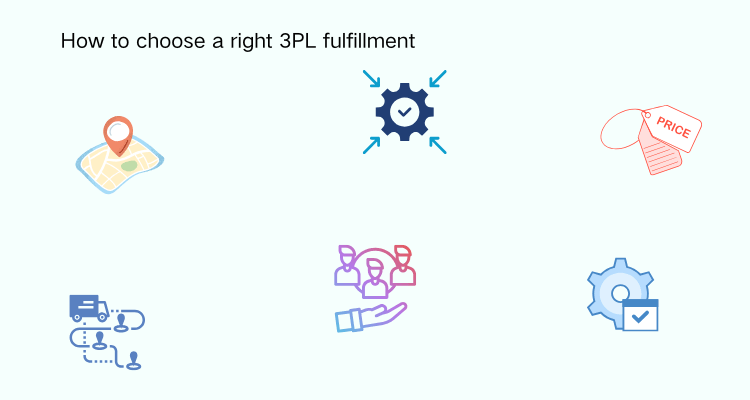
1️⃣Warehouse locations
Closer warehouses mean shorter transit times and lower shipping costs. If most of your customers are in the US, a provider with multiple US fulfillment centers will generally serve you better than one operating out of a single location.
2️⃣Platform integrations
Your 3PL should connect cleanly with whatever you're selling on: Shopify, WooCommerce, Amazon, or wherever else. Good integrations mean orders flow through automatically, which reduces manual work and cuts down on fulfillment mistakes.
3️⃣Transparent pricing
Some providers look cheap upfront, but layer on fees once you're locked in. Before committing, get clear numbers on storage fees, pick-and-pack costs, shipping rates, return processing, and any custom packaging charges. Surprises here eat into your margins fast.
4️⃣Shipping speed and accuracy
Fast shipping matters, but so does getting the right item in the right box. Look for providers with strong fulfillment accuracy rates and reliable tracking — customers notice both.
5️⃣Customer support
Things go wrong in logistics. Delayed shipments, inventory discrepancies, return issues - it happens. When it does, you want a provider that actually responds and helps you fix it, not one that leaves you chasing replies for days.
6️⃣Fulfillment technology and product tools
Shipping is only part of the equation. Inventory planning and product selection matter just as much for long-term growth. Platforms like Flowpallet go beyond fulfillment by combining logistics workflows with product sourcing and branding options - useful if you're trying to manage sourcing and brand operations in one place rather than juggling multiple tools.
Choosing the right 3PL fulfillment partner is not just about finding the cheapest option. A reliable 3PL provider can help improve operational efficiency, while the wrong one may create delays and customer satisfaction issues.
6. Final thoughts
3PL fulfillment has become a practical solution for e-commerce businesses that want to scale without getting buried in logistics. Outsourcing warehousing, packing, and shipping frees up time and reduces operational strain - but only if you choose the right partner.
There's no universal answer. The best fit depends on your order volume, target market, product type, and where you're headed. Take the time to compare pricing, warehouse coverage, integrations, and support quality before deciding.
Best of luck with your 3PL fulfillment journey.
