'/%3e%3cpath%20d='M59.9558%200H51.6287C51.6287%200%2045.5566%2034.1414%2045.7996%2039.9704C48.4659%20103.923%20122.41%2090.4886%20159.049%2075.7773L159.882%2071.6137C72.4464%20100.759%2053.2939%2059.9557%2054.1268%2039.9704C54.7163%2025.8265%2059.9558%200%2059.9558%200Z'%20fill='url(%23paint1_linear_658_5274)'/%3e%3cpath%20d='M180.7%2050.7959L180.845%2049.8037C184.282%2054.4129%20189.53%2057.458%20195.688%2057.458C206.726%2057.458%20217.339%2046.0121%20217.339%2034.9746C217.339%2023.9371%20211.722%2015.8223%20200.685%2015.8223C195.356%2015.8223%20189.544%2018.1027%20184.957%2021.7031L185.696%2016.6543H177.369L168.209%2075.7773H176.536L180.7%2050.7959ZM194.023%2049.9629C183.198%2049.1302%20183.198%2041.6353%20183.198%2037.4717C183.198%2028.3123%20190.455%2023.3157%20197.354%2023.3154C204.252%2023.3154%20208.18%2027.6155%20208.18%2034.9736C208.18%2044.1334%20200.922%2049.9627%20194.023%2049.9629Z'%20fill='%23FBFBFB'/%3e%3cpath%20d='M221.503%2050.7954C226.722%2063.8433%20244.819%2055.7917%20248.982%2050.7954C247.65%2056.7908%20255.088%2057.1796%20258.974%2056.6245L259.807%2049.1304C258.697%2049.1304%20256.476%2048.6308%20256.476%2046.6323C256.476%2044.1342%20260.451%2031.2297%20258.974%2025.814C253.978%207.49469%20228.164%2015.8221%20225.666%2024.9819L231.495%2028.312C242.32%2016.6545%20253.146%2024.9814%20249.815%2031.6431C239.823%2029.1449%20214.842%2034.1413%20221.503%2050.7954ZM248.982%2038.3052C250.648%2045.7997%20233.994%2056.6248%20229.83%2046.6323C227.054%2039.9706%20241.488%2037.4725%20248.982%2038.3052Z'%20fill='%23FBFBFB'/%3e%3cdefs%3e%3clinearGradient%20id='paint0_linear_658_5274'%20x1='333.92'%20y1='70.601'%20x2='188.194'%20y2='70.601'%20gradientUnits='userSpaceOnUse'%3e%3cstop%20stop-color='%23EB5455'/%3e%3cstop%20offset='0.0001'%20stop-color='%23EF733E'/%3e%3cstop%20offset='1'%20stop-color='%23FFD461'/%3e%3c/linearGradient%3e%3clinearGradient%20id='paint1_linear_658_5274'%20x1='139.897'%20y1='83.2717'%20x2='53.2939'%20y2='3.33085'%20gradientUnits='userSpaceOnUse'%3e%3cstop%20stop-color='%23FFD461'/%3e%3cstop%20offset='0.9999'%20stop-color='%23EF733E'/%3e%3c/linearGradient%3e%3c/defs%3e%3c/svg%3e)


5 Steps to Set a Price for a Product
FlowpalletAurora ShawJun. 12, 2026

Do you know how to price a product? Pricing a product is one of the most influential decisions in any business. The right price can boost sales, strengthen your positioning, and increase profitability.
Many companies struggle with this, wavering between setting prices too low—which erodes earnings—and too high, which can drive away potential sales, often due to a lack of a clear framework.
Whether you're launching a new product or optimizing an existing one, understanding how to price effectively is essential for long-term success. Continue reading~
1. What are pricing strategy types
Before setting numbers, it's important to know common pricing strategies used across e-commerce and retail:
| Pricing strategy | What it means | When to use | Pros | Cons |
|---|---|---|---|---|
| Cost-Plus pricing | Add a markup on top of your total cost | Stable costs, simple products | Easy to calculate; ensures profit | Doesn't consider market or customer demand |
| Market-based pricing | Set prices based on competitor pricing | Highly competitive markets | Easy positioning; quick to apply | Hard to stand out; race-to-the-bottom risk |
| Value-based pricing | Price based on customer perceived value | Premium, unique, or branded products | Higher profit potential | Requires research; harder to execute |
| Pentration pricing | Start low to attract customers fast | New products entering competitive markets | Fast adoption; increases visibility | Low initial profit; may attract bargain hunters |
| Premium pricing | Price higher to signal high quality | Luxury, niche, or specialty products | Strong brand image; high margins | Smaller customer base |
| Psychological pricing | Use pricing psychology (e.g., $9.99) | Broad consumer markets | Boosts conversions; easy to apply | Limited impact on high-ticket items |
| Dynamic pricing | Prices change based on demand, season, or competition | Travel, retail, e-commerce | Maximizes revenue; flexible | Can confuse or frustrate customers |
Choose the right one suited to your case. Further reading: How to choose an e-commerce platform?
2. How to price a product
To set a price for a product, you need a clear plan that uses both your numbers and what customers expect.
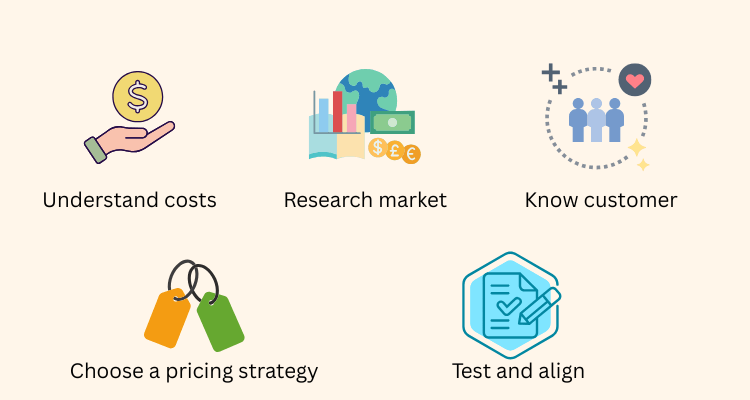
Step 1: Understand your costs
Identify both direct and indirect costs, including materials, labor, packaging, marketing, and shipping. This ensures you never price below your break-even point.
Step 2: Research the market
Study competitor pricing, product quality, market trends, and customer expectations. This helps you position your product effectively.
Step 3: Know your customer
Understand what your target audience values, their willingness to pay, and how sensitive they are to price differences.
Step 4: Choose a pricing strategy
Use the strategy (we talked about above) that best aligns with your goals: gaining market share, maximizing profits, or strengthening your brand image.
Step 5: Test and align
No price is final. Test different price points, analyze conversion rates, and monitor performance regularly. Adjust as market or customer behavior changes.
This process prevents guesswork, ensuring your price supports both profitability and customer appeal.
3. Bonus: How to track orders and adjust prices
Once you've set your price, the real work begins: you have to watch your sales. This tells you if your price is hitting the mark with customers and meeting your goals.
To make this easy, try a tool like Flowpallet. It connects directly to your online store, automatically pulls in your sales numbers, and shows every order in a clean, simple dashboard. It takes the guesswork out of seeing how your pricing is actually performing.
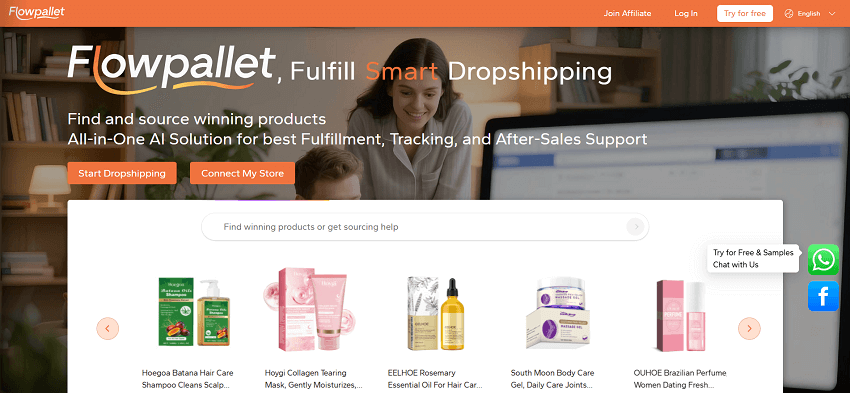
Here's what Flowpallet does for you:
- Easy setup: Connect your store in minutes—no complicated setup. It just starts bringing in your data.
- Clear snapshot: See your sales figures in a straightforward format, so you can instantly spot which products are winning or struggling at their current price.
- Connect price to results: It allows you to establish a direct link between your price and sales volume using the provided data.
- Smarter adjustments: Make pricing decisions based on what's actually happening in your store, not on a hunch.
This tool makes it easier to refine your pricing strategy continuously, manage your prices simply, and stay competitive in your niche. Why not try it now?
