'/%3e%3cpath%20d='M59.9558%200H51.6287C51.6287%200%2045.5566%2034.1414%2045.7996%2039.9704C48.4659%20103.923%20122.41%2090.4886%20159.049%2075.7773L159.882%2071.6137C72.4464%20100.759%2053.2939%2059.9557%2054.1268%2039.9704C54.7163%2025.8265%2059.9558%200%2059.9558%200Z'%20fill='url(%23paint1_linear_658_5274)'/%3e%3cpath%20d='M180.7%2050.7959L180.845%2049.8037C184.282%2054.4129%20189.53%2057.458%20195.688%2057.458C206.726%2057.458%20217.339%2046.0121%20217.339%2034.9746C217.339%2023.9371%20211.722%2015.8223%20200.685%2015.8223C195.356%2015.8223%20189.544%2018.1027%20184.957%2021.7031L185.696%2016.6543H177.369L168.209%2075.7773H176.536L180.7%2050.7959ZM194.023%2049.9629C183.198%2049.1302%20183.198%2041.6353%20183.198%2037.4717C183.198%2028.3123%20190.455%2023.3157%20197.354%2023.3154C204.252%2023.3154%20208.18%2027.6155%20208.18%2034.9736C208.18%2044.1334%20200.922%2049.9627%20194.023%2049.9629Z'%20fill='%23FBFBFB'/%3e%3cpath%20d='M221.503%2050.7954C226.722%2063.8433%20244.819%2055.7917%20248.982%2050.7954C247.65%2056.7908%20255.088%2057.1796%20258.974%2056.6245L259.807%2049.1304C258.697%2049.1304%20256.476%2048.6308%20256.476%2046.6323C256.476%2044.1342%20260.451%2031.2297%20258.974%2025.814C253.978%207.49469%20228.164%2015.8221%20225.666%2024.9819L231.495%2028.312C242.32%2016.6545%20253.146%2024.9814%20249.815%2031.6431C239.823%2029.1449%20214.842%2034.1413%20221.503%2050.7954ZM248.982%2038.3052C250.648%2045.7997%20233.994%2056.6248%20229.83%2046.6323C227.054%2039.9706%20241.488%2037.4725%20248.982%2038.3052Z'%20fill='%23FBFBFB'/%3e%3cdefs%3e%3clinearGradient%20id='paint0_linear_658_5274'%20x1='333.92'%20y1='70.601'%20x2='188.194'%20y2='70.601'%20gradientUnits='userSpaceOnUse'%3e%3cstop%20stop-color='%23EB5455'/%3e%3cstop%20offset='0.0001'%20stop-color='%23EF733E'/%3e%3cstop%20offset='1'%20stop-color='%23FFD461'/%3e%3c/linearGradient%3e%3clinearGradient%20id='paint1_linear_658_5274'%20x1='139.897'%20y1='83.2717'%20x2='53.2939'%20y2='3.33085'%20gradientUnits='userSpaceOnUse'%3e%3cstop%20stop-color='%23FFD461'/%3e%3cstop%20offset='0.9999'%20stop-color='%23EF733E'/%3e%3c/linearGradient%3e%3c/defs%3e%3c/svg%3e)


How Hard Is Dropshipping? Get It Started More Easily!
FlowpalletAurora ShawJun. 23, 2026

Dropshipping is often promoted as one of the easiest ways to start an online business. No inventory, low upfront cost, and the ability to sell products from anywhere in the world - it sounds almost too good to be true.
So it's no surprise that many beginners ask the same question before getting started: Is dropshipping hard?
The honest answer is: it depends. Dropshipping removes many traditional barriers of e-commerce, but it also introduces new challenges that most tutorials don't talk about. Understanding both sides is the key to deciding whether this business model is right for you.
What is dropshipping?
Maybe you wanna know: What is dropshipping? Dropshipping is an e-commerce business model where you sell products without holding any inventory.
Here's how it works:
- You set up an online store and connect the store to the supplier
- You import and list products for sale from a supplier
- A customer places an order in your store
- The order is forwarded to your supplier or fulfillment partner
- The supplier ships the product directly to your customer
You never handle the product yourself. This is what makes dropshipping attractive to beginners - you don't need a warehouse, large capital, or logistics experience to get started.
Understanding the pros and cons of dropshipping
Before deciding whether dropshipping is hard, it's important to look at both its advantages and disadvantages.
Pros of dropshipping
- Very low startup cost
- No inventory risk
- Easy to launch a store quickly
- Flexible location - run your business from anywhere
- Access to a wide range of products
Cons of dropshipping
- High competition in popular niches
- Thin profit margins
- Limited control over shipping and product quality
- Dependence on suppliers
- Customer service challenges when delays happen
Dropshipping removes operational complexity, but shifts the difficulty to product selection, marketing, and supplier management.
What makes dropshipping hard in reality
This is where many beginners feel stuck when starting a dropshipping business:
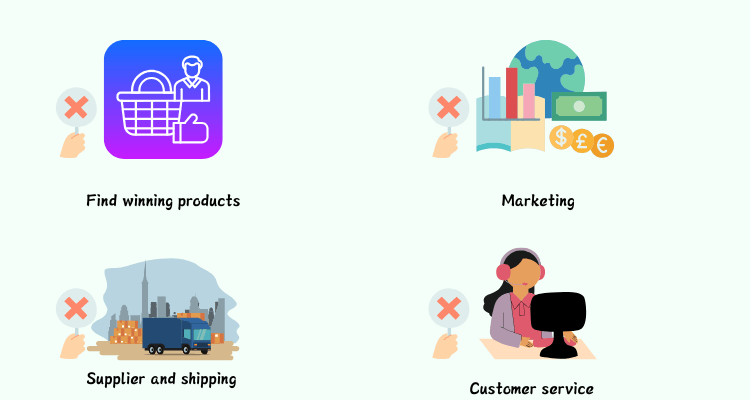
1️⃣Finding winning products is not easy. Products that look promising may not sell at all. Trends change quickly, and constant testing is required.
2️⃣Marketing is the biggest challenge. Running ads on Facebook, TikTok, or Google requires budget, testing, and data analysis. Without marketing skills, traffic simply won't come.
3️⃣Supplier and shipping issues can damage your store's reputation. Long delivery times, stock shortages, or inconsistent product quality lead to refunds and complaints.
4️⃣Customer service pressure is real. When something goes wrong, customers contact you — not the supplier.
This is why dropshipping is not "passive income." It's a real business that requires effort and learning.
How to make dropshipping easier?
While dropshipping has challenges, the right tools and partners can make a huge difference.
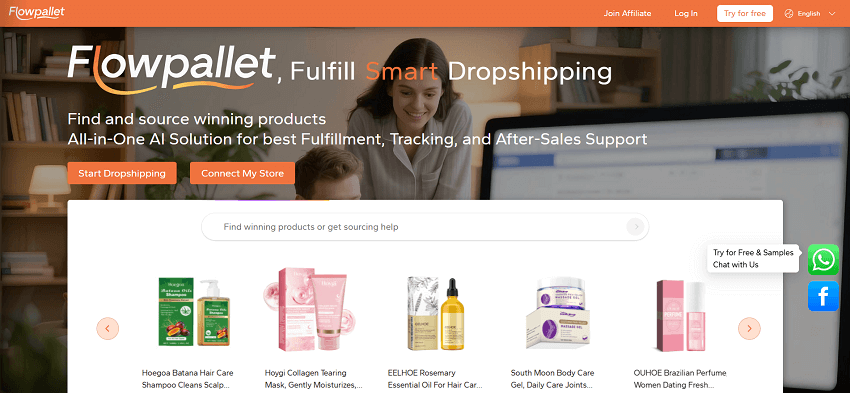
Using a reliable sourcing and fulfillment partner like Flowpallet helps solve many common problems:
- Access to vetted suppliers and faster shipping
- Inventory synchronization to avoid stock issues
- Automated order processing
- Better product quality control
- Help source items in a short time
- Less time spent dealing with logistics problems
- 24/7 online service
This allows you to focus on what actually grows your store — product selection and marketing — instead of constantly fixing operational issues.
Moreover, you can use these key skills:
- Product research and market validation
- Basic advertising and marketing knowledge
- Store optimization and branding
- Data analysis to improve performance
- Communication with suppliers and customers
Conclusion
So, is dropshipping hard? It's not as easy as social media makes it look, but it's also not impossible. The difficulty comes from competition, marketing, and supplier management — not from setting up the store itself.
With realistic expectations, the right skills, and reliable partners like Flowpallet, dropshipping becomes much more manageable and far more likely to succeed.
