


How to Start An Online Dropshipping Business
FlowpalletAurora ShawSep. 23, 2026

💭I wanna start my own online dropshipping business, but idk how to start. Any advice? -reddit.com
Maybe you wanna do a dropshipping business like this user; read here. An online dropshipping business lets you sell products without buying and storing inventory yourself.
You build the storefront, choose what to sell, market the products, and handle customer communication. When a customer places an order, your supplier ships the item directly to them.
That sounds simple, and the basic model is. The challenge part is setting up a store people trust, finding products with real demand, and working with suppliers that deliver consistently. Dropshipping can be a practical way to enter e-commerce with less upfront risk, but it still requires research, testing, and careful customer service.
This guide explains how online dropshipping works, where the opportunities and drawbacks are, and how to start with a dropshipping platform such as Flowpallet.
How does online dropshipping work?
The process usually follows this sequence:
- You create an online store and list products from a supplier.
- A shopper visits your store and completes a purchase.
- You receive the payment and forward the order details to the supplier.
- The supplier packs and ships the product to your customer.
- You manage tracking updates, customer questions, returns, and any delivery issues.
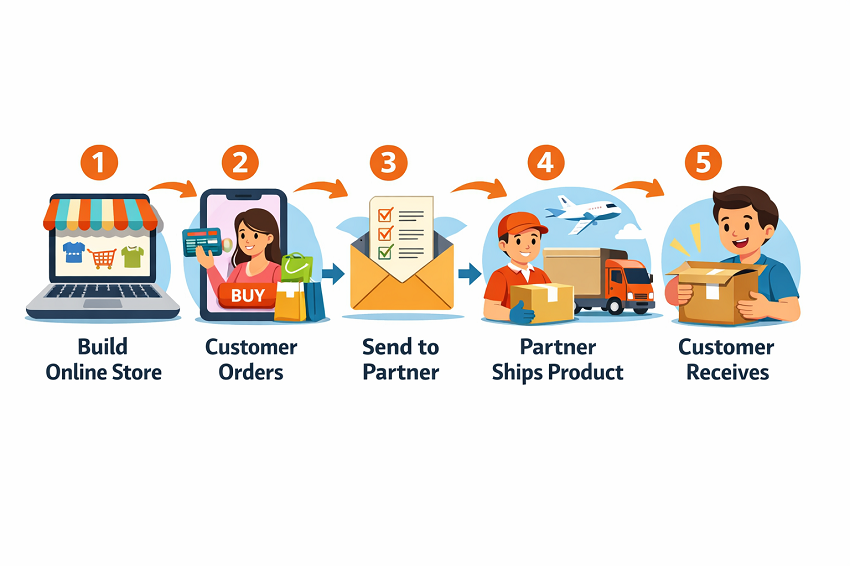
For example, you might list a desk organizer for $35. When someone buys it, you pay your supplier $18 plus shipping. The remaining amount covers your advertising, store fees, payment processing, customer support, refunds, and profit.
Your customer buys from your brand, even though another company fulfills the order. That is why supplier selection matters so much. A poor product, delayed shipment, or missing tracking number becomes your problem in the customer's eyes.
Advantages and disadvantages of online dropshipping
Dropshipping has clear benefits, though it is not a shortcut to effortless income.
| Advantages | Disadvantages |
|---|---|
| Lower upfront investment | Lower margins on many products |
| A wide product selection | Less control over fulfillment |
| Flexible location | Stock and pricing can change quickly |
| Fast product testing | Customer service still belongs to you |
To avoid the cons of dropshipping, you can read the pros and cons of dropshipping.
How to start an online dropshipping business
Here we try to summarize the complete guide to starting your online dropshipping business:
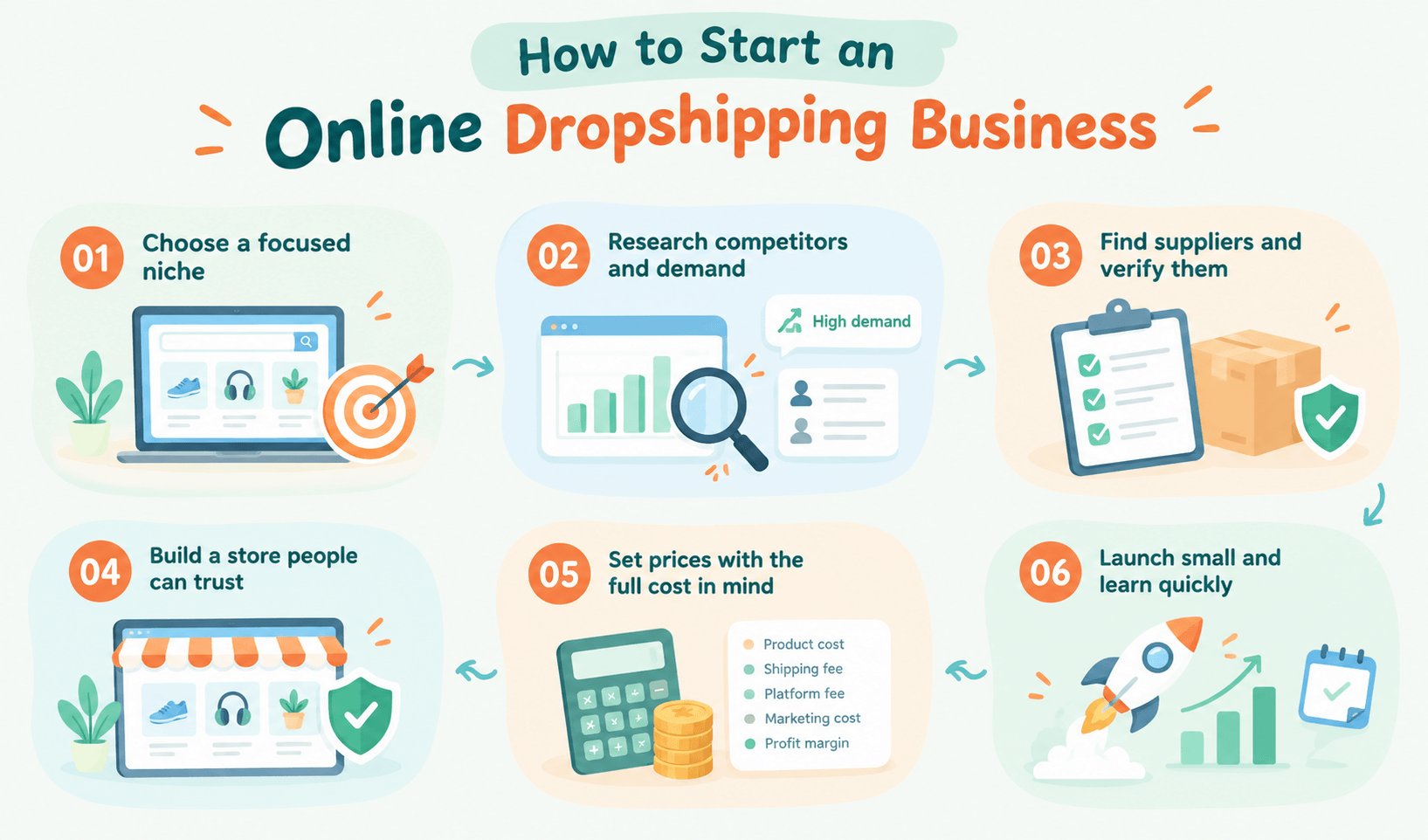
01 Choose a focused niche
A focused store is often easier to market than a store that sells everything. Look for a category with a clear buyer type and repeatable content opportunities. Pet travel accessories, compact home fitness equipment, and organization products for small apartments are more focused than a general product store.
Try to understand the customer before choosing the products. Ask:
- Who is likely to buy this?
- What problem are they trying to solve?
- Why would they choose an online store instead of a local retailer?
- Can you make useful videos, guides, or social posts around this category?
02 Research competitors and demand
Search the product category on Google, TikTok, Instagram, Amazon, and relevant marketplaces. Pay attention to recurring customer complaints. Those complaints often reveal an opportunity: confusing sizing, weak materials, inconvenient storage, slow delivery, or poor instructions.
You are looking for proof that people care, not merely a product that looks unusual.
03 Find suppliers and verify them
Before listing a product, check the supplier's product information, shipping locations, processing times, return policy, tracking options, and communication speed. Order samples whenever possible. A sample tells you far more than a listing photo ever will.
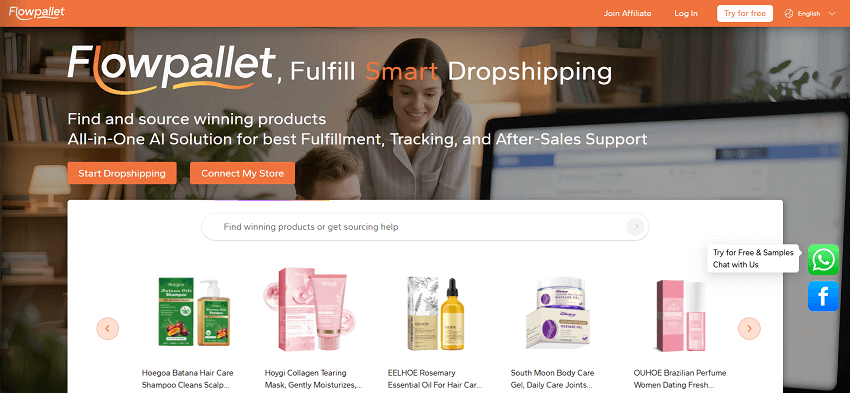
Flowpallet can fit into this stage as a place to organize product sourcing and fulfillment workflows. Use it to review or source available products, compare different sourcing information, and keep the order process manageable as your store grows. Before committing to a supplier, confirm the current pricing, shipping coverage, product availability, and integration options directly within the platform.
04 Build a store people can trust
Your store does not need to be complicated. It does need to answer the questions customers ask before they buy:
- What does the product do?
- Who is it for?
- How long will delivery take?
- What happens if there is a problem?
- How can the customer contact you?
Write product pages in plain language. Use original photos or videos when you can, list accurate dimensions, explain materials, and avoid claims you cannot support. Add clear shipping, return, privacy, and contact pages.
05 Set prices with the full cost in mind
Do not price a product by simply doubling the supplier cost. Include:
- Product cost
- Shipping cost
- Platform and payment fees
- Advertising spend
- Refunds or replacements
- Taxes where applicable
- A realistic profit margin
A product can look profitable on paper and still lose money once paid traffic and refunds enter the picture.
06 Launch small and learn quickly
Start with a manageable selection of products. Track which products get clicks, add-to-carts, purchases, refunds, and customer questions. Early results help you improve the offer before you spend heavily on ads.
Hope this whole process can work out for you.
How to choose the right dropshipping products
The best dropshipping products tend to have a practical use, a clear audience, and enough room for profit after marketing costs. So please look for products that:
- Solve a specific inconvenience
- Are easy to explain in a short video or image
- Have a reasonable selling price for your market
- Are compact enough to ship efficiently
- Are unlikely to break in transit
- Have low return risk
- Can be bundled with related products
- Are available from dependable suppliers
Avoid relying only on "viral" products. A sudden spike in views can bring sales, but it also attracts copycat stores and can disappear just as fast.
Product research should include customer reviews. Read both positive and negative feedback. Positive reviews show what buyers value. Negative reviews show what needs to be improved or avoided. If customers repeatedly complain that a product is smaller than expected, unclear product dimensions may be an easy way to stand out. If they complain about poor quality, choose another supplier.
Be especially careful with regulated or high-risk categories such as medical products, supplements, children's safety products, branded goods, and electronics. These areas may involve legal requirements, higher liability, or counterfeit concerns.
Bonus: How to make a dropshipping business successful
A sustainable dropshipping business usually comes from doing ordinary things well over time.
First, treat customer service as part of marketing. Fast, calm replies can turn a delivery issue into a customer who orders again. Set honest shipping expectations before checkout and send tracking updates proactively.
Second, build a real brand around your niche. That can include helpful content, product comparisons, buying guides, email follow-ups, and a clear visual identity. A store that only reposts supplier photos is easy to replace. A store that helps customers make better choices is harder to forget.
Third, use data without becoming trapped by vanity metrics. Views and likes are useful signals, but conversion rate, cost per purchase, repeat orders, refunds, and contribution margin tell you whether the business is healthy.
Finally, keep improving your supply chain. As sales grow, negotiate better terms, test faster fulfillment options, and maintain relationships with more than one supplier for important products. Tools such as Flowpallet can help you keep product sourcing and order operations organized, leaving you more time to focus on the customer experience.
Dropshipping works best when it is treated as a real retail business: choose products carefully, make accurate promises, protect your margins, and give customers a reason to trust your store.
Conclusion
Dropshipping works best when you focus on earning customers' trust—not chasing one "perfect" product.
Start with a focused niche and products that genuinely solve a problem. Take time to vet suppliers, test product quality, and be upfront about prices, shipping times, and return policies. Those details make a big difference in whether people feel comfortable buying from you.
Tools like Flowpallet can simplify sourcing and fulfillment as your store grows, but the real success comes from the choices you make: the products you sell, the service you provide, and how you market your brand.
Listen closely to customer feedback, keep testing, and improve what isn't working. With patience and consistent effort, a small dropshipping store can become a business people come back to.
