


Print on Demand VS Dropshipping: Can I Combine Them?
FlowpalletAurora ShawSep. 30, 2026

If you are looking for the best way to start an online business, two of the most popular options are dropshipping and print on demand(POD). Like this doubt:
I ran my Shopify store through AliExpress, but I found the shipping time is long, so I wanna a print on demand instead. Are there any differences between dropshipping and POD? -reddit.com
Both business models let you sell products online without holding inventory, which makes them especially attractive for beginners, side hustlers, and entrepreneurs who want to start with lower upfront costs. Still, dropshipping and print-on-demand are not the same. They work in different ways, have different profit margins, and fit different goals.
So which one is better for your online store? Is print on demand more profitable than dropshipping? Or is dropshipping the better choice if you want to scale faster? Read below.
1. What is dropshipping?
Dropshipping is an e-commerce business model that lets you sell products without holding inventory yourself. When a customer places an order, the supplier ships the item directly to the buyer. As the store owner, your main focus is usually product selection, marketing, and customer service. See this process:
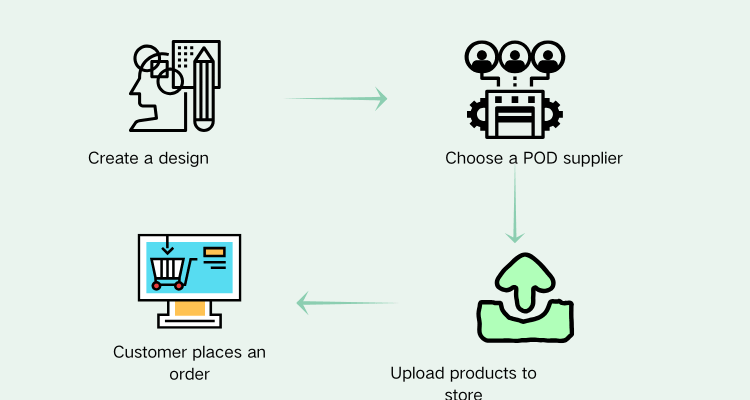
Because you don't need to buy stock in advance, dropshipping is still one of the easiest ways to start an online business.
| Benefits of dropshipping | Drawbacks of dropshipping |
|---|---|
| Low startup costs | Strong competition |
| Access to thousands of products | Less control over product quality |
| Easy to test different niches | Lower profit margins in some categories |
| No inventory management | Dependence on suppliers for fulfillment |
Dropshipping tends to work especially well for entrepreneurs who want flexibility and a fast way to test product ideas.
2. What is print on demand?
Print on demand, or POD, is another inventory-free business model. The difference is that instead of selling generic products, you offer custom items with your own designs.
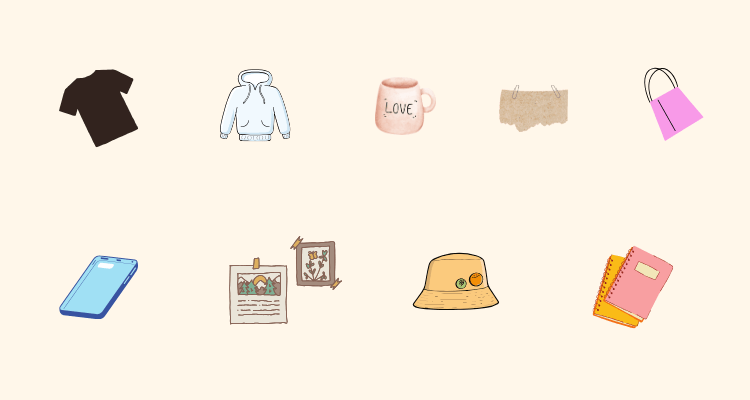
Products are only made after a customer places an order. A print-on-demand provider takes care of printing, packaging, and shipping. Common POD products include:
- T-shirts
- Hoodies
- Mugs
- Tote bags
- Phone cases
- Posters
This model is especially popular with creators, artists, and brands that want to sell original merchandise.
| Benefits of POD | Drawbacks of POD |
|---|---|
| No upfront inventory investment | Higher production costs |
| A chance to build a brand | Longer fulfillment times |
| Unique products with less direct competition | Success depends heavily on design quality |
| Easy to launch with relatively low risk | Fewer product options than dropshipping |
For people who enjoy creativity and branding, print on demand can be a great choice.
3. Print on demand vs dropshipping
Although both models eliminate the need for inventory, there are several important differences:
| Factor | Dropshipping | Print on demand |
|---|---|---|
| Product type | General products | Customized products |
| Privacy variety | Very large | More limited |
| Branding potential | Moderate | High |
| Production time | Faster | Slightly longer |
| Competition | High | Lower |
| Product costs | Lower | Higher |
| Profit margins | Moderate | Moderate to high |
| Scalability | Excellent | Good |
| Best for | Product testing and scaling | Building a brand |
Which is more profitable?
There's no single winner.
Dropshipping can grow faster because you can sell a wide range of products and move quickly into trending niches. But competition is often intense, which can make it harder to keep healthy margins.
Print on demand usually has higher product costs, but original designs can justify premium pricing and help you build a stronger brand.
For beginners to do dropshipping or POD, consider:
Choose dropshipping if you:
- Want to test many products quickly.
- Prefer data-driven product research.
- Want to focus on scaling sales.
- Have limited experience with branding.
Choose print on demand if you:
- Enjoy designing products.
- Want to build a recognizable brand.
- Plan to create a loyal customer base.
- Prefer selling unique products instead of trending items.
Neither model is automatically better. The right choice depends on your strengths, goals, and the kind of business you want to build.
4. Can I combine dropshipping and print on demand?
Absolutely. Many e-commerce brands combine both models to widen their catalog and create a stronger brand presence.
For example, you could sell trending home accessories through dropshipping while offering branded T-shirts or mugs through print-on-demand. This hybrid approach can help you:
- Expand your product catalog.
- Diversify revenue streams.
- Increase average order value.
- Strengthen your brand identity.
As your store grows, managing multiple suppliers and fulfillment channels can get complicated. That's where a reliable fulfillment partner becomes especially useful.
Consider partnering with Flowpallet; whether you're running a dropshipping store, a print-on-demand business, or both, fulfillment has a big impact on customer satisfaction.
Flowpallet helps e-commerce sellers streamline operations with:
- POD dropshipping
- Product sourcing services
- Inventory management.
- Order automation
- Warehousing solutions
- Global 3PL fulfillment support
Instead of juggling different suppliers and logistics providers, sellers can manage everything, including POD services, more efficiently and focus on growing the business. So convenient, right?
5. Conclusion
When comparing print on demand vs dropshipping, there isn't a one-size-fits-all answer.
Dropshipping gives you flexibility, endless product choices, and faster testing opportunities. Print on demand offers stronger branding and the ability to sell products that stand out from the competition.
For beginners, dropshipping is often the easier starting point. For creators and entrepreneurs focused on building a brand, print on demand can be incredibly rewarding. Fingers crossed!
