'/%3e%3cpath%20d='M59.9558%200H51.6287C51.6287%200%2045.5566%2034.1414%2045.7996%2039.9704C48.4659%20103.923%20122.41%2090.4886%20159.049%2075.7773L159.882%2071.6137C72.4464%20100.759%2053.2939%2059.9557%2054.1268%2039.9704C54.7163%2025.8265%2059.9558%200%2059.9558%200Z'%20fill='url(%23paint1_linear_658_5274)'/%3e%3cpath%20d='M180.7%2050.7959L180.845%2049.8037C184.282%2054.4129%20189.53%2057.458%20195.688%2057.458C206.726%2057.458%20217.339%2046.0121%20217.339%2034.9746C217.339%2023.9371%20211.722%2015.8223%20200.685%2015.8223C195.356%2015.8223%20189.544%2018.1027%20184.957%2021.7031L185.696%2016.6543H177.369L168.209%2075.7773H176.536L180.7%2050.7959ZM194.023%2049.9629C183.198%2049.1302%20183.198%2041.6353%20183.198%2037.4717C183.198%2028.3123%20190.455%2023.3157%20197.354%2023.3154C204.252%2023.3154%20208.18%2027.6155%20208.18%2034.9736C208.18%2044.1334%20200.922%2049.9627%20194.023%2049.9629Z'%20fill='%23FBFBFB'/%3e%3cpath%20d='M221.503%2050.7954C226.722%2063.8433%20244.819%2055.7917%20248.982%2050.7954C247.65%2056.7908%20255.088%2057.1796%20258.974%2056.6245L259.807%2049.1304C258.697%2049.1304%20256.476%2048.6308%20256.476%2046.6323C256.476%2044.1342%20260.451%2031.2297%20258.974%2025.814C253.978%207.49469%20228.164%2015.8221%20225.666%2024.9819L231.495%2028.312C242.32%2016.6545%20253.146%2024.9814%20249.815%2031.6431C239.823%2029.1449%20214.842%2034.1413%20221.503%2050.7954ZM248.982%2038.3052C250.648%2045.7997%20233.994%2056.6248%20229.83%2046.6323C227.054%2039.9706%20241.488%2037.4725%20248.982%2038.3052Z'%20fill='%23FBFBFB'/%3e%3cdefs%3e%3clinearGradient%20id='paint0_linear_658_5274'%20x1='333.92'%20y1='70.601'%20x2='188.194'%20y2='70.601'%20gradientUnits='userSpaceOnUse'%3e%3cstop%20stop-color='%23EB5455'/%3e%3cstop%20offset='0.0001'%20stop-color='%23EF733E'/%3e%3cstop%20offset='1'%20stop-color='%23FFD461'/%3e%3c/linearGradient%3e%3clinearGradient%20id='paint1_linear_658_5274'%20x1='139.897'%20y1='83.2717'%20x2='53.2939'%20y2='3.33085'%20gradientUnits='userSpaceOnUse'%3e%3cstop%20stop-color='%23FFD461'/%3e%3cstop%20offset='0.9999'%20stop-color='%23EF733E'/%3e%3c/linearGradient%3e%3c/defs%3e%3c/svg%3e)


How to Get into Dropshipping [Best Tutorial]
FlowpalletAurora ShawJun. 11, 2026

💬I researched and worked on dropshipping, but I still struggle to understand what to get into better. Where do I get started practically, and how to spend money wisely? -reddit.com
Dropshipping is one of the easiest ways to start an online business. Unlike traditional retail, you don't need to buy inventory in advance or handle storage. When a customer places an order, your supplier ships the product directly to them.
So what does getting into dropshipping actually involve?
It means running a business that connects customers with products while leaving storage and shipping to a third party. Your main tasks are selecting the right products, attracting customers, managing your store, and ensuring a smooth buying experience.
The low startup cost makes dropshipping attractive, but success still depends on solid research, careful planning, and consistent execution. Before launching your first store, it's important to understand how people typically start a dropshipping business and what you need to prepare.
1. The 3 main ways to enter dropshipping
There's no single way to get into dropshipping. Most successful sellers begin with one of these approaches:
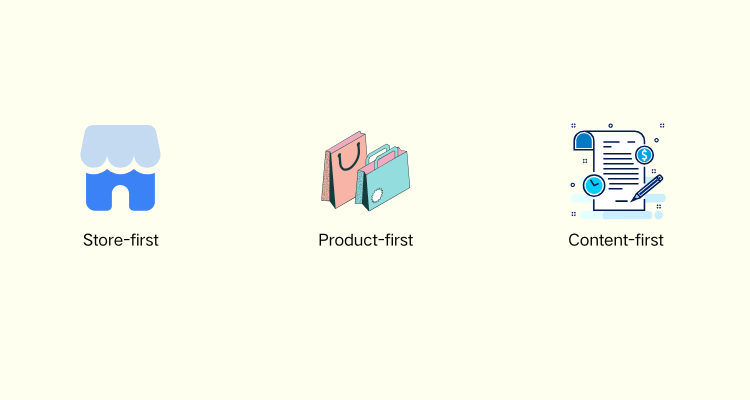
1️⃣Store-first approach
This method focuses on building a branded online store first, then adding products that fit the theme.
It works best if you already have a clear market in mind. For example, you might launch a fitness, pet, beauty, or home decor store and gradually expand your product range within that niche.
✅Advantages:
- Builds a stronger brand identity
- Helps establish customer trust
- Better suited for long-term growth
❎Challenges:
- Requires more planning at the start
- Finding the right products can take time
This approach is often chosen by entrepreneurs who want to build a lasting brand rather than chase short-term wins.
Read more: dropshipping cosmetics
2️⃣Product-first approach
With this approach, you start by finding a product with strong potential, then build your store around it.
Instead of focusing on a broad niche, you zero in on a product that solves a specific problem or taps into a trend. This could be a clever kitchen tool, a handy pet accessory, or a unique phone gadget.
✅Advantages:
- Quick to launch
- Easier to test ideas
- Lower initial effort
❎Challenges:
- Trends can fade quickly
- Harder to expand beyond a single product
This is one of the most common entry points for beginners because it's simple and fast to execute.
3️⃣Content-first approach
This model starts with building an audience before selling anything. You might grow a following through: TikTok, YouTube, Instagram, a niche blog…
Once you have consistent engagement, you introduce products that match your audience's interests.
✅Advantages:
- Lower reliance on paid ads
- Stronger trust with your audience
- High long-term potential
❎Challenges:
- Takes time to grow
- Requires regular content creation
Many successful sellers today combine content with e-commerce, using organic traffic as a steady source of sales.
2. What you must prepare before starting
Dropshipping is easy to start, but a bit of preparation goes a long way. Please do these:
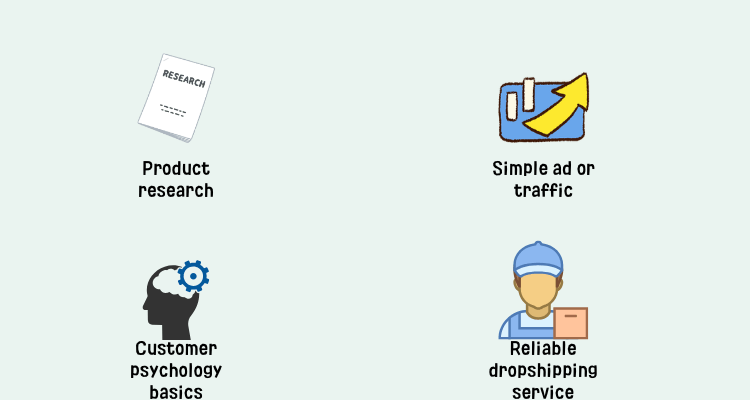
💡Product research
The product you choose often determines your results. Look for the best items to dropship that:
- Solve a clear problem
- Have steady demand
- Aren't easy to find locally
- Offer solid profit margins
- Receive positive customer feedback
To spot good opportunities, explore marketplaces, follow social media trends, study competitor stores, and use keyword research tools.
💡A simple traffic strategy
Even a great product won't sell without visibility. Before launching, decide how you'll bring in traffic. Common options include:
- TikTok organic content
- Instagram Reels
- Facebook Ads
- Google Ads
- Influencer partnerships
- SEO content
You don't need a complex plan at the start. One reliable traffic source is enough to test your idea.
💡Basic customer psychology
Understanding why people buy can make a big difference. Most buying decisions are driven by emotion first, then justified with logic. People are more likely to respond to:
- Products that solve a problem
- Convenience and ease of use
- Social proof (reviews, testimonials)
- Scarcity or limited availability
- Fear of missing out
- Aspirational lifestyles
Learning these basics helps you write better product pages, create more effective ads, and improve conversions.
💡A reliable dropshipping service
Your supplier plays a key role in customer experience.
Slow shipping, poor product quality, or stock issues can quickly hurt your reputation. That's why many sellers work with dedicated fulfillment partners like Flowpallet.
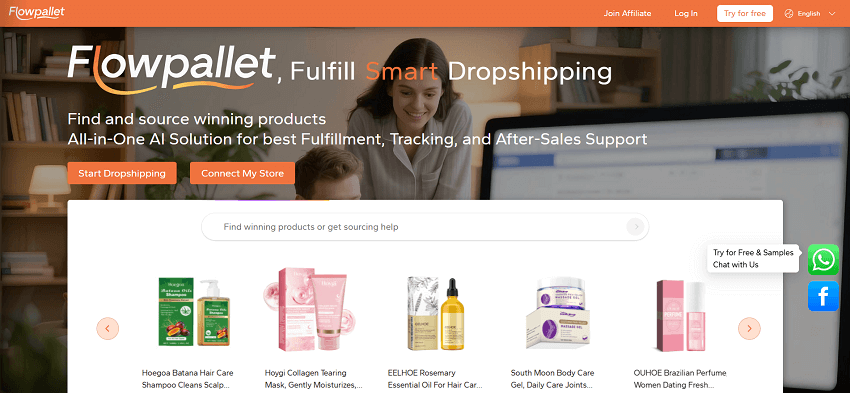
Flowpallet helps with product sourcing, inventory management, order processing, revenue summarizing, and shipping. With a reliable partner handling logistics, you can focus more on marketing and growing your store.
Moreover, it offers 3PL logistics, white labeling, private labeling, custom packaging, and so on, affiliate dropshipping program. Log in and have $10 off now~
3. How to get into dropshipping: step-by-step
Once you've done the prep work above, it's time to start building your dropshipping business.
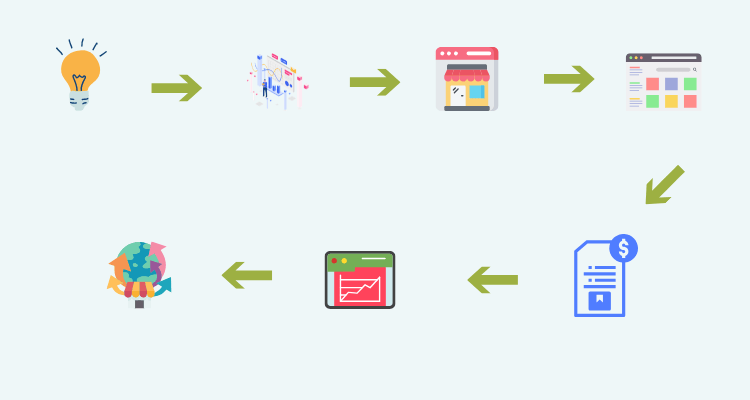
^1 Find and validate a product idea
Start with a product that solves a real problem or meets a clear need. Ask yourself:
- Would I buy this myself?
- Is it useful or different?
- Does it offer a clear benefit?
- Can I explain its value in a few seconds?
Validation matters. Don't rely on gut feeling alone.
Look for real signs of demand, such as engagement on social media, sales data on marketplaces, active competitors, and search trends.
If similar products are already selling, that's usually a good sign.
^2 Check demand and competition
Competition isn't something to avoid - it often proves there's a market. Look at:
- How many sellers offer similar products
- Pricing across competitors
- Customer feedback and reviews
- Ad activity in the space
- Gaps you could improve on
Your goal isn't to find an empty market, but to stand out with a better or more focused offer.
^3 Build a simple store
Many beginners overcomplicate this step. In most cases, simple works better. Focus on:
- Clean, easy navigation
- Mobile-friendly design
- Fast loading speed
- Clear product displays
- Secure checkout
Your store should feel trustworthy and easy to use, without unnecessary extras.
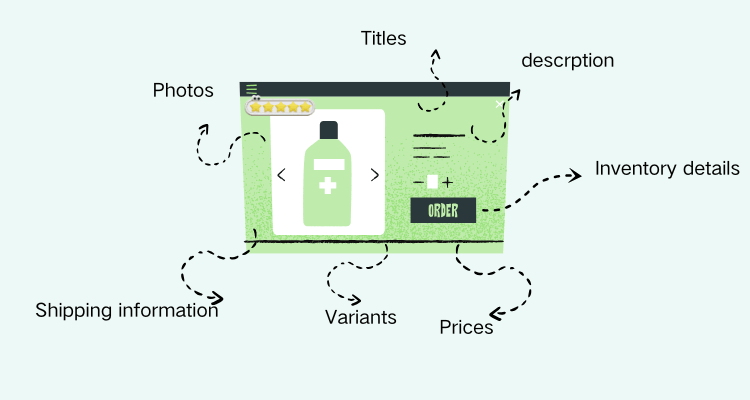
^4 Create a high-converting product page
Your product page should clearly answer one question: why buy this now? Include:
- High-quality images
- Benefit-focused descriptions
- Customer reviews
- FAQs
- Shipping details
- Clear calls to action
Avoid long technical details unless they actually help someone decide.
^5 Set up order flow and fulfillment
Before launching, test everything. Let's check:
- Order processing
- Payment systems
- Shipping setup
- Tracking updates
Catching issues early can save you a lot of trouble later. Services like Flowpallet can help simplify fulfillment and keep things running smoothly as you grow. Then you can have an easier starting process for this efficient partner.
^6 Start traffic testing
Now bring in visitors. Start small and test different creatives, audiences, and messaging. Track key metrics like:
- Click-through rate (CTR)
- Cost per click (CPC)
- Conversion rate
- Average order value
- Return on ad spend (ROAS)
At this stage, the goal isn't profit - it's learning what works.
^7 Optimize and scale
Very few stores succeed right away. Improvement comes from data. Please refine:
- Product pages
- Pricing
- Ad creatives
- Target audiences
- Upsells and bundles
Once you find what works, scale gradually by increasing your budget and expanding your product range; growth should be based on results, not guesswork.
4. Final thoughts
Dropshipping is easy to start, but real results take time.
No matter which approach you choose, the basics don't change: pick products people want, build a store they trust, bring in the right traffic, and work with reliable partners.
Don't chase quick wins. Focus on testing, learning, and improving as you go. That's how most successful stores are built. Start small, move fast, and stay consistent. If you keep refining what works, growth will follow. Lucky you~
