'/%3e%3cpath%20d='M59.9558%200H51.6287C51.6287%200%2045.5566%2034.1414%2045.7996%2039.9704C48.4659%20103.923%20122.41%2090.4886%20159.049%2075.7773L159.882%2071.6137C72.4464%20100.759%2053.2939%2059.9557%2054.1268%2039.9704C54.7163%2025.8265%2059.9558%200%2059.9558%200Z'%20fill='url(%23paint1_linear_658_5274)'/%3e%3cpath%20d='M180.7%2050.7959L180.845%2049.8037C184.282%2054.4129%20189.53%2057.458%20195.688%2057.458C206.726%2057.458%20217.339%2046.0121%20217.339%2034.9746C217.339%2023.9371%20211.722%2015.8223%20200.685%2015.8223C195.356%2015.8223%20189.544%2018.1027%20184.957%2021.7031L185.696%2016.6543H177.369L168.209%2075.7773H176.536L180.7%2050.7959ZM194.023%2049.9629C183.198%2049.1302%20183.198%2041.6353%20183.198%2037.4717C183.198%2028.3123%20190.455%2023.3157%20197.354%2023.3154C204.252%2023.3154%20208.18%2027.6155%20208.18%2034.9736C208.18%2044.1334%20200.922%2049.9627%20194.023%2049.9629Z'%20fill='%23FBFBFB'/%3e%3cpath%20d='M221.503%2050.7954C226.722%2063.8433%20244.819%2055.7917%20248.982%2050.7954C247.65%2056.7908%20255.088%2057.1796%20258.974%2056.6245L259.807%2049.1304C258.697%2049.1304%20256.476%2048.6308%20256.476%2046.6323C256.476%2044.1342%20260.451%2031.2297%20258.974%2025.814C253.978%207.49469%20228.164%2015.8221%20225.666%2024.9819L231.495%2028.312C242.32%2016.6545%20253.146%2024.9814%20249.815%2031.6431C239.823%2029.1449%20214.842%2034.1413%20221.503%2050.7954ZM248.982%2038.3052C250.648%2045.7997%20233.994%2056.6248%20229.83%2046.6323C227.054%2039.9706%20241.488%2037.4725%20248.982%2038.3052Z'%20fill='%23FBFBFB'/%3e%3cdefs%3e%3clinearGradient%20id='paint0_linear_658_5274'%20x1='333.92'%20y1='70.601'%20x2='188.194'%20y2='70.601'%20gradientUnits='userSpaceOnUse'%3e%3cstop%20stop-color='%23EB5455'/%3e%3cstop%20offset='0.0001'%20stop-color='%23EF733E'/%3e%3cstop%20offset='1'%20stop-color='%23FFD461'/%3e%3c/linearGradient%3e%3clinearGradient%20id='paint1_linear_658_5274'%20x1='139.897'%20y1='83.2717'%20x2='53.2939'%20y2='3.33085'%20gradientUnits='userSpaceOnUse'%3e%3cstop%20stop-color='%23FFD461'/%3e%3cstop%20offset='0.9999'%20stop-color='%23EF733E'/%3e%3c/linearGradient%3e%3c/defs%3e%3c/svg%3e)


How to Become a Shopify Dropshipper: Step-by-Step
FlowpalletAurora ShawSep. 10, 2026

Starting a Shopify dropshipping business sounds simple: create a store, find a supplier, add products, and start selling.
But getting consistent sales takes more than that. You need products people want, reliable dropshipping suppliers, a store customers trust, and a way to reach the right audience.
The good news? You do not need a warehouse or upfront inventory. So, how do you become a Shopify dropshipper?
The process is simple: choose a niche, find winning products and suppliers, build your Shopify store, set up fulfillment, market your products, and improve based on sales data.
This guide covers each step, along with practical tools and tips to help you get started.
1. What is a Shopify dropshipper?
A Shopify dropshipper is someone who sells products through a Shopify store without keeping inventory themselves. Instead, a third-party supplier stores, packs, and ships each order directly to the customer.
Unlike traditional e-commerce, you do not need to buy products in bulk before knowing whether they will sell.
For example, you might sell phone accessories on your Shopify store. A customer buys a phone stand for $25. You then send the order to your supplier, who charges $10 and ships the product to the customer.
Your gross margin is the difference between your selling price and product cost. It does not include other expenses, such as ad spend, Shopify fees, payment-processing fees, refunds, or returns.
The process is simple: Customer → Shopify store → Supplier → Customer
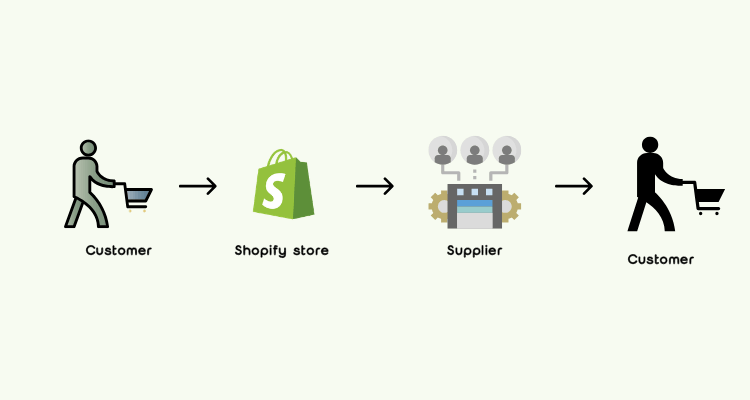
Customers place orders through your Shopify store, while the supplier handles inventory and shipping. This makes dropshipping easier to start, but it also gives you less control over stock availability, delivery times, and product quality.
2. How to become a Shopify dropshipper
Becoming a Shopify dropshipper doesn't require you to build a huge catalog from day one. A more practical approach is to start small, test your assumptions, and expand once you find something that works.
Step 1: Choose a niche
Focus on one market instead of trying to sell everything. Popular niches include:
- Home and lifestyle
- Beauty and personal care
- Pet products
- Fitness accessories
- Outdoor gear
- Hobby and craft supplies
- Fashion accessories
A good dropshipping niche should have enough customers while still giving your store a clear identity. Look for products that solve a problem, save time, make life easier, or appeal to a specific interest.
Step 2: Research products
Once you have a niche, start looking for products with real potential. Check:
- Search demand
- Social media trends
- Competitor stores
- Customer reviews
- Selling prices
- Supplier costs
- Shipping times
- Product size and weight
- Potential profit margins
Do not rely on one platform. A product may go viral on TikTok but have little long-term demand. On the other hand, a product with steady search demand may be more reliable even if it is not trending.
The goal is not to find something that looks popular. It is to find a product with demand, reasonable costs, and room for profit.
Step 3: Find a reliable supplier
Your supplier can make or break a dropshipping business. Before committing to one, check:
- Product quality
- Processing time
- Shipping options
- Tracking availability
- Communication speed
- Return and refund policies
- Inventory stability
- Customization options
- Order fulfillment capacity
If possible, order a sample first. Supplier photos can look great, but the real product, packaging, and delivery speed may be very different. Testing it yourself helps you avoid problems before customers experience them.
Step 4: Build your Shopify store
Create your Shopify store and choose a clean theme that fits your niche. At minimum, your store should have:
- A clear homepage
- Product pages
- About page
- Contact page
- Shipping information
- Return and refund policy
- Privacy policy
- Terms of service
Your product pages matter most. They should quickly explain:
- What the product is
- Why it is useful
- Why customers should buy it from your store
Avoid copying the supplier's description. Write clear, original copy that focuses on benefits, common concerns, delivery details, and what makes the product worth buying.
Step 5: Set up fulfillment
You can fulfill orders manually at the beginning, but it becomes time-consuming as sales grow.
A Shopify-compatible dropshipping or fulfillment tool can help sync:
- Products
- Inventory
- Orders
- Shipping details
- Tracking numbers
Automation reduces manual work and lowers the risk of missed orders or incorrect tracking information.
Step 6: Price for profit
After adding products to Shopify, do not price a product by adding a small markup to the supplier's cost.
Your real costs may include:
Product cost + shipping + payment fees + Shopify fees + advertising + returns = total cost
For example, a product that costs $8 with $3 shipping may seem profitable at $15. But if it costs another $5 to acquire a customer through ads, there may be little profit left.
Focus on your contribution margin, not just the difference between your selling price and supplier price.
Step 7: Launch and market your store
Once your store is ready, you need traffic. Common marketing channels include:
- SEO
- TikTok
- YouTube
- Google Ads
- Influencer marketing
- Email marketing
- Affiliate marketing
You do not need to use every channel at once. Start with one or two channels that match your product and audience, then focus on the ones that bring profitable sales.
Step 8: Test, measure, and improve
Your first product may not work perfectly, and that is normal. Track key metrics such as:
- Website traffic
- Conversion rate
- Customer acquisition cost
- Average order value
- Gross margin
- Refund rate
- Repeat purchase rate
If people visit but do not buy, review your product page, pricing, customer reviews, shipping information, and checkout process.
If people buy but profits are low, look closely at your product costs, shipping fees, and ad spend.
The data will show you what needs to improve.
3. Shopify dropshipping with Flowpallet
Finding products is only one part of running a dropshipping business. Once orders start coming in, sourcing, fulfillment, shipping, and after-sales support become just as important.
This is where a full-service platform such as Flowpallet can fit into a Shopify dropshipping workflow.
Flowpallet provides services covering seamless products sourcing, wholesale buying, automated order fulfillment, logistics, and after-sales support, helping Shopify sellers manage more of the supply chain through one platform.
For sellers who want more control over their brand, Flowpallet also supports options such as custom packaging, POD dropshipping, ODM customization, and bulk purchasing.
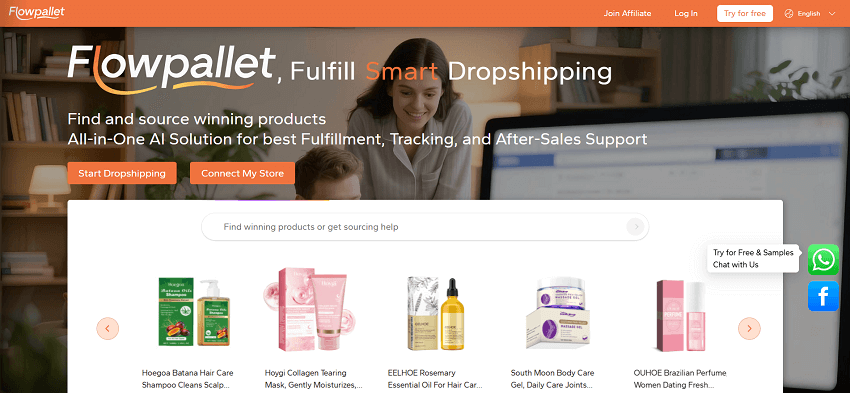
The workflow can look like:
Shopify Store → Flowpallet → Supplier & Fulfillment → Customer
This can be particularly useful when you're moving beyond basic product testing and want to build a more recognizable ecommerce brand.
For example, you might start by testing a product through standard dropshipping. Once you have consistent sales, you could explore custom packaging or product customization instead of continuing to sell the exact same product as dozens of competitors.
That transition - from simply reselling products to building a differentiated brand - is one of the ways a dropshipping business can become more sustainable over time.
4. Recommended Shopify dropshipping tools
You do not need dozens of apps to start a Shopify dropshipping business. Too many tools can slow down your store, increase costs, and make your workflow harder to manage.
Start with a simple tool stack that supports the parts of your business that matter most.
Shopify
Shopify is the foundation of your store. You can use it to manage products, orders, payments, customers, and your storefront in one place.
Product research tools
Product research tools can help you find product ideas, track trends, study competitors, and estimate demand.
However, do not treat tool data as the final answer. Use it as a starting point, then check customer reviews, search demand, pricing, and supplier costs yourself.
Supplier and fulfillment platforms
A sourcing or fulfillment platform can help you find suppliers, source products, manage inventory, process orders, and arrange shipping.
This becomes more useful as your order volume grows, especially when manual fulfillment starts taking too much time.
Google Analytics and Search Console
Google Analytics and Google Search Console help you understand how people find your store and what they do after they arrive.
They can show you where your traffic comes from, which pages get the most visits, and which keywords bring organic search traffic.
SEO tools
Tools like Ahrefs and Semrush can support:
- Keyword research
- Competitor analysis
- Backlink research
- Content planning
- Search performance tracking
You do not need to learn every feature at once. Start with keyword research and competitor analysis, then use the insights to create better product pages and blog content.
Email marketing tools
Email marketing helps you recover abandoned carts, follow up after a purchase, and encourage repeat orders.
It can be especially valuable for products customers buy regularly, such as beauty products, pet supplies, or everyday accessories.
Hope these tools or tips can help you a lot.
5. Final thoughts
Becoming a Shopify dropshipper is technically easy. Building a profitable business takes more work.
Your Shopify store is only one part of the process. Product selection, supplier reliability, fulfillment, pricing, marketing, and customer experience all affect your results.
If you are starting from scratch, do not try to build a huge store right away. Pick a focused niche, test a few products, work with reliable suppliers, and use real customer data to decide what to scale.
This approach is more sustainable than uploading hundreds of products and hoping one of them sells.
