


[Full Guide] How to Find a Reliable ODM Supplier?
FlowpalletAurora ShawNov. 9, 2026

If you've ever dreamed of launching your own product without starting from zero, ODM could be the answer.
In e-commerce and global manufacturing, ODM stands for Original Design Manufacturer. It's a business model where a manufacturer designs and produces products that other companies can rebrand and sell as their own.
Today, ODM is everywhere. From skincare and electronics to pet products and home goods, many popular brands rely on ODM suppliers to speed up product development and reduce costs.
For startups, dropshippers, Amazon sellers, and growing ecommerce brands, ODM offers a faster way to enter the market compared to building a completely custom product. Let's explore what ODM is.
What is ODM? How ODM works?
ODM, or Original Design Manufacturer, refers to a company that creates ready-made product designs available for other businesses to customize, brand, and sell under their own name.
Rather than building a product from scratch, you simply choose an existing design from the manufacturer and make adjustments such as:
- Logo placement
- Packaging
- Colors
- Materials
- Features
- Overall branding.
The manufacturer then produces it for you. You can see how ODM works here:
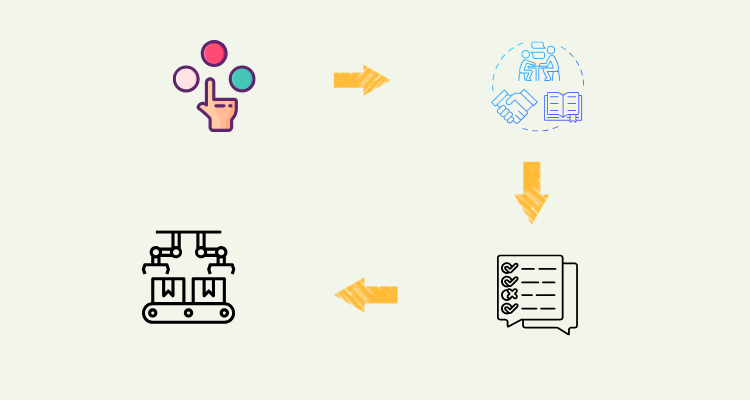
1. Choose a product
ODM manufacturers maintain catalogs of existing designs and samples. You browse and pick what fits your market — for example, a skincare brand selecting a serum formula, a fitness brand choosing a resistance band set, or a home goods brand going with a portable humidifier design.
2. Customize the product
Once you've chosen a design, you can personalize it with your brand logo, packaging, color options, accessories, labels, and instruction manuals. Some suppliers also allow minor feature adjustments.
3. Approve samples
Before production begins, the supplier sends samples for you to review. This is a critical step - it lets you check quality, test functionality, evaluate packaging, and catch any manufacturing issues before they scale.
4. Mass production
Once samples are approved, full-scale production begins. Finished products are then shipped to your warehouse, Amazon FBA centers, third-party logistics providers, or, in some cases, directly to customers.
ODM manufacturing has become popular because it helps businesses:
- Launch products faster
- Reduce development costs
- Avoid expensive R&D
- Test markets with lower risk
- Focus more on branding and marketing
For many e-commerce brands, speed matters more than inventing an entirely new product.
ODM vs OEM vs Private label
ODM, OEM, and private label are often used interchangeably - but they're not the same thing. Here's a clear breakdown of how each one works.
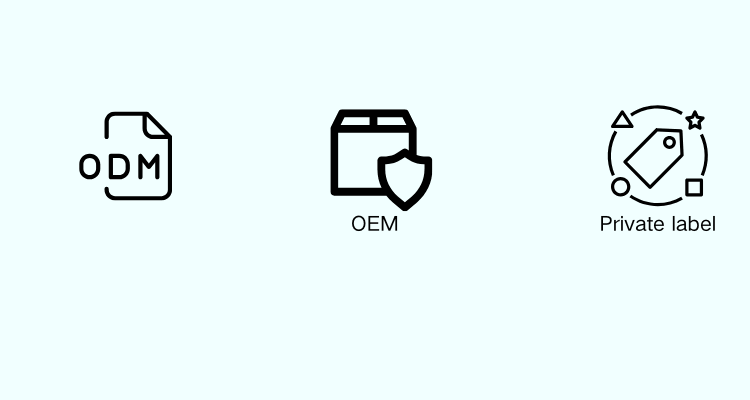
ODM (Original design manufacturer)
With ODM, the manufacturer already owns the product design. You come in, customize it, add your branding, and it's ready to sell. Because the groundwork is already done, development time is shorter, and costs are generally lower.
🔑Best for: Startups, ecommerce sellers, and anyone looking to launch quickly.
Example: A supplier already makes a portable blender - you add your logo and design custom packaging.
OEM (Original equipment manufacturer)
OEM works the other way around. You bring your own product concept or specifications, and the factory builds it for you. You typically own the design, which means more control - but also more responsibility. Expect a higher investment, longer development timelines, and a fair amount of technical planning and testing.
🔑Best for: Established brands, businesses developing truly unique products, and companies with larger budgets.
Example: You design a brand-new smartwatch from scratch and hire a factory to manufacture it.
Private label
Private label sits close to ODM but involves even fewer changes. The product itself stays largely the same - only the branding and packaging are swapped out. This also means multiple brands may end up selling virtually identical products.
🔑Best for: Straightforward e-commerce businesses, beauty brands, and grocery or household product sellers.
Example: Several coffee brands sell the same beans in different packaging.
Quick summary
| ODM | OEM | Private Label | |
|---|---|---|---|
| Design ownership | Manufacturer | You | Manufacturer |
| Customization | Moderate | High | Minimal |
| Cost | Low-medium | High | Low |
| Time to market | Fast | Slow | Fastest |
| Best for | Startups & e-commerce | Established brands | Simple product launches |
Advantages and disadvantages of ODM
ODM can be extremely helpful, but it also comes with trade-offs.
| Aspect | Pros | Cons |
|---|---|---|
| Product development speed | Products are already designed and tested, allowing brands to launch much faster. | Faster launches may also mean less opportunity to create highly differentiated products. |
| Cost efficiency | Businesses can save significantly on R&D, engineering, prototyping, and testing expenses. | Lower upfront costs can sometimes come with compromises in customization flexibility. |
| Ease of entry | ODM is beginner-friendly and ideal for startups, e-commerce sellers, and small brands with limited technical expertise. | New sellers may enter highly competitive markets where similar products already exist. |
| Customization options | Many suppliers allow branding changes such as logos, packaging, colors, and minor feature adjustments. | Core product structures are usually controlled by the manufacturer, limiting deeper customization. |
| Intellectual property | ODM reduces the burden of creating proprietary designs internally. | Similar or nearly identical products may be sold to multiple brands, reducing exclusivity. |
Hope this table could help you.
How to find reliable manufacturers
Choosing the right ODM manufacturer can make or break your business. Here are practical ways to find trustworthy suppliers.
1️⃣Use trusted B2B platforms
Popular sourcing platforms include: Alibaba, Global Sources, Made-in-China, Thomasnet…
These platforms allow you to compare:
- Certifications
- Reviews
- Product categories
- Factory capabilities
- Minimum order quantities
2️⃣Check factory experience
A reliable ODM supplier should have:
- Several years of manufacturing experience
- Product specialization
- Clear communication
- Export experience
Ask questions like:
- How long have you produced this product?
- Which countries do you export to?
- What certifications do you have?
- Can you provide test reports?
3️⃣Request samples
Never skip sampling. A product may look great in photos but feel completely different in reality. Test build quality, packaging, durability, functionality, materials, and so on.
4️⃣Start small
Avoid placing huge orders immediately.
Start with:
- Small MOQs
- Trial orders
- Pilot launches
This reduces risk before scaling.
5️⃣Use tools to simplify fulfillment
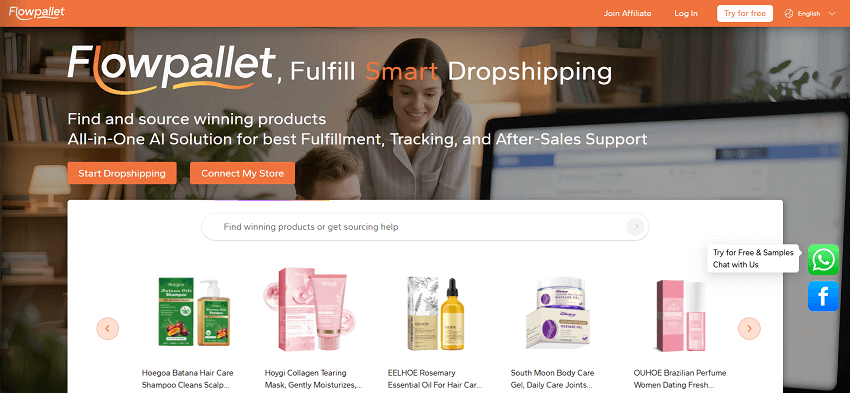
Managing sourcing, inventory, and fulfillment across multiple suppliers can quickly become complicated. That's where Flowpallet can help.
Flowpallet not only provides e-commerce order fulfillment and supply chain solutions, but also supports brands with sourcing and ODM product development services. This allows online sellers to find suitable manufacturers, customize products, manage production, and handle global fulfillment in one streamlined workflow.
For brands working with ODM manufacturers, Flowapllet helps improve:
- Shipping speed
- 3PL logistics
- Inventory management
- Order tracking
- International logistics
- Customer experience
This becomes especially valuable as your order volume grows.
Final words
ODM is one of the quickest, most practical ways to launch a product today - no years of development required. Beginners get a lower-risk entry into e-commerce. Established brands get a faster way to expand.
But finding a cheap supplier isn't enough. Good luck to you.
