'/%3e%3cpath%20d='M59.9558%200H51.6287C51.6287%200%2045.5566%2034.1414%2045.7996%2039.9704C48.4659%20103.923%20122.41%2090.4886%20159.049%2075.7773L159.882%2071.6137C72.4464%20100.759%2053.2939%2059.9557%2054.1268%2039.9704C54.7163%2025.8265%2059.9558%200%2059.9558%200Z'%20fill='url(%23paint1_linear_658_5274)'/%3e%3cpath%20d='M180.7%2050.7959L180.845%2049.8037C184.282%2054.4129%20189.53%2057.458%20195.688%2057.458C206.726%2057.458%20217.339%2046.0121%20217.339%2034.9746C217.339%2023.9371%20211.722%2015.8223%20200.685%2015.8223C195.356%2015.8223%20189.544%2018.1027%20184.957%2021.7031L185.696%2016.6543H177.369L168.209%2075.7773H176.536L180.7%2050.7959ZM194.023%2049.9629C183.198%2049.1302%20183.198%2041.6353%20183.198%2037.4717C183.198%2028.3123%20190.455%2023.3157%20197.354%2023.3154C204.252%2023.3154%20208.18%2027.6155%20208.18%2034.9736C208.18%2044.1334%20200.922%2049.9627%20194.023%2049.9629Z'%20fill='%23FBFBFB'/%3e%3cpath%20d='M221.503%2050.7954C226.722%2063.8433%20244.819%2055.7917%20248.982%2050.7954C247.65%2056.7908%20255.088%2057.1796%20258.974%2056.6245L259.807%2049.1304C258.697%2049.1304%20256.476%2048.6308%20256.476%2046.6323C256.476%2044.1342%20260.451%2031.2297%20258.974%2025.814C253.978%207.49469%20228.164%2015.8221%20225.666%2024.9819L231.495%2028.312C242.32%2016.6545%20253.146%2024.9814%20249.815%2031.6431C239.823%2029.1449%20214.842%2034.1413%20221.503%2050.7954ZM248.982%2038.3052C250.648%2045.7997%20233.994%2056.6248%20229.83%2046.6323C227.054%2039.9706%20241.488%2037.4725%20248.982%2038.3052Z'%20fill='%23FBFBFB'/%3e%3cdefs%3e%3clinearGradient%20id='paint0_linear_658_5274'%20x1='333.92'%20y1='70.601'%20x2='188.194'%20y2='70.601'%20gradientUnits='userSpaceOnUse'%3e%3cstop%20stop-color='%23EB5455'/%3e%3cstop%20offset='0.0001'%20stop-color='%23EF733E'/%3e%3cstop%20offset='1'%20stop-color='%23FFD461'/%3e%3c/linearGradient%3e%3clinearGradient%20id='paint1_linear_658_5274'%20x1='139.897'%20y1='83.2717'%20x2='53.2939'%20y2='3.33085'%20gradientUnits='userSpaceOnUse'%3e%3cstop%20stop-color='%23FFD461'/%3e%3cstop%20offset='0.9999'%20stop-color='%23EF733E'/%3e%3c/linearGradient%3e%3c/defs%3e%3c/svg%3e)


How to Do Dropshipping for Beginners (Step-by-Step)
FlowpalletAurora ShawJun. 11, 2026

Starting an online business can be overwhelming, especially when you're worried about inventory, shipping, and upfront costs. This is where dropshipping comes in - a model that allows you to sell products without ever holding stock.
If you are new to e-commerce, this guide will walk you through everything you need to know to start dropshipping for beginners confidently and successfully.
1. What is dropshipping & how does dropshipping work?
Dropshipping is a retail fulfillment method where the seller doesn't keep products in stock. It's like being a middleman — you focus on marketing and sales, while someone else handles stock and shipping. You make a profit from the difference between the retail price and the supplier's price.
How does dropshipping work? In short, it works in simple steps:
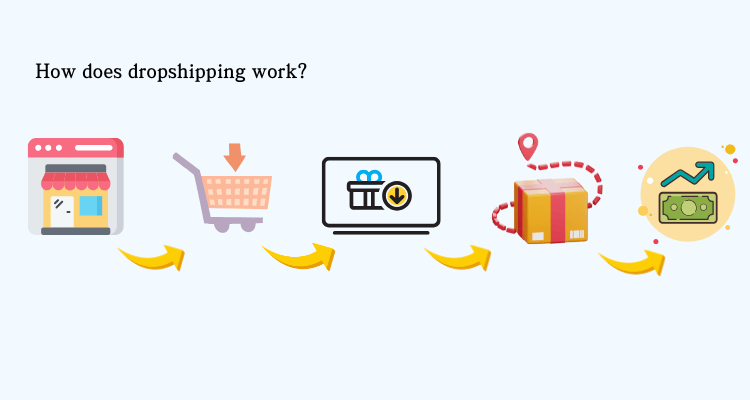
- You set up an online store and list products for sale.
- A customer orders a product from your store.
- You forward the order to your dropshipping supplier.
- The supplier ships the product directly to your customer.
- You keep the difference between your selling price and the supplier's cost.
Platforms and tools now make it easier than ever to connect with reliable suppliers, automate inventory updates, and streamline order fulfillment—allowing you to focus on marketing, customer experience, and growing your store.
2. Dropshipping for beginners: Is it ideal?
Dropshipping is a great way for newcomers to break into e-commerce, as it removes major startup hurdles. There's no need to buy stock upfront, pay for storage, or manage shipping. This lets you experiment with products and markets while keeping financial risk low.
It's also highly flexible—you can run your store from anywhere with an internet connection, making it ideal for side hustles or aspiring entrepreneurs looking for location-independent income.
That said, dropshipping isn't a shortcut to easy money. You still must choose products wisely, put effort into marketing, and provide reliable customer service. Margins are often slimmer than in traditional retail, and crowded niches mean stiff competition.
Therefore, for dropshipping for beginners, the key is to approach dropshipping as a learning process: start small, test products, monitor results, and gradually refine your strategy. With the right approach, dropshipping can be both a practical entry point into e-commerce and a scalable business model.
3. Dropshipping for beginners: Pros and cons
Before diving into the practical steps of starting a dropshipping business, it's important to understand its advantages and challenges. Knowing the pros and cons helps beginners set realistic expectations and plan strategies to overcome common obstacles:
| Pros | Cons |
|---|---|
| Low upfront investment | Lower profit margins compared to traditional retail |
| Easy to scale quickly | Dependence on suppliers for product quality and shipping speed |
| Wide product selection without storage worries | Higher competition in popular niches |
| Flexible work location | Less control over fulfillment |
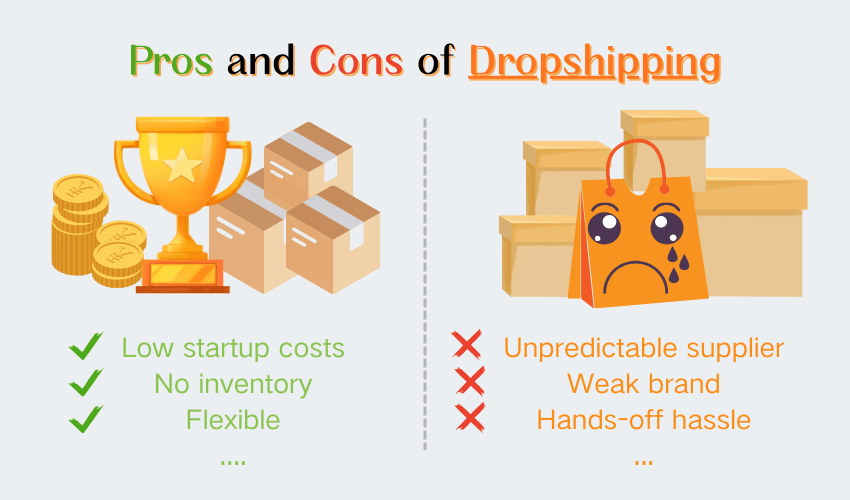
Understanding these pros and cons helps set realistic expectations and avoid early pitfalls.
4. Dropshipping for beginners: How to do it
Starting a dropshipping store may seem complicated at first, but when broken down into clear steps, the process becomes much more manageable. The key is to follow a logical order and avoid rushing into product listings without preparation.
#01 Choose your niche and products carefully
Your choice of niche defines your target audience and shapes your entire marketing strategy. Rather than offering unrelated items, specialize in a defined area—like pet supplies, home organization, fitness equipment, or beauty tools. A focused niche enables you to develop a stronger brand identity and simplifies your marketing efforts.
Aim for niches with consistent demand, opportunities to stand out from competitors, and products that meet real customer needs.
#02 Find reliable suppliers
A good supplier is the backbone of your dropshipping business. Product quality, shipping speed, and consistency all depend on them. This is why many dropshipping beginners struggle when they choose suppliers randomly or rely on unreliable sources.
Using a platform like Flowpallet removes much of this uncertainty. Flowpallet connects you with vetted suppliers and ready-to-ship products, while also handling the operational side of dropshipping—product sourcing and order fulfillment—all in one place.
Instead of juggling multiple tools, spreadsheets, and supplier communications, beginners can manage everything through this single system, Flowpallet. This not only saves time but also reduces common mistakes such as not sourcing wanted items or delaying orders. With direct integrations to Shopify and WooCommerce, products and orders stay automatically synchronized, allowing you to focus more on marketing and growing your store rather than dealing with backend logistics.
#03 Set up your online store
Choose an e-commerce platform such as Shopify or WooCommerce to build your store. Keep the design clean and professional. Focus on easy navigation, clear product pages, and a smooth checkout experience.
When designing your store, simplicity works best. Avoid cluttered layouts or too many colors. A clean homepage, clear menu structure, and well-organized product categories help visitors find what they need quickly. Your product pages should include high-quality images, easy-to-read descriptions, pricing, shipping information, and trust signals such as reviews or guarantees.
With Flowpallet integration, you can import products directly into your store, source your wanted items, and orders are synced automatically.
#04 Add products and set smart pricing
A common beginner mistake is adding too many products at once. Instead, start with a small, carefully selected range of items that fit your niche and solve specific customer problems. A focused product catalog makes your store look more professional and easier to market.
For each product, write descriptions that highlight benefits rather than just features. Use clear, persuasive language to explain how the product improves the customer's life. Pair this with high-quality images or videos that show the product in use.
Pricing is another area where many beginners struggle. You need to consider not only the product cost, but also shipping fees, transaction fees, and future advertising expenses. Setting prices too low may attract customers but leave you without profit, while pricing too high can reduce conversions.
Read more: How to price a product?
#05 Launch your store and start marketing
Once your store is ready, the real work begins—bringing traffic to it. No matter how well-designed your store looks, it won't generate sales without visitors. Marketing is what turns your store from a website into a business.
Start with platforms where your target audience spends time. Short-form videos on TikTok, Instagram Reels, and YouTube Shorts are especially effective for beginners because they allow you to showcase products in action. You can also collaborate with small influencers in your niche to gain trust and reach potential customers faster.
If you plan to use paid ads, begin with a small budget. Test different product creatives, headlines, and audiences instead of putting all your budget into one campaign. Once you find a product and ad that performs well, you can gradually scale your budget.
#06 Manage orders and customer experience
As orders start coming in, smooth fulfillment and responsive customer service become critical. While Flowpallet automates the backend process—handling sourcing, direct products importing, shipping, and tracking—you are still responsible for the customer's overall experience.
Make it a habit to check orders daily and monitor shipping status so you can update customers proactively if needed. Fast responses to emails, messages, or comments build trust and reduce refund requests.
A good customer experience doesn't just solve problems - it creates repeat buyers and word-of-mouth referrals, which are invaluable for long-term growth.
5. Dropshipping for beginners: tips to succeed faster
Before diving into advanced strategies, it's helpful to understand the practical habits that can speed up your progress:
- Focus on a specific niche: Don't spread yourself too thin.
- Test multiple products: Identify what sells best before investing heavily.
- Leverage automation: Tools like Flowpallet save time on order management and inventory tracking.
- Optimize your store: High-quality images, clear product descriptions, and smooth checkout improve conversions.
- Monitor competitors: Learn from other sellers but differentiate your brand.
Starting small, staying consistent, and using smart tools can accelerate your success in dropshipping.
6. Conclusion
Dropshipping is one of the most accessible ways to start an online business, especially for beginners. With low upfront costs, flexible operation, and the right tools like Flowpallet, you can turn your dropshipping ideas into a profitable store.
By choosing the right niche, working with reliable suppliers, and focusing on marketing and customer experience, success becomes much more achievable. Hope you can smoothly start this business.
