


How to Choose Your Needed Dropshipping Solution?
FlowpalletAurora ShawOct. 13, 2026

If you have tried dropshipping before, you already know that the idea of dropshipping is simple, but execution is where things get messy. Finding reliable suppliers, keeping shipping times reasonable, and avoiding order mistakes can quickly turn a "low-risk" business into a daily headache.
That's where dropshipping solutions are needed. Instead of juggling multiple tools, suppliers, and spreadsheets, modern solutions like automated dropshipping aim to centralize and streamline the entire process - from product sourcing to order fulfillment.
In this guide, you can see what a dropshipping solution really is and how to choose one that actually works nowadays.
Part 1: What is a dropshipping solution & common problems?
A dropshipping solution is a system, platform, or service that helps you manage key parts of your business, typically including product sourcing, inventory syncing, order pick and pack fulfillment, and shipping.
It's designed to replace the fragmented setup many beginners start with. When starting dropshipping, you may encounter these problems:
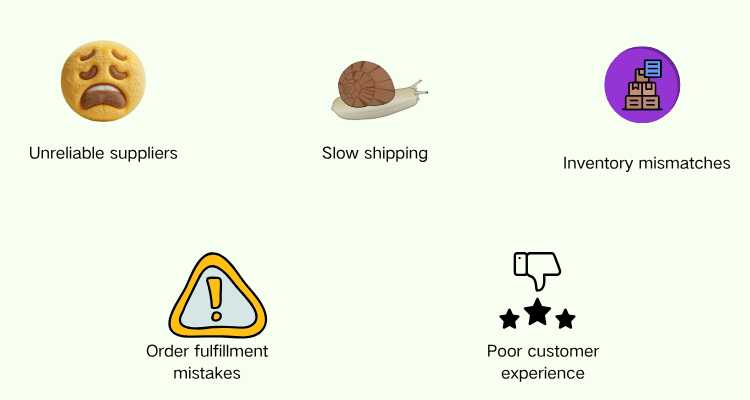
1️⃣Unreliable suppliers
Product quality can vary, and stock levels aren't always accurate. This leads to refunds, complaints, and bad reviews.
2️⃣Slow shipping
Overseas suppliers often have long delivery times. This kills sales and makes customers unhappy.
3️⃣Inventory mismatches
Selling out-of-stock products is more common than you'd expect when systems aren't synced in real time.
4️⃣Order fulfillment mistakes
Doing order work by hand easily leads to wrong products, incorrect addresses, and shipping delays.
5️⃣Poor customer experience
When things go wrong, you're the one customers blame - even if the supplier caused the issue.
A reliable dropshipping solution or tool can greatly cut down or completely fix all these troubles.
Part 2: How to judge an effective dropshipping solution
Not all tools are created equal. A good dropshipping solution should actually make your operations smoother, not just add another monthly subscription.
Here are some main features that matter most:
| Features | Details |
|---|---|
| Automated order processing | Orders should flow directly from your store to the supplier or fulfillment center without manual input. |
| Real-time inventory updates | Stock levels need to sync automatically to prevent overselling. |
| Faster and more reliable shipping | Look for solutions that offer local warehouses or optimized shipping lines. |
| Product sourcing support | Instead of relying on random marketplace listings, better solutions help you find stable, scalable products. |
| Quality control | Some providers inspect products before shipping, reducing returns and complaints. |
| Platform integration | Seamless connection with platforms like Shopify or WooCommerce is essential. |
| Data tracking and analytics | You should be able to monitor order status, delivery times, and performance without digging through multiple tools. |
In short, a strong solution removes friction and gives you more control, without adding complexity.
Part 3: Types of dropshipping solutions
There isn't a one-size-fits-all approach. Most dropshipping solutions fall into a few categories:
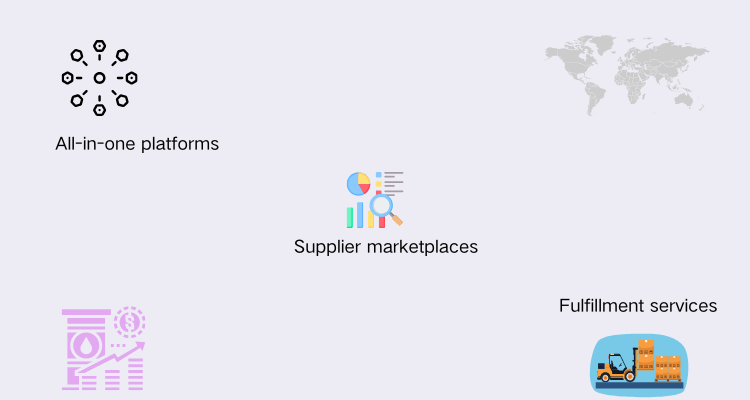
Type 1: All-in-one platforms
These tools try to handle everything - product import, order automation, and supplier connections.
They're beginner-friendly but can feel limiting as you scale.
Type 2: Supplier marketplaces
Platforms like AliExpress connect you directly with suppliers.
They offer a huge product variety, but you'll often deal with inconsistent quality and slower shipping.
Type 3: Fulfillment services
This is the point where many sellers start rethinking their setup. Private agents or fulfillment services act as a middle layer between you and manufacturers. Instead of dealing with dozens of suppliers, you work with one partner who handles sourcing, warehousing, and shipping.
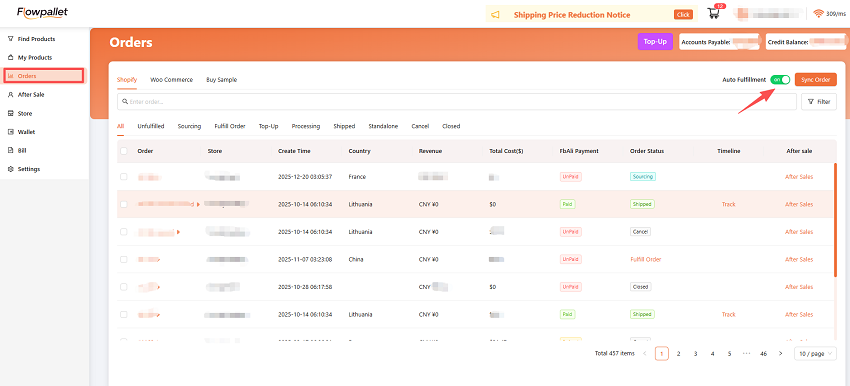
Services like Flowpallet are built around this model. Rather than acting as just a supplier directory, they function more like a backend team for your store.
For example, instead of relying on random listings, you can source more stable products with consistent quality. Orders can be processed in bulk, checked before shipping, and sent through more optimized logistics routes.
Another difference is communication. When you're dealing with multiple suppliers, even small issues can take hours (or days) to resolve. With a dedicated fulfillment partner, support tends to be more direct and aligned with your business goals.
Compared to open marketplaces, this approach gives you more control and stability, especially once you start scaling.
Part 3: Recommended dropshipping fulfillment solution
There's no shortage of dropshipping tools out there, but in practice, most sellers end up comparing a few well-known options. Each one solves a slightly different problem, so the "best" choice really depends on your stage and priorities.
Here are some commonly used solutions, and how they compare in real-world use.
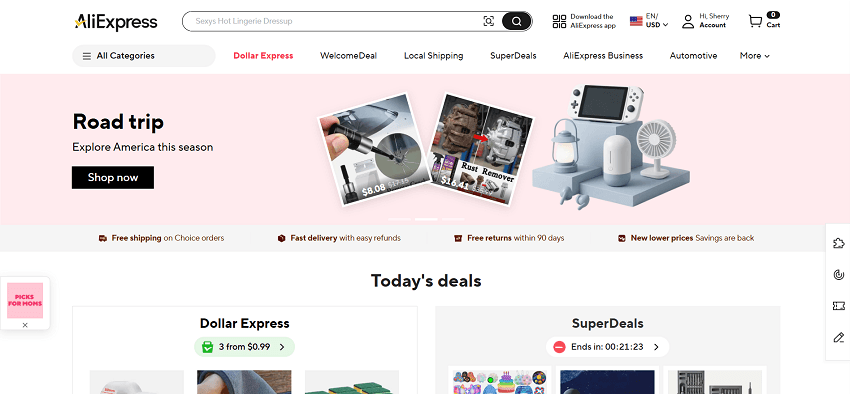
Recommendation 1: AliExpress
AliExpress is still one of the most accessible ways to start dropshipping.
You get instant access to a massive range of products, and it's easy to connect with platforms like Shopify. For beginners who want to test multiple products quickly without upfront investment, it does the job.
That said, the downsides are pretty well known. Shipping times can be long and inconsistent, product quality varies from supplier to supplier, and communication isn't always smooth. Once you start getting regular orders, these issues tend to show up more often.
🔑Good for testing ideas, but not ideal for building a long-term, stable operation.
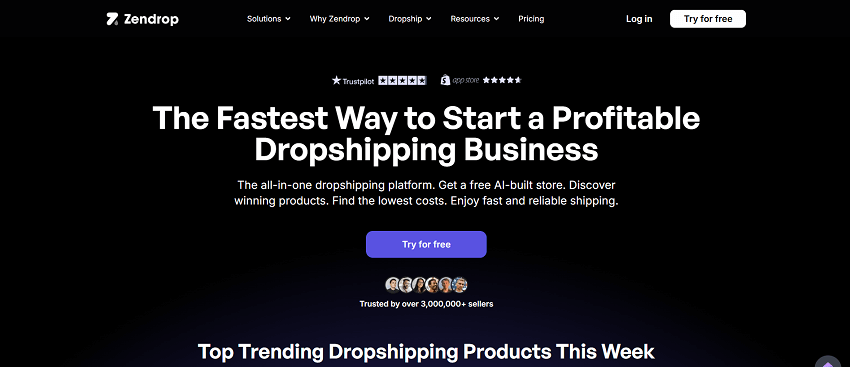
Recommendation 2: Zendrop
Zendrop focuses more on automation and ease of use.
The interface is clean, integrations are straightforward, and it's designed to reduce manual work. This makes it appealing for beginners who want a smoother setup without dealing with too many moving parts.
On the flip side, it's still dependent on its supplier network, which means less control over sourcing and fulfillment compared to more customized solutions.
🔑Great for simplifying workflows, but not the most flexible for advanced scaling.
Recommendation 3: Flowpallet
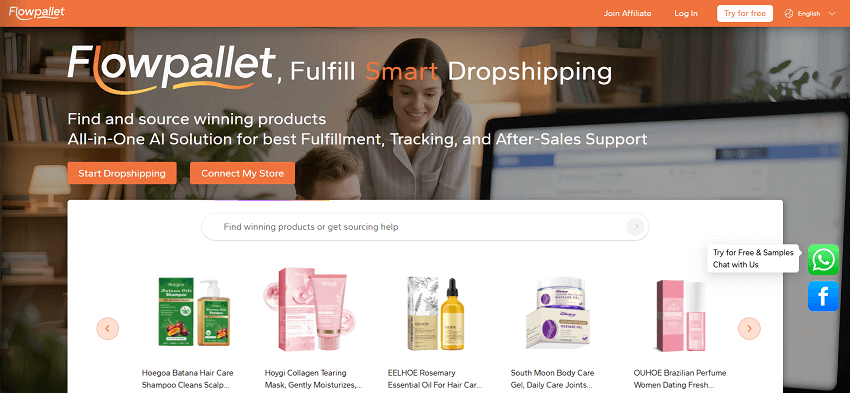
Flowpallet sits in a slightly different category compared to the tools above.
Instead of acting as a marketplace or just an automation layer, it works more like a dedicated fulfillment partner. With it, you can:
- Simplify day-to-day operations
- Monitor store revenue data conveniently
- Reduce fulfillment errors
- Maintain more consistent product sourcing quality
- Know each item's inventory
- Own the chances for customized packaging or branded options
That said, Flowpallet may not be necessary if you're still in the early testing phase. It's more suited to sellers who already have some traction and want to improve consistency, speed, and overall reliability.
🔑Less about quick product testing, more about building a scalable and stable fulfillment system.
Part 4: Bonus: Best practices for maximizing your dropshipping solution
No matter which dropshipping solution you choose, the tool itself is only part of the equation. Here are a few practical ways to get more out of your setup.
1. Focus on fewer, better products
One common mistake is trying to manage too many products at once.
Even with a good solution, spreading your attention too thin can lead to inconsistent results. It's usually more effective to double down on a few products that are already showing traction, and then optimize everything around them—supplier, shipping, and customer experience.
2. Prioritize supplier stability over price
In the dropshipping space, going for the cheapest option rarely pays off long-term.
Paying a little more for your items is completely reasonable if it means steady product quality and fewer return or refund requests.
Instead of jumping from one supplier to another nonstop, teaming up with a dedicated fulfillment partner like Flowpallet brings more stability and cuts down on unexpected disruptions.
3. Keep shipping times predictable
Customers don't just care about speed; they care about certainty. If your delivery estimates are unreliable, it creates friction even before the order is placed.
Even small improvements here can have a noticeable impact on conversion rates and customer satisfaction.
4. Automate what actually saves time
Automation is useful, but not everything needs to be automated.
Focus on the parts that reduce repetitive work, like order processing, tracking updates, and inventory syncing. Over-automating without understanding your workflow can sometimes create more confusion than clarity.
5. Review and adjust regularly
What works at one stage of your business might not work later.
It's worth reviewing your setup every so often, your suppliers, shipping performance, and overall workflow. Many sellers start with basic tools and gradually move toward more stable fulfillment solutions as their needs change.
Part 5: Closing Thought
A dropshipping solution should make your business easier to run, not more complicated.
The goal isn't to stack as many tools as possible, but to build a system that's reliable, manageable, and aligned with your growth stage. When that happens, everything else, from marketing to customer experience, becomes easier to improve.
Dropshipping may look simple, but patience and persistence often make the biggest difference. Good luck~
