'/%3e%3cpath%20d='M59.9558%200H51.6287C51.6287%200%2045.5566%2034.1414%2045.7996%2039.9704C48.4659%20103.923%20122.41%2090.4886%20159.049%2075.7773L159.882%2071.6137C72.4464%20100.759%2053.2939%2059.9557%2054.1268%2039.9704C54.7163%2025.8265%2059.9558%200%2059.9558%200Z'%20fill='url(%23paint1_linear_658_5274)'/%3e%3cpath%20d='M180.7%2050.7959L180.845%2049.8037C184.282%2054.4129%20189.53%2057.458%20195.688%2057.458C206.726%2057.458%20217.339%2046.0121%20217.339%2034.9746C217.339%2023.9371%20211.722%2015.8223%20200.685%2015.8223C195.356%2015.8223%20189.544%2018.1027%20184.957%2021.7031L185.696%2016.6543H177.369L168.209%2075.7773H176.536L180.7%2050.7959ZM194.023%2049.9629C183.198%2049.1302%20183.198%2041.6353%20183.198%2037.4717C183.198%2028.3123%20190.455%2023.3157%20197.354%2023.3154C204.252%2023.3154%20208.18%2027.6155%20208.18%2034.9736C208.18%2044.1334%20200.922%2049.9627%20194.023%2049.9629Z'%20fill='%23FBFBFB'/%3e%3cpath%20d='M221.503%2050.7954C226.722%2063.8433%20244.819%2055.7917%20248.982%2050.7954C247.65%2056.7908%20255.088%2057.1796%20258.974%2056.6245L259.807%2049.1304C258.697%2049.1304%20256.476%2048.6308%20256.476%2046.6323C256.476%2044.1342%20260.451%2031.2297%20258.974%2025.814C253.978%207.49469%20228.164%2015.8221%20225.666%2024.9819L231.495%2028.312C242.32%2016.6545%20253.146%2024.9814%20249.815%2031.6431C239.823%2029.1449%20214.842%2034.1413%20221.503%2050.7954ZM248.982%2038.3052C250.648%2045.7997%20233.994%2056.6248%20229.83%2046.6323C227.054%2039.9706%20241.488%2037.4725%20248.982%2038.3052Z'%20fill='%23FBFBFB'/%3e%3cdefs%3e%3clinearGradient%20id='paint0_linear_658_5274'%20x1='333.92'%20y1='70.601'%20x2='188.194'%20y2='70.601'%20gradientUnits='userSpaceOnUse'%3e%3cstop%20stop-color='%23EB5455'/%3e%3cstop%20offset='0.0001'%20stop-color='%23EF733E'/%3e%3cstop%20offset='1'%20stop-color='%23FFD461'/%3e%3c/linearGradient%3e%3clinearGradient%20id='paint1_linear_658_5274'%20x1='139.897'%20y1='83.2717'%20x2='53.2939'%20y2='3.33085'%20gradientUnits='userSpaceOnUse'%3e%3cstop%20stop-color='%23FFD461'/%3e%3cstop%20offset='0.9999'%20stop-color='%23EF733E'/%3e%3c/linearGradient%3e%3c/defs%3e%3c/svg%3e)


Beginner Dropshipping Guide: A Practical Way to Start
FlowpalletAurora ShawJun. 10, 2026

Dropshipping isn't some new trend - it's been around for years, and it's definitely not dying out. It's just changed and grown over time. It's still super easy to get started with dropshipping, but these days, how well you run your business makes all the difference between failing and succeeding.
📑I have been researching and working on dropshipping, but I still struggle to understand what to start with, especially how to do it better. -reddit.com
Do you also need a comprehensive dropshipping guide? Here, we'll break down how modern dropshipping really works right now, and cover the key things you need to focus on to build a long-lasting, stable business, instead of going after fast, quick cash. Step-by-step guide:
- Pick a suitable business strategy
- Conduct thorough product research
- Source dependable suppliers
- Build your own online store
- Develop pricing & profit plans
- Run high-converting marketing campaigns
- Manage order fulfillment and elevate customer experience
- Expand and grow your dropshipping venture
1. How the dropshipping model works
At its heart, dropshipping is pretty straightforward: you sell items online without ever keeping any inventory in stock. Here is the basic step-by-step flow:
- Customer places an order: A shopper browses your online shop and buys one of your items.
- You get paid: Your store's payment system processes the customer's payment right away.
- Send the order to your supplier: You place the same order with your supplier and share the buyer's shipping address and info.
- Supplier sends out the item: Your supplier packs the product and ships it straight to the customer. Many will even add your store's branding to the package.
- Customer gets their order: Once the buyer receives their item, you take care of all after-sales messages and customer support.
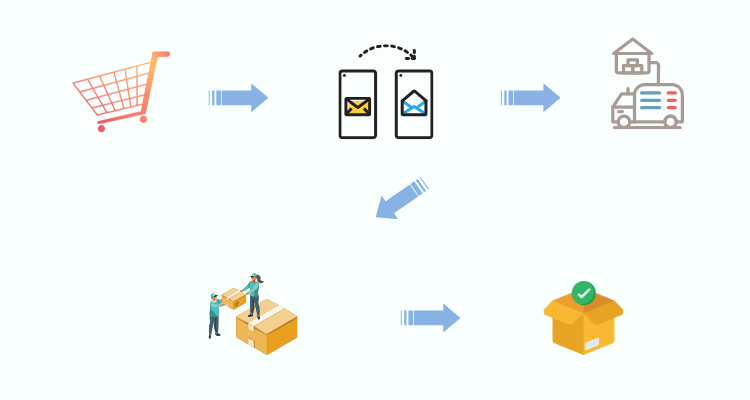
You're basically the middleman in this setup. Your main jobs are building your brand, running marketing, and taking care of the overall customer experience.
Compared to traditional retail, you don't need to buy stock upfront or manage a warehouse. But that doesn't mean it's "hands-off." You're still responsible for product quality, delivery expectations, and customer satisfaction.
2. Is dropshipping still profitable in 2026?
Before the dropshipping guide officially begins, you might wonder: Is dropshipping profitable? Short answer: yes, but it's no longer easy money.
A few years ago, you could launch a basic store, run some ads, and get sales fairly quickly. That window hasn't completely closed, but it has definitely narrowed. The market is more mature now, which means the average quality level has gone up.
| What's changed in 2026? | What still works well? |
|---|---|
| More competition | Strong product selection |
| Higher advertising costs | Branding and positioning |
| Smarter customers | Reliable fulfillment |
Where the real opportunity is now: Dropshipping today is less about quick wins and more about building something that can last.
Many successful sellers:
- Start with dropshipping to test products
- Then improve the product (packaging, quality, branding)
- Eventually, turn it into a more stable eCommerce brand
So yes, it's still profitable, but mostly for people who are willing to treat it like a real business, not a shortcut.
3. Full dropshipping guide
Before jumping into tactics, it helps to see the bigger picture. A successful dropshipping business isn't built on a single step - it's the result of getting several moving parts to work together.
The following breakdown walks you through the core pieces that matter most, in the order you'll likely encounter them.
#1 Choose the right business approach
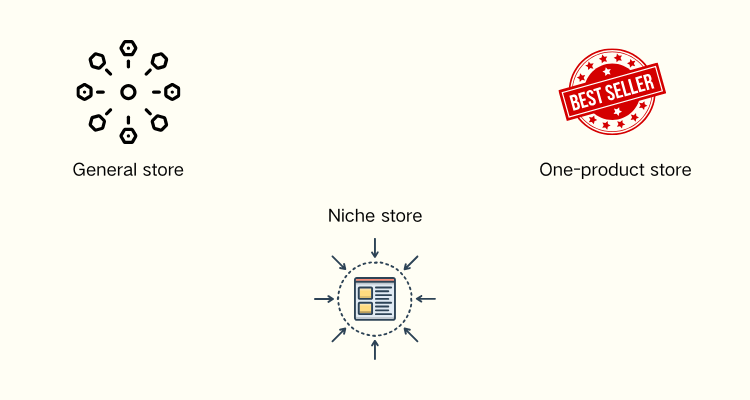
Not all dropshipping stores are built the same; the direction you choose early on will shape how you market, brand, and scale your business. There are three common approaches:
1️⃣General store: ideal for beginners who want to test different products quickly without committing to a single niche. You can launch fast and experiment, but the downside is lower trust and weaker branding.
2️⃣Niche store: focuses on a specific audience (e.g. fitness, pets, skincare). This makes your marketing more targeted and helps build trust with customers. Over time, niche stores tend to convert better and are easier to turn into a brand.
3️⃣One-product store: built around a single winning item. The entire website is optimized to sell that one item, which can lead to high conversion rates—but it also carries more risk if the product stops performing.
#2 Do product research
Product research is the foundation of your business. The wrong product will fail no matter how good your ads are. A good dropshipping product usually:
- Solves a clear problem or has a strong appeal
- Isn't easily found in local stores
- Has decent margins after ads and shipping
- Is simple to ship (not fragile or oversized)
Instead of relying on guesswork, use real signals:
- Social media trends: Products going viral on TikTok or Instagram
- Competitor ads: What other stores are actively promoting
- Customer engagement: Comments, shares, and repeat appearances
Also, take time to order samples. This helps you avoid quality issues and gives you better content for ads.
#3 Find reliable suppliers
Your supplier isn't just a backend partner - it directly affects your reputation, your reviews, and whether customers come back or ask for refunds. A bad supplier can quietly kill your store even if your ads and products are solid.
When you're evaluating suppliers, don't just look at price; look for the key things like consistent product quality, shipping speed you can realistically stand behind, communication that doesn't disappear when problems happen, and a stable fulfillment process.
This is usually the point where sellers switch to more structured fulfillment solutions like Flowpallet. Compared to random suppliers, this more structured solution can help with:
- Faster and more stable shipping
- Better product sourcing
- Centralized pick and pack fulfillment
- Easy and convenient to use
- Relatively lower prices than other platforms
- Customized options like POD, ODM, and customized packaging
Remember that you're not just "finding a supplier"; you're building the backbone of your business.
#4 Set up your online store
A clean, trustworthy store beats a flashy one every time. Please focus on:
- Simple, mobile-friendly design
- Clear product pages (benefits > features)
- Strong visuals (real photos or videos)
- Essential pages (shipping, returns, contact)
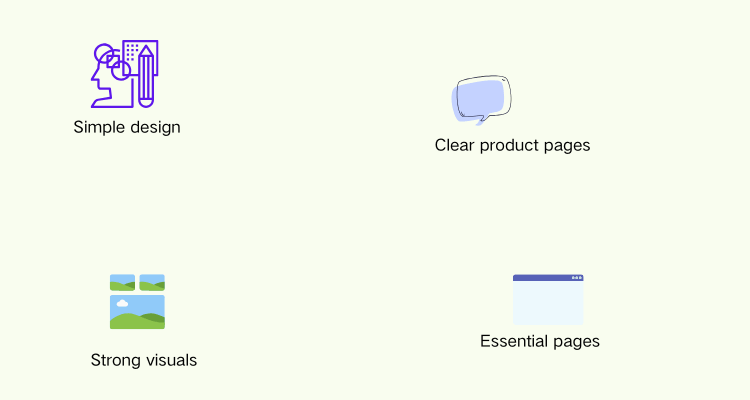
Think like a customer: if your store looks rushed or confusing, people won't buy, no matter how good the product is.
#5 Price and profit strategy
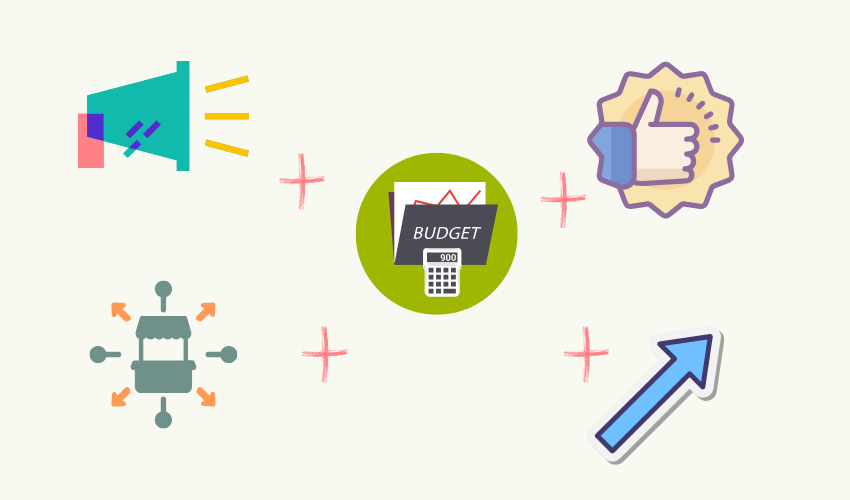
Pricing isn't just "cost × 3" anymore. A better way to think about pricing is: how much room do I actually have after everything is paid for? Here is what goes into your real cost per order:
For example, a product that costs $8 might look cheap, but if you're spending $15 to acquire a customer, your real cost is already $23 before profit. Maybe you can try to:
- Start with competitive pricing
- Test different price points
- Increase margins once you find a winning product
Also, don't underestimate upsells and bundles; they often make the difference between breaking even and being profitable. You can learn more about how to price a product.
#6 Marketing that drives sales
You can have a great product and a clean store, but without traffic, nothing happens. Marketing is what turns your store from an idea into an actual business. Traffic is everything.
- Paid ads are still the fastest way to validate products: TikTok Ads for viral-style content; Facebook Ads for broader targeting.
- Organic strategies take longer but build long-term value: TikTok content; Instagram reels; SEO blog content…
The key is testing. Most products won't work, but the ones that do can scale quickly.
#7 Order fulfillment and customer experience
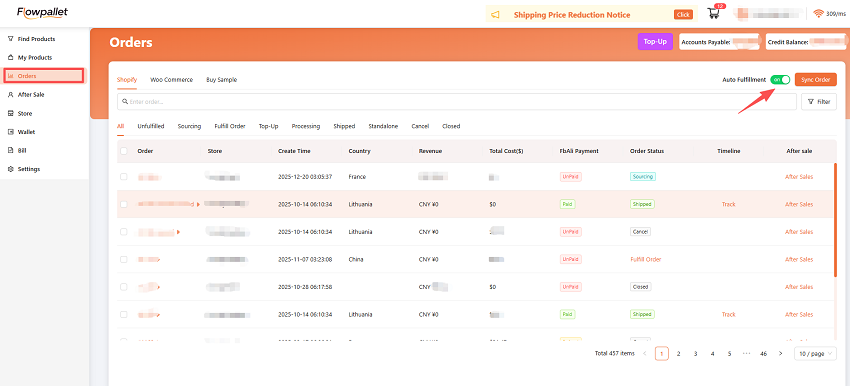
Once orders start coming in, operations matter more than ever. You need to process orders quickly, provide tracking information, or communicate delays clearly.
Poor fulfillment is one of the biggest reasons stores fail. Using a more organized fulfillment solution like Flowpallet can help streamline:
- Seamless order syncing
- Faster dispatch
- More predictable delivery times
- Revenue of integrated stores
At the end of the day, customers don't care that you're dropshipping; they just care that their order arrives on time.
#8 Scale a dropshipping business
Scaling isn't just increasing ad spend. You should consider:
- Turning winning products into a brand
- Improving product quality and packaging
- Working with better suppliers or private labeling
- Automating customer service and logistics
This is the stage where dropshipping starts to look more like a real e-commerce business.
4. Tips: Common Challenges and How to Handle Them
Every dropshipping store runs into problems. The difference between stores that survive and those that fail is how they handle them:
1. Long shipping times
→ Set clear expectations and work with faster suppliers
2. Product quality issues
→ Always order samples before selling
3. Ad costs are getting too high
→ Test more creatives, not just bigger budgets
4. Low conversion rates
→ Improve product pages and trust signals
5. Refunds and complaints
→ Respond quickly and stay transparent
Dropshipping challenges are normal - it's how you respond that matters. If you stay patient during testing, fix problems instead of ignoring them, and build more stable systems as you grow.
You'll be in a much better position than most beginners who give up too early.
5. Final thoughts
Dropshipping isn't dead, but it's no longer a shortcut.
If you approach it like a real business - focus on products, customer experience, and reliable operations - it can still be a solid way to build an online income stream in 2026.
With this full dropshipping guide, your dropshipping store can grow into a profitable online business.
