'/%3e%3cpath%20d='M59.9558%200H51.6287C51.6287%200%2045.5566%2034.1414%2045.7996%2039.9704C48.4659%20103.923%20122.41%2090.4886%20159.049%2075.7773L159.882%2071.6137C72.4464%20100.759%2053.2939%2059.9557%2054.1268%2039.9704C54.7163%2025.8265%2059.9558%200%2059.9558%200Z'%20fill='url(%23paint1_linear_658_5274)'/%3e%3cpath%20d='M180.7%2050.7959L180.845%2049.8037C184.282%2054.4129%20189.53%2057.458%20195.688%2057.458C206.726%2057.458%20217.339%2046.0121%20217.339%2034.9746C217.339%2023.9371%20211.722%2015.8223%20200.685%2015.8223C195.356%2015.8223%20189.544%2018.1027%20184.957%2021.7031L185.696%2016.6543H177.369L168.209%2075.7773H176.536L180.7%2050.7959ZM194.023%2049.9629C183.198%2049.1302%20183.198%2041.6353%20183.198%2037.4717C183.198%2028.3123%20190.455%2023.3157%20197.354%2023.3154C204.252%2023.3154%20208.18%2027.6155%20208.18%2034.9736C208.18%2044.1334%20200.922%2049.9627%20194.023%2049.9629Z'%20fill='%23FBFBFB'/%3e%3cpath%20d='M221.503%2050.7954C226.722%2063.8433%20244.819%2055.7917%20248.982%2050.7954C247.65%2056.7908%20255.088%2057.1796%20258.974%2056.6245L259.807%2049.1304C258.697%2049.1304%20256.476%2048.6308%20256.476%2046.6323C256.476%2044.1342%20260.451%2031.2297%20258.974%2025.814C253.978%207.49469%20228.164%2015.8221%20225.666%2024.9819L231.495%2028.312C242.32%2016.6545%20253.146%2024.9814%20249.815%2031.6431C239.823%2029.1449%20214.842%2034.1413%20221.503%2050.7954ZM248.982%2038.3052C250.648%2045.7997%20233.994%2056.6248%20229.83%2046.6323C227.054%2039.9706%20241.488%2037.4725%20248.982%2038.3052Z'%20fill='%23FBFBFB'/%3e%3cdefs%3e%3clinearGradient%20id='paint0_linear_658_5274'%20x1='333.92'%20y1='70.601'%20x2='188.194'%20y2='70.601'%20gradientUnits='userSpaceOnUse'%3e%3cstop%20stop-color='%23EB5455'/%3e%3cstop%20offset='0.0001'%20stop-color='%23EF733E'/%3e%3cstop%20offset='1'%20stop-color='%23FFD461'/%3e%3c/linearGradient%3e%3clinearGradient%20id='paint1_linear_658_5274'%20x1='139.897'%20y1='83.2717'%20x2='53.2939'%20y2='3.33085'%20gradientUnits='userSpaceOnUse'%3e%3cstop%20stop-color='%23FFD461'/%3e%3cstop%20offset='0.9999'%20stop-color='%23EF733E'/%3e%3c/linearGradient%3e%3c/defs%3e%3c/svg%3e)


Steps to Be a Successful Dropshipper: Guide for You
FlowpalletAurora ShawJun. 12, 2026

Dropshipping is still one of the most talked-about online business models nowadays. Some claim dropshipping is "dead" because competition is higher than ever. Others are quietly building profitable stores with the right products, suppliers, and marketing strategies.
💬I wanna start a dropshipping store, how can I become a dropshipper? Give me some advice. -quora.com
💬How do I actually start dropshipping? I have been looking for hours, but have become more puzzled. Any tips? -reddit.com
Is dropshipping profitable? The truth sits somewhere in the middle. Dropshipping is not a shortcut to overnight success, but it can still be a realistic way to start an e-commerce business with low upfront costs. But success depends on more factors.
How to become a successful dropshipper? You can follow:
- Judge a profitable niche
- Work with a dropshipping supplier(+Flowpallet)
- Set up an online store
- Import and edit winning products
- Set up payments and shipping
- Begin selling and fulfill orders
- Market and manage your dropshipping store
How does dropshipping work?
Dropshipping is an e-commerce fulfillment method where you sell products online without keeping inventory yourself. Here is the basic process:
A customer places an order in your store → You send the details to the supplier or the supplier receives the order automatically → It packs and ships the products to the customer → You pocket the difference between what the customer paid and what the supplier charges.
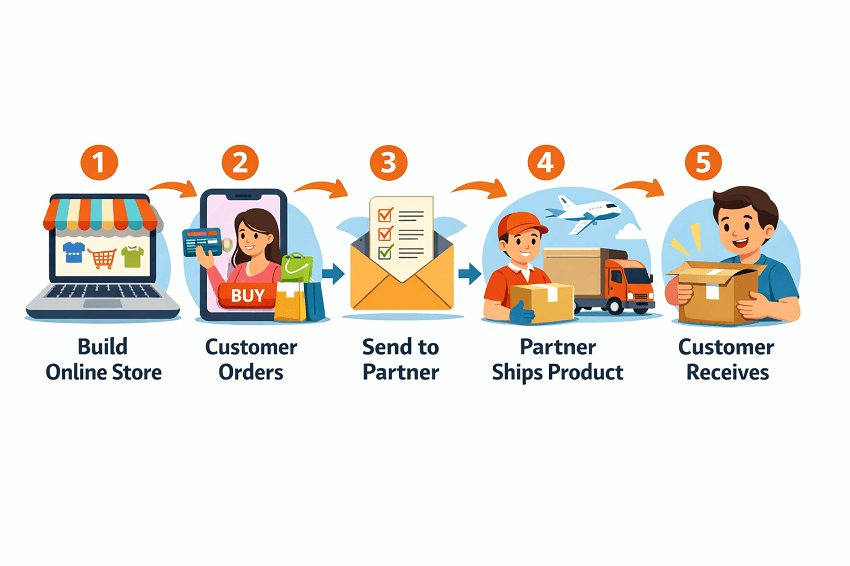
Here's a simple example: if your supplier charges $15 for a product and you sell it for $39, you walk away with $24 in gross profit - before ad spend and platform fees.
Most dropshippers start dropshipping on Shopify or WooCommerce, while suppliers take care of storage and shipping in the background.
The model looks straightforward on paper, but there's a lot more to it than just listing products. Long-term success comes down to finding the right products, working with reliable suppliers, building a brand people trust, and actually taking care of your customers.
Step-by-step to become a dropshipper
Becoming a dropshipper may seem overwhelming at first, but the process becomes much easier when you break it down. The key is to focus on steady progress instead of trying to do everything perfectly from day one.
#1 Choose a profitable niche
One of the most common mistakes beginners make is trying to sell everything at once. A general store with hundreds of unrelated products is hard to market and even harder to build a brand around.
Pick a dropshipping niche that has real, consistent demand, not just something that went viral last week. A focused niche makes your store easier to trust and your ads easier to target.
There are some categories that tend to perform well:
- Home and kitchen products
- Pet accessories
- Fitness and wellness
- Beauty and skincare
- Car accessories
- Tech gadgets
- Baby products
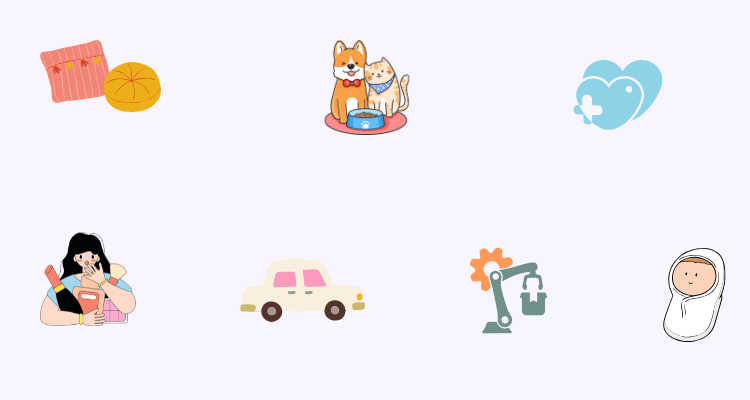
When sizing up a niche, ask yourself: Does this product solve a problem? Does it have visual appeal for social media? Will people buy it more than once? Also, look at search demand, competition levels, pricing, profit margins, and whether the product is practical to ship.
#2 Find a dropshipping supplier
Your supplier is one of the most important decisions you'll make. Great marketing can still get killed by slow shipping, flimsy packaging, or inconsistent product quality.
When evaluating suppliers, look at:
- Shipping speed and processing times
- Product quality and how often update
- How quickly they respond to messages
- Return and refund policies
- Whether they integrate with your store
- Additional branding features provided
As your store grows, many sellers switch to private suppliers or fulfillment agents to get faster delivery and more functions during e-commerce. Tools like Flowpallet combine product sourcing, pick and pack fulfillment, 3PL inventory management, white-label products options, and an intelligent daily operating data dashboard in one place, which can be a time-saver compared to hunting through large marketplaces manually.
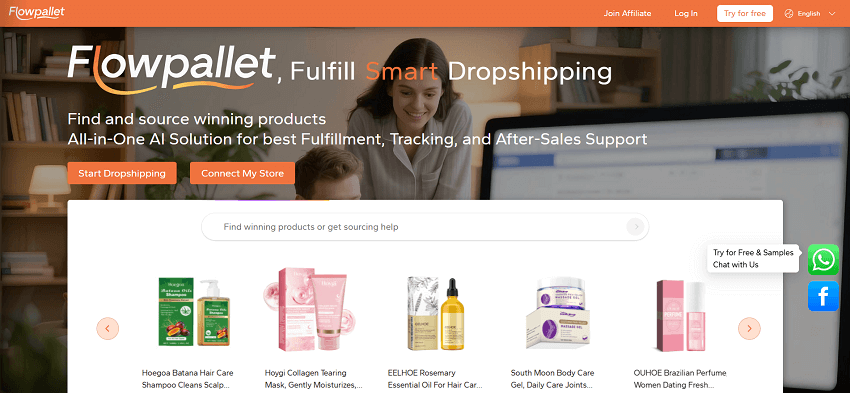
Tip: Whatever route you go, order samples before selling anything. You want to know exactly what your customers are receiving - the packaging, the quality, and how long it actually takes to arrive.
#3 Build your online store
Your store is the first thing customers judge you on. It doesn't need to be fancy, but it does need to feel trustworthy and easy to use.
Shopify is the go-to for most beginners because of how straightforward it is to set up. WooCommerce dropshipping is another solid option if you want more flexibility and already have some technical comfort.
Get these basics right from the start:
- Clean, simple design
- Fast load times
- Mobile-friendly layout
- Smooth navigation
- Professional product pages
- A checkout process with as little friction as possible
You don't need to spend a lot on design upfront. A clean, minimal store almost always outperforms a cluttered one.
Don't skip the trust-building details either - customer reviews, an FAQ page, clear shipping info, a contact page, and a return policy. These small things genuinely affect whether someone decides to buy.
#4 Add winning products
Not every product is worth listing. The ones that tend to do well usually hit a combination of strong demand, emotional pull, and healthy margins. Many top-performing dropshipping products are things that solve small, everyday frustrations or make life a little more convenient.
When researching products, look for:
- Strong engagement on TikTok or Instagram
- A clear problem-solving angle
- Good supplier pricing with room to mark up
- Solid customer reviews already out there
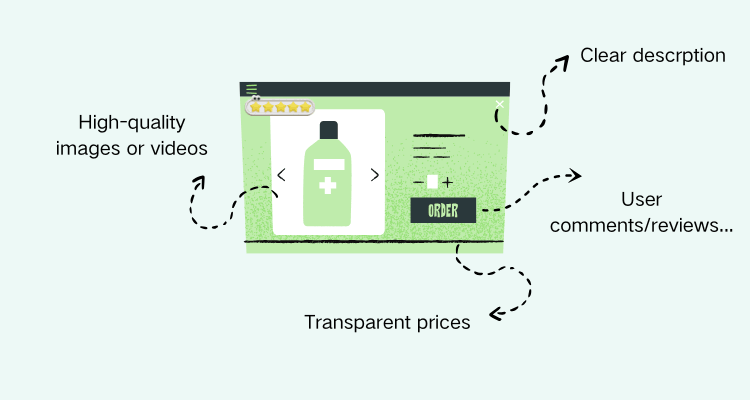
Don't just dump dozens of random products into your store. It's usually better to start with a small, well-chosen selection and build real branding around those items.
Each product page should have high-quality images, a clear description focused on benefits, transparent pricing, and reviews where possible. (Some dropshipping platforms have the ready images, descriptions, and videos for you)
Also, you can import them one by one by yourself, or use tools to automatically add them.
#5 Set up payments and shipping
Sort this out before you launch. Common payment options include Shopify Payments, PayPal, and Stripe. Make sure the checkout experience feels secure and works smoothly on mobile.
Shipping is where a lot of dropshippers quietly lose customers. Long delivery times are one of the top complaints in this space, so be upfront about it rather than letting people find out after they've paid.
Your shipping page should cover:
- Estimated delivery and processing times
- Shipping costs
- Whether tracking is available
- How returns work
Setting clear expectations up front cuts down on disputes and builds more trust than any pop-up or discount banner ever will.
#6 Start selling and fulfilling orders
Once everything is in place, it's time to start driving traffic and processing orders.
The basic fulfillment flow looks like this:
A customer places an order; the supplier receives the details, then picks, packs, and ships(Tracking information is shared with the buyer); The customer receives the packages; You can handle returns if there are.
Early on, most people handle this manually. As volume picks up, automation tools like Flowpallet can take a lot of that off your plate.
Stay on top of customer communication, especially in the beginning. Questions about shipping, delays, and product details come up constantly. Handling them quickly and honestly is one of the easiest ways to turn a one-time buyer into someone who comes back.
#7 Market and manage your dropshipping store
Marketing is where most of the real work happens. You can have a great product, a clean store, and a solid supplier - and still make zero sales if no one sees it. Traffic doesn't come by default. Most dropshippers build it through a mix of paid ads, organic content, and search.
TikTok and Instagram
Short-form video is still one of the most cost-effective ways to get eyes on a product. You don't need a big budget - you need content that stops people mid-scroll. Demonstration videos tend to work best: show the product doing something, solving a problem, or surprising the viewer.
Facebook ads
Facebook and Instagram ads are still widely used for e-commerce. However, ad costs are higher than they were a few years ago, so testing and optimization matter more than ever.
SEO and content marketing
Blog content can help bring in long-term organic traffic. Many e-commerce stores now invest in SEO to reduce dependence on paid ads.
Influencer marketing
You don't need a celebrity. Micro-influencers - people with smaller but highly engaged audiences - can drive real results without a huge budget. It also adds a layer of social proof that paid ads alone can't replicate.
As your store grows, focus on tracking: conversion rates, ad performance, refund rates, customer feedback, best-selling products…
Dropshipping rewards people who treat it like a data problem. The stores that grow are usually the ones constantly testing, adjusting, and paying close attention to what the numbers are saying.
Bonus: Common mistakes new dropshippers make
A lot of people come into dropshipping with the wrong picture — big revenue screenshots, "I made $10k in my first month" stories. So they jump in expecting fast money, make expensive mistakes, and quit early.
The model isn't complicated, but the details trip people up. Here are the most common ones.
Chasing trends without thinking ahead
By the time most beginners spot a trend, set up a store, and launch ads, the wave has already passed. Trending products can work, but steady long-term demand is usually a safer starting point.
Skipping branding entirely
A generic store with copy-pasted supplier descriptions doesn't give people a reason to buy from you. A clean store name, consistent visuals, and rewritten product copy go further than most beginners expect.
Throwing money at ads before the store is ready
Running paid traffic to a store that isn't converting is just burning cash. Make sure your product pages and checkout are solid before spending on ads - then test small before scaling.
Going with unreliable suppliers
Late deliveries and poor product quality lead directly to refunds, chargebacks, and bad reviews. Vet your suppliers properly and always order samples before selling anything.
Expecting results too quickly
Most stores that actually make money went through a stretch of losing money on ads, switching products, and figuring things out the hard way. That's normal — not a sign to quit.
Most beginner mistakes come down to rushing and chasing short-term wins. The stores that last treat early losses as tuition, keep testing, and improve steadily over time.
Final words
Learning how to become a dropshipper is easier today than ever before, but building a profitable store still takes patience and consistent effort.
The good news is that you don't need massive startup capital to begin. With the right niche, reliable suppliers, strong product research, and effective marketing, dropshipping can still be a practical entry point into e-commerce.
Instead of chasing "get rich quick" promises, focus on building a store that delivers a good customer experience. In the long run, sustainable businesses usually outperform short-term trends.
We hope your dropshipping journey brings both learning and success.
