'/%3e%3cpath%20d='M59.9558%200H51.6287C51.6287%200%2045.5566%2034.1414%2045.7996%2039.9704C48.4659%20103.923%20122.41%2090.4886%20159.049%2075.7773L159.882%2071.6137C72.4464%20100.759%2053.2939%2059.9557%2054.1268%2039.9704C54.7163%2025.8265%2059.9558%200%2059.9558%200Z'%20fill='url(%23paint1_linear_658_5274)'/%3e%3cpath%20d='M180.7%2050.7959L180.845%2049.8037C184.282%2054.4129%20189.53%2057.458%20195.688%2057.458C206.726%2057.458%20217.339%2046.0121%20217.339%2034.9746C217.339%2023.9371%20211.722%2015.8223%20200.685%2015.8223C195.356%2015.8223%20189.544%2018.1027%20184.957%2021.7031L185.696%2016.6543H177.369L168.209%2075.7773H176.536L180.7%2050.7959ZM194.023%2049.9629C183.198%2049.1302%20183.198%2041.6353%20183.198%2037.4717C183.198%2028.3123%20190.455%2023.3157%20197.354%2023.3154C204.252%2023.3154%20208.18%2027.6155%20208.18%2034.9736C208.18%2044.1334%20200.922%2049.9627%20194.023%2049.9629Z'%20fill='%23FBFBFB'/%3e%3cpath%20d='M221.503%2050.7954C226.722%2063.8433%20244.819%2055.7917%20248.982%2050.7954C247.65%2056.7908%20255.088%2057.1796%20258.974%2056.6245L259.807%2049.1304C258.697%2049.1304%20256.476%2048.6308%20256.476%2046.6323C256.476%2044.1342%20260.451%2031.2297%20258.974%2025.814C253.978%207.49469%20228.164%2015.8221%20225.666%2024.9819L231.495%2028.312C242.32%2016.6545%20253.146%2024.9814%20249.815%2031.6431C239.823%2029.1449%20214.842%2034.1413%20221.503%2050.7954ZM248.982%2038.3052C250.648%2045.7997%20233.994%2056.6248%20229.83%2046.6323C227.054%2039.9706%20241.488%2037.4725%20248.982%2038.3052Z'%20fill='%23FBFBFB'/%3e%3cdefs%3e%3clinearGradient%20id='paint0_linear_658_5274'%20x1='333.92'%20y1='70.601'%20x2='188.194'%20y2='70.601'%20gradientUnits='userSpaceOnUse'%3e%3cstop%20stop-color='%23EB5455'/%3e%3cstop%20offset='0.0001'%20stop-color='%23EF733E'/%3e%3cstop%20offset='1'%20stop-color='%23FFD461'/%3e%3c/linearGradient%3e%3clinearGradient%20id='paint1_linear_658_5274'%20x1='139.897'%20y1='83.2717'%20x2='53.2939'%20y2='3.33085'%20gradientUnits='userSpaceOnUse'%3e%3cstop%20stop-color='%23FFD461'/%3e%3cstop%20offset='0.9999'%20stop-color='%23EF733E'/%3e%3c/linearGradient%3e%3c/defs%3e%3c/svg%3e)


The Full Guide to Find Products to Sell on Shopify
FlowpalletAurora ShawJun. 11, 2026

Finding the right products is the foundation of every successful Shopify store. Whether you're running a dropshipping business, selling wholesale items, or building a private-label brand, choosing the wrong product can quickly drain your time and money.
On the other hand, a high-demand, well-researched product sets you up for strong conversions, repeat customers, and sustainable growth. This guide walks you through the key standards of winning products on Shopify and the most effective methods to find products to sell on Shopify.
1. Key criteria of a good Shopify product
Before you start searching, it's important to understand what makes a product worth selling. A strong Shopify product typically meets these standards:
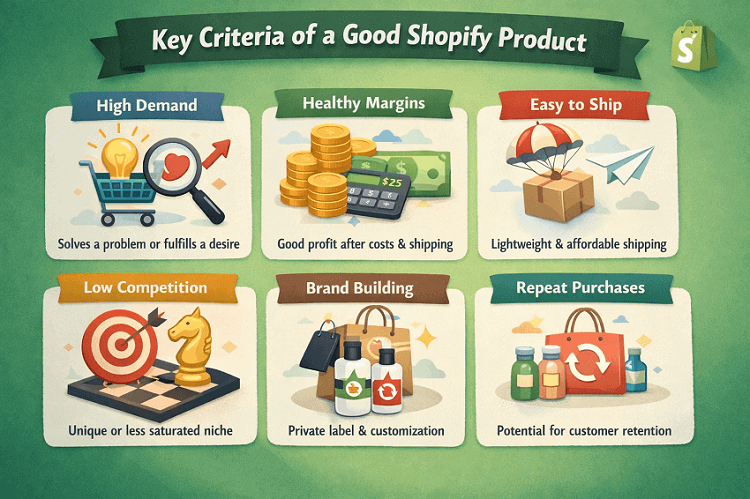
- High demand: The product solves a problem or fulfills a desire people already care about.
- Healthy margins: After product cost, shipping fulfilment services fee, Shopify fees, and marketing spend, you still keep a solid profit.
- Low competition or clear differentiation: Either the niche is unsaturated, or you can offer a unique angle.
- Lightweight and easy to ship: Lower shipping costs and fewer damaged packages.
- Potential for repeat purchases: Especially helpful for long-term growth.
- Room for brand building: Private labeling, customization, or bundling.
Products that match most of these criteria tend to perform better, especially for beginners.
2. How to find products to sell on Shopify
Finding products to sell on Shopify is not just about spotting a trend—it's about selecting items that can sustain long-term sales, fit your niche, and deliver healthy margins. The process involves:
# Research market trends
Start by examining what customers are currently interested in. Tools like Google Trends, Pinterest, TikTok Creative Center, and Amazon Movers & Shakers show you which products are gaining traction.
Go deeper by comparing seasonal trends vs. evergreen trends, identifying whether interest is short-lived or stable. Early trend detection helps you position your store before competition peaks.
# Analyze competitions
Competitor research helps you understand what already sells. Look at the top Shopify stores, Amazon listings, and niche competitors:
- Identify their best-selling items
- Check price ranges and margins
- Read customer reviews for complaints or missing features
- Analyze their marketing angles
This helps you understand what's working, what's missing, and where you can differentiate. Shopify store trackers and Amazon Best Seller lists are great for scouting real market behavior.
# Choose reliable product sourcing methods
The most important part of finding products to sell on Shopify is sourcing products. Here are four product sourcing methods; choose the one you prefer best:
(1)Dropshipping suppliers
Dropshipping is beginner-friendly, but supplier quality varies, as you sell without holding inventory. Find reliable dropshipping suppliers with fast shipping, quality control, and stable stock levels.
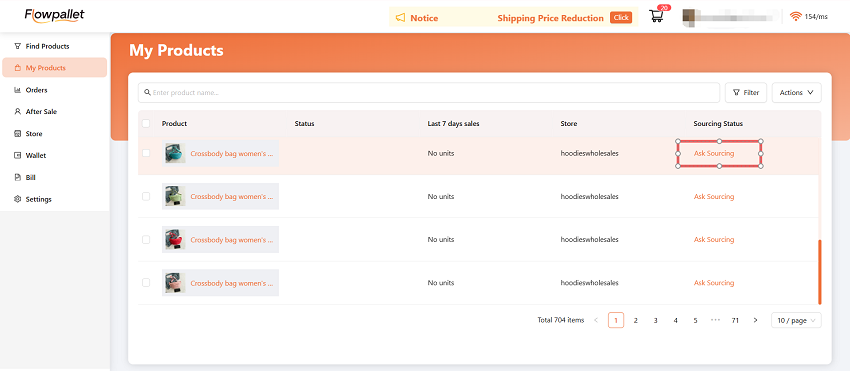
Platforms like Flowpallet streamline the sourcing process with its all-in-one fulfilment platform. It offers vast and curated product lists, vetted suppliers, and a smoother sourcing experience compared with traditional sites like AliExpress. The trending products update every week, and asking sourcing actions can be replied to in a short time.
Ultimately, Flowpallet gives you back the most valuable resource—your time—so you can focus on building your brand and marketing your store.
(2)Wholesale
Bulk wholesale gives you better margins but requires upfront inventory investment. It's best for sellers who have already validated product demand.
(3)Print-on-demand (POD)
POD is low-risk for creative niches. You only produce items when customers place orders. Great for apparel, mugs, or home decor—especially if you want to build brand personality through custom designs.
(4)Private label
For long-term brand building, private label lets you create a unique, higher-margin product with your branding. This requires strong supplier relationships and MOQs, but it also locks in differentiation.
# Use product research tools
Product research tools help you filter data quickly instead of relying on guesswork. Tools like Sell The Trend, Minea, Dropship.io, Jungle Scout, or Semrush reveal:
- Order volume and sales patterns
- Winning ad creatives
- Competitor stores selling similar products
- Pricing insights(learn how to price your product)
- Customer engagement metrics
Look for patterns such as rising order volume, strong engagement on ads, steady search demand, and profitable pricing. A good tool doesn't guarantee success, but it dramatically reduces guesswork.
# Validate your product ideas
Before adding anything to your Shopify store, check whether your product:
- Has consistent search demand
- Achieves healthy margins after fees and shipping
- Faces manageable competition
- Has customer interest (via comments, reviews, or social engagement)
You can run quick paid ads or post organic content to test real demand before adding the product to Shopify.
# Consider Shopify-specific opportunities
Shopify merchants often follow certain patterns, making some product categories repeatedly successful—such as beauty, fitness, pet supplies, and home improvement.
Use Shopify apps that show store bestsellers, explore trending collections, and look at fast-growing Shopify stores for inspiration.
Many Shopify merchants succeed by combining Shopify-friendly products with faster sourcing alternatives like Flowpallet, which helps reduce supplier risk and speeds up fulfillment.
![How to Start Dropshipping on Shopify? [Guide Here]](https://cdn.flowpallet.com/blog/default/Mar_Tue/summary-how-to-start-dropshipping-shopify.png)
3. Tip: Avoid common product selection mistakes
Even with the best tools, many new Shopify sellers undermine their efforts by falling into predictable traps. Being aware of these common mistakes is your first line of defense:
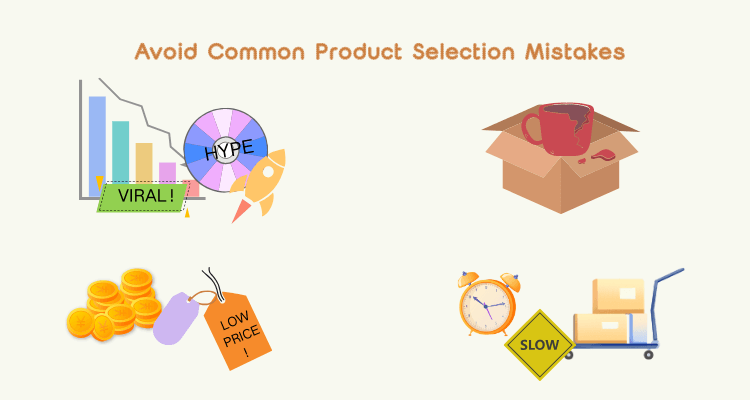
- Don't sell low-margin products that require high ad spend
- Don't chase fads. Build around sustainable demand, not one-hit wonders.
- Don't choose saturated items without differentiation
- Avoid hyper-saturated markets. Compete on uniqueness, not just price.
- Don't source fragile or oversized items with high shipping risk
- Never ignore unit economics. Factor in all costs to confirm real profitability.
- Never skip supplier vetting. Always order samples and check reliability.
- Avoid selling low-margin products that require high ad spend
- Don't build for yourself. Validate that a market exists for your product idea.
- Never skip testing before launching.
Avoiding these mistakes helps you find sustainable, scalable products rather than short-term fads.
4. Conclusion
Finding profitable products to sell on Shopify isn't luck—it's a process. By understanding what makes a good product, analyzing trends and competitors, using reliable sourcing partners like Flowpallet, and validating your ideas, you dramatically increase your chances of launching a successful store.
Hope that you can finally end up finding the needed products to sell on Shopify.
