'/%3e%3cpath%20d='M59.9558%200H51.6287C51.6287%200%2045.5566%2034.1414%2045.7996%2039.9704C48.4659%20103.923%20122.41%2090.4886%20159.049%2075.7773L159.882%2071.6137C72.4464%20100.759%2053.2939%2059.9557%2054.1268%2039.9704C54.7163%2025.8265%2059.9558%200%2059.9558%200Z'%20fill='url(%23paint1_linear_658_5274)'/%3e%3cpath%20d='M180.7%2050.7959L180.845%2049.8037C184.282%2054.4129%20189.53%2057.458%20195.688%2057.458C206.726%2057.458%20217.339%2046.0121%20217.339%2034.9746C217.339%2023.9371%20211.722%2015.8223%20200.685%2015.8223C195.356%2015.8223%20189.544%2018.1027%20184.957%2021.7031L185.696%2016.6543H177.369L168.209%2075.7773H176.536L180.7%2050.7959ZM194.023%2049.9629C183.198%2049.1302%20183.198%2041.6353%20183.198%2037.4717C183.198%2028.3123%20190.455%2023.3157%20197.354%2023.3154C204.252%2023.3154%20208.18%2027.6155%20208.18%2034.9736C208.18%2044.1334%20200.922%2049.9627%20194.023%2049.9629Z'%20fill='%23FBFBFB'/%3e%3cpath%20d='M221.503%2050.7954C226.722%2063.8433%20244.819%2055.7917%20248.982%2050.7954C247.65%2056.7908%20255.088%2057.1796%20258.974%2056.6245L259.807%2049.1304C258.697%2049.1304%20256.476%2048.6308%20256.476%2046.6323C256.476%2044.1342%20260.451%2031.2297%20258.974%2025.814C253.978%207.49469%20228.164%2015.8221%20225.666%2024.9819L231.495%2028.312C242.32%2016.6545%20253.146%2024.9814%20249.815%2031.6431C239.823%2029.1449%20214.842%2034.1413%20221.503%2050.7954ZM248.982%2038.3052C250.648%2045.7997%20233.994%2056.6248%20229.83%2046.6323C227.054%2039.9706%20241.488%2037.4725%20248.982%2038.3052Z'%20fill='%23FBFBFB'/%3e%3cdefs%3e%3clinearGradient%20id='paint0_linear_658_5274'%20x1='333.92'%20y1='70.601'%20x2='188.194'%20y2='70.601'%20gradientUnits='userSpaceOnUse'%3e%3cstop%20stop-color='%23EB5455'/%3e%3cstop%20offset='0.0001'%20stop-color='%23EF733E'/%3e%3cstop%20offset='1'%20stop-color='%23FFD461'/%3e%3c/linearGradient%3e%3clinearGradient%20id='paint1_linear_658_5274'%20x1='139.897'%20y1='83.2717'%20x2='53.2939'%20y2='3.33085'%20gradientUnits='userSpaceOnUse'%3e%3cstop%20stop-color='%23FFD461'/%3e%3cstop%20offset='0.9999'%20stop-color='%23EF733E'/%3e%3c/linearGradient%3e%3c/defs%3e%3c/svg%3e)


Best Drop Shipping Fulfillment Services | Convenient Solution
FlowpalletAurora ShawJun. 11, 2026

If you run an online store, you already know that selling a product is only half the job. The real test begins after a customer clicks "Buy Now". How fast you ship, how safely the package arrives, and how you handle returns can determine whether that customer ever comes back.
This is where shipping fulfillment services come in. From storing inventory to packing boxes and arranging delivery, fulfillment plays a central role in modern e-commerce.
In this guide, we'll break down what shipping fulfillment services are, how they work, the main types available, and how to choose the right partner for your business.
1. What is shipping fulfillment service & How it works
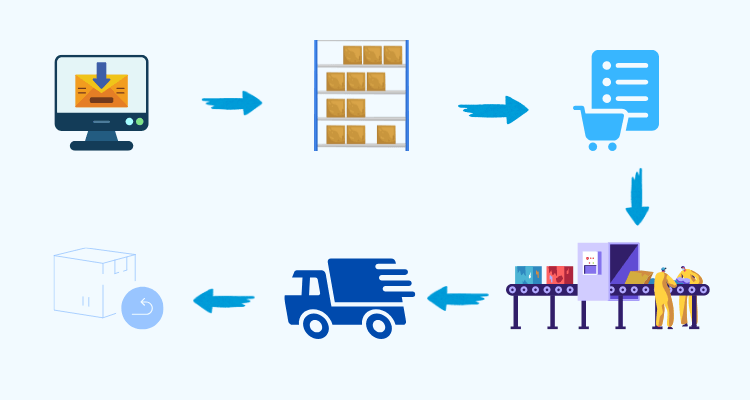
Shipping fulfillment services refer to the complete process of receiving, storing, processing, packing, and shipping customer orders on behalf of a business.
It's important to understand that fulfillment is more than just shipping. Shipping is simply the transportation of goods from a warehouse to a customer. Fulfillment covers everything that happens before and after that step; it often includes:
- Inventory receiving – Products are delivered to the warehouse and logged into the system.
- Storage – Items are stored safely with real-time inventory tracking.
- Order processing – Customer orders are automatically synced to the fulfillment center.
- Picking and packing – Staff pick the ordered items and pack them for shipment.
- Shipping – Orders are handed over to carriers and shipped to customers.
- Returns handling – Returned products are inspected and restocked when possible.
Most e-commerce brands, Amazon sellers, and Shopify store owners rely on fulfillment services to scale efficiently without managing logistics themselves.
2. Types & key criteria of shipping fulfillment services
Not all shipping fulfillment services are built the same. Some are designed for small online stores handling a few orders a day, while others support large-scale brands shipping thousands of packages globally. See the main below:
📦In-House fulfillment
You store and ship products yourself. This works for small businesses with low order volumes, but it becomes difficult to manage as orders grow.
📦Third-Party logistics (3PL)
A 3PL provider handles storage, packing, and shipping for you. This is one of the most common solutions for scaling e-commerce brands.
📦Dropshipping fulfillment
Suppliers ship products directly to customers after you make a sale. You never hold inventory, but shipping times and quality control can vary.
Solutions like Flowpallet operate within this model, helping sellers streamline warehousing and shipping while maintaining better cost control and flexibility compared to traditional logistics setups. Moreover, it supports product sourcing, 3PL, wholesale purchasing, and so on.
📦Marketplace fulfillment (e.g., FBA model)
Platforms like Amazon handle fulfillment on your behalf. This offers convenience but may limit branding control and flexibility.
When evaluating a good shipping and fulfillment service, please focus on these critical factors:
- Inventory accuracy – Real-time tracking and low error rates
- Fast processing time – Less than 7 days of fulfillment
- Shipping speed and coverage – Domestic and international capabilities
- Transparent pricing – Clear breakdown of storage, picking, packing, and shipping fees
- Technology integration – Seamless connection with platforms like Shopify, WooCommerce, and marketplaces
- Scalability – Ability to handle seasonal spikes and rapid growth
- Returns handling – Efficient reverse logistics process
Choosing based on price alone often leads to costly mistakes later.
3. How to choose the right shipping fulfillment service?
Selecting the right fulfillment partner can directly impact customer satisfaction and profit margins. Here's how to approach it strategically:
1. Understand your business needs
Calculate your monthly order volume, average order size, target markets, and expected growth rate. A startup brand has very different needs from a high-volume seller.
2. Compare cost structures
Look at storage fees, pick-and-pack fees, shipping rates, and any hidden charges. Make sure the pricing model fits your margins.
3. Evaluate technology & automation
Your fulfillment partner should integrate easily with your store and automate order syncing and tracking updates.
4. Check shipping performance
Fast delivery improves conversion rates and reduces refund requests. Ask about average delivery times and carrier partnerships.
5. Review support & flexibility
Strong customer support is essential, especially during peak seasons or unexpected issues.
If you wanna start a dropshipping business, you can consider Flowpallet. Why?
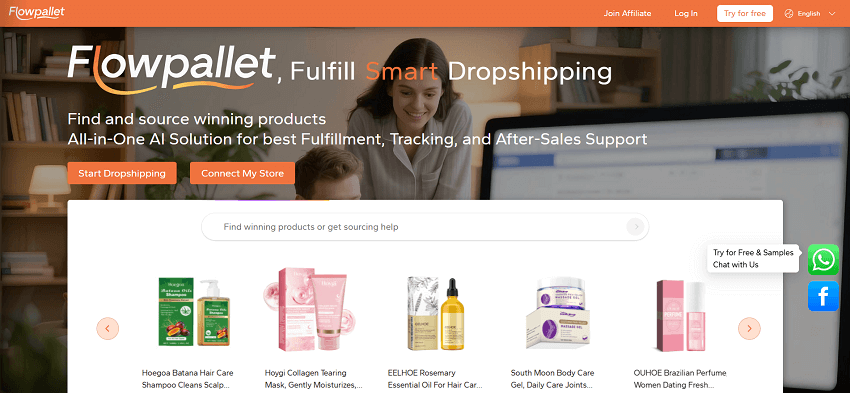
Flowpallet is designed to help e-commerce sellers simplify shipping fulfillment while maintaining cost efficiency and operational control. It focuses on streamlined order processing, efficient inventory coordination, competitive global shipping solutions, and reliable suppliers to source products to sell online.
For sellers looking to expand internationally or optimize logistics without building their own warehouse network, Flowpallet offers a practical, growth-oriented solution.
4. Bottom line
Shipping fulfillment services are the backbone of successful e-commerce operations. They go far beyond shipping packages — covering inventory management, order processing, packaging, delivery, and returns.
Whether you manage fulfillment in-house or partner with a provider like Flowpallet, investing in the right shipping fulfillment strategy can significantly improve your operational efficiency and profitability. Good luck~
