


Guide to Greatly Increasing Your Conversion Rate
FlowpalletAurora ShawNov. 5, 2026

Getting people to your site is only half the work. The next step is helping them feel confident enough to buy.
A shopper might browse, add something to their cart, or even begin checkout—then leave. Maybe the price feels too high. Maybe they can't find the information they need, aren't sure about the product, or find checkout too much hassle. You don't always need to spend more on ads to improve conversions. Often, a few thoughtful changes to your site, product pages, or checkout can help.
A practical guide to improving your conversion rate
A quick summary here:
- Understand your current conversion rate
- Optimize your website for user experience
- Create clear and compelling calls to action
- Improve your product pages and landing pages
- Build trust and reduce purchase anxiety
- Simplify the checkout experience
- Personalize the shopping experience
- Measure results and identify opportunities
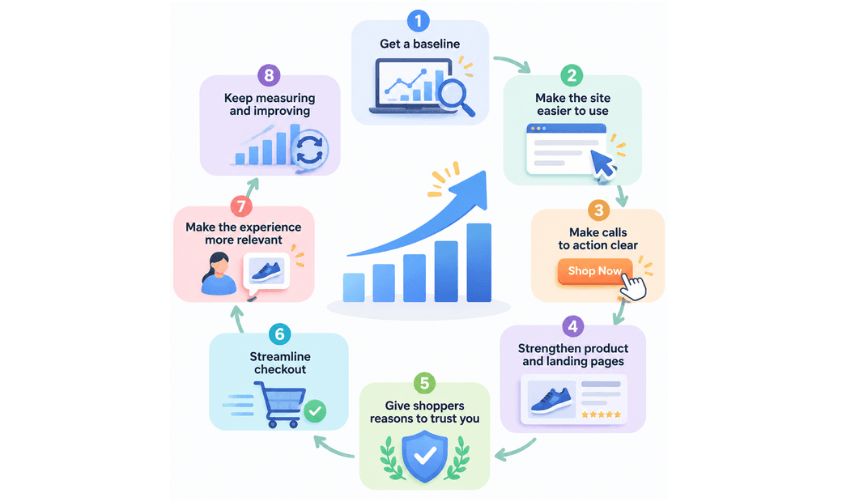
See details below:
1. Get a baseline
Before changing anything, see how your site is performing now.
Conversion rate = (conversions ÷ visitors) × 100%
For example, 100 purchases from 5,000 visitors gives you a 2% conversion rate.
- That overall figure is useful, but it doesn't show where shoppers are getting stuck. Also look at:
- Add-to-cart rate, checkout abandonment, and average order value
- Where shoppers leave: product pages, the cart, or checkout
- How traffic sources compare: organic, paid, and social visitors may behave differently
- Mobile performance: a page that works on a desktop may be awkward to use on a phone
Google Analytics 4 can help you track these patterns.
2. Make the site easier to use
Visitors should be able to find what they need without hunting for it.
- Improve page speed by compressing images and removing unnecessary scripts.
- Simplify navigation with clear labels and sensible categories.
- Design for mobile with readable text and buttons that are easy to tap.
- Use familiar layouts so shoppers know where to look.
- Reduce distractions: too many pop-ups and banners can pull attention away from buying.
Start with pages that get plenty of traffic but few conversions. Removing a couple of obstacles may help more than redesigning the whole site.
3. Make calls to action clear
- Be specific: "Get Your Free Quote" tells people more than "Submit."
- Make the main button easy to spot and avoid giving it too much competition.
- Place it where shoppers can find it: "Add to Cart" shouldn't require a long scroll.
- Consider where the shopper is in their decision: someone still researching may want a guide, while someone ready to buy wants a direct path to checkout.
Try different wording, placement, and styles. More clicks don't automatically mean more sales.
4. Strengthen product and landing pages
- Explain the benefits, not just the specifications. Keep claims accurate and supported.
- Use clear photos and videos to show a product's size, materials, and details.
- Share prices and shipping information early. Unexpected costs can lead shoppers to abandon their carts.
- Answer common questions about sizing, compatibility, warranties, and returns.
- Make sure landing pages match your ads so visitors see what they expected when they clicked.
Keep product listings true to what customers will receive.
5. Give shoppers reasons to trust you
People may hesitate if they're unsure about product quality, payment security, or delivery.
- Show genuine reviews.
- Make shipping, return, refund, and cancellation policies easy to find.
- Offer customer support that's easy to reach.
- Use clear trust signals, such as secure payment options and guarantees customers can verify.
- Set realistic expectations about product claims and delivery times.
The experience doesn't end when someone places an order. For dropshipping sellers, dependable supplier fulfillment matters too. Flowpallet brings product sourcing, order fulfillment, and logistics together in one platform. A good website can encourage a purchase; reliable automated fulfillment helps you keep the promise.
6. Streamline checkout
- Let shoppers check out as guests instead of requiring an account.
- Keep forms short, especially on mobile.
- Show the full cost upfront, including shipping and taxes.
- Offer payment options that suit your market.
- Make errors easy to correct without forcing shoppers to start over.
Try the checkout on a phone yourself, then keep an eye on completion rates.
7. Make the experience more relevant
A few simple touches can help shoppers find what they need:
- Suggest related products.
- Highlight categories that match their interests.
- Offer a first-order discount or free-shipping threshold if your margins allow.
- Send abandoned-cart reminders when you have permission.
- Help returning customers find past purchases and new arrivals.
Use customer data responsibly and in line with applicable privacy rules.
8. Keep measuring and improving
Conversion rate optimization is an ongoing process, not a one-time project.
- Track the metrics tied to your goals, such as conversion rate, add-to-cart rate, checkout completion, cart abandonment, average order value, or revenue per visitor.
- Break results down by device, traffic source, new or returning visitor, and landing page.
- Treat session recordings and heatmaps as clues, not proof of what's wrong.
- Run A/B tests by changing one major element at a time. Decide what success means before the test, and collect enough data to judge the result.
- Fix the biggest blockers first, such as a checkout button that doesn't work.
Conclusion
You don't have to change everything to improve conversions. Learn where shoppers get stuck, then make it easier for them to buy with a smoother site, clearer product information, useful calls to action, visible trust signals, and a simpler checkout.
The experience continues after someone places an order, so sourcing and fulfillment matter too. Start with the biggest obstacle in your funnel, make one change, and measure what happens. Decisions based on customer behavior are more useful than redesigns based on guesswork.
