'/%3e%3cpath%20d='M59.9558%200H51.6287C51.6287%200%2045.5566%2034.1414%2045.7996%2039.9704C48.4659%20103.923%20122.41%2090.4886%20159.049%2075.7773L159.882%2071.6137C72.4464%20100.759%2053.2939%2059.9557%2054.1268%2039.9704C54.7163%2025.8265%2059.9558%200%2059.9558%200Z'%20fill='url(%23paint1_linear_658_5274)'/%3e%3cpath%20d='M180.7%2050.7959L180.845%2049.8037C184.282%2054.4129%20189.53%2057.458%20195.688%2057.458C206.726%2057.458%20217.339%2046.0121%20217.339%2034.9746C217.339%2023.9371%20211.722%2015.8223%20200.685%2015.8223C195.356%2015.8223%20189.544%2018.1027%20184.957%2021.7031L185.696%2016.6543H177.369L168.209%2075.7773H176.536L180.7%2050.7959ZM194.023%2049.9629C183.198%2049.1302%20183.198%2041.6353%20183.198%2037.4717C183.198%2028.3123%20190.455%2023.3157%20197.354%2023.3154C204.252%2023.3154%20208.18%2027.6155%20208.18%2034.9736C208.18%2044.1334%20200.922%2049.9627%20194.023%2049.9629Z'%20fill='%23FBFBFB'/%3e%3cpath%20d='M221.503%2050.7954C226.722%2063.8433%20244.819%2055.7917%20248.982%2050.7954C247.65%2056.7908%20255.088%2057.1796%20258.974%2056.6245L259.807%2049.1304C258.697%2049.1304%20256.476%2048.6308%20256.476%2046.6323C256.476%2044.1342%20260.451%2031.2297%20258.974%2025.814C253.978%207.49469%20228.164%2015.8221%20225.666%2024.9819L231.495%2028.312C242.32%2016.6545%20253.146%2024.9814%20249.815%2031.6431C239.823%2029.1449%20214.842%2034.1413%20221.503%2050.7954ZM248.982%2038.3052C250.648%2045.7997%20233.994%2056.6248%20229.83%2046.6323C227.054%2039.9706%20241.488%2037.4725%20248.982%2038.3052Z'%20fill='%23FBFBFB'/%3e%3cdefs%3e%3clinearGradient%20id='paint0_linear_658_5274'%20x1='333.92'%20y1='70.601'%20x2='188.194'%20y2='70.601'%20gradientUnits='userSpaceOnUse'%3e%3cstop%20stop-color='%23EB5455'/%3e%3cstop%20offset='0.0001'%20stop-color='%23EF733E'/%3e%3cstop%20offset='1'%20stop-color='%23FFD461'/%3e%3c/linearGradient%3e%3clinearGradient%20id='paint1_linear_658_5274'%20x1='139.897'%20y1='83.2717'%20x2='53.2939'%20y2='3.33085'%20gradientUnits='userSpaceOnUse'%3e%3cstop%20stop-color='%23FFD461'/%3e%3cstop%20offset='0.9999'%20stop-color='%23EF733E'/%3e%3c/linearGradient%3e%3c/defs%3e%3c/svg%3e)


A Complete Guide to Start a Cosmetics Store
FlowpalletMay. 6, 2026
The beauty industry continues to grow at an impressive pace, driven by rising demand for skincare, makeup, and personal-care products. If you are planning to start a cosmetic business, the opportunity is huge - but so is the competition.
The key to starting a cosmetics business is choosing a business model that matches your budget, goals, and resources, then building a strong brand that stands out online.
This guide walks you through the simplest ways to start, including traditional manufacturing routes and the increasingly popular option of cosmetic dropshipping.
Part 1: The easiest way to start a cosmetic business
If you are looking for the simplest, lower-risk way to enter the beauty industry, dropshipping is the most accessible entry point. Unlike traditional cosmetic businesses that require upfront investment in inventory, packaging, and storage, dropshipping lets you sell without buying stock or handling fulfillment. Your dropshipping supplier produces, packs, and ships each order directly to your customers.
This means you can focus on branding, marketing, and customer experience instead of logistics. It also allows you to launch quickly and test different products with almost no financial risk.
Platforms like Flowpallet make starting a cosmetic business even easier by helping you source the products, automate fulfillment, and manage orders in one place—so you can focus on branding and marketing instead of logistics. It stands out:
- Wide product selection across all beauty categories (including skincare, makeup, haircare, body-care, fragrances, and wellness essentials)
- High-quality cosmetic suppliers with consistent ingredient standards.
- Trendy and regularly updated products, helping you stay ahead of the competition
- Easy store integration with popular e-commerce platforms like Shopify dropshipping and WooCommerce.
- Brand-friendly product presentation - build a cohesive beauty line with pre-designed product options.
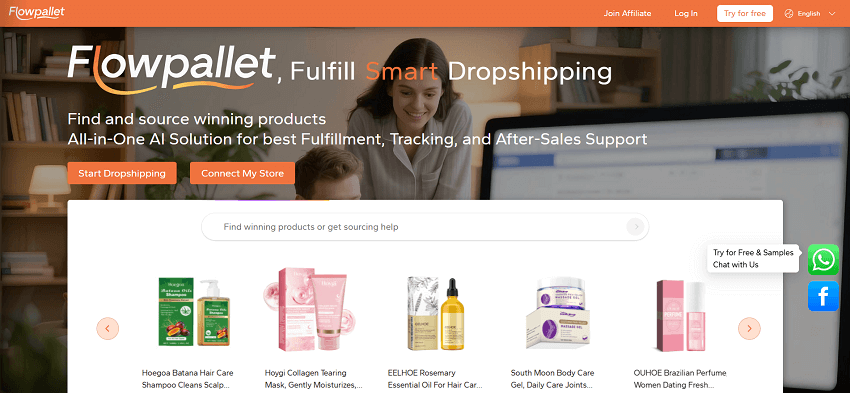
With it, your process is: Set an online store > Connect to Flowpallet > Add products > Wait for its automated fulfillment. Dropshipping makes starting a cosmetic business simple, flexible, and ideal for beginners or anyone wanting to scale efficiently. If you prefer the traditional way, read below.
Part 2: Traditional way to start a cosmetic business
This may take much time and effort to do, but it suits the DIY brand. You can follow:
# Step 1: Research the market and choose a niche
Before you start, you need to understand the beauty market thoroughly. Research the market to understand:
- Which categories are trending (skincare, makeup, acne care, clean beauty, men's grooming, etc.)?
- What are the gaps that larger brands may be overlooking?
- What do your target audience struggle with?
- Competitors' price positioning and product strategies?
Narrowing down your niche allows you to focus marketing efforts, create products your audience truly wants, and avoid being lost in a crowded market.
# Step 2: Build your brand or select products
Your brand is more than a logo—it's your story and promise to customers. Or decide whether you're building your own brand or selling existing products.
If building a brand:
- Create your brand name, mission, and unique selling proposition(USP).
- Develop a simple visual identity (logo, colors, packaging style).
If selling existing products (especially via dropshipping):
- Select items that match your niche.
- Compare different suppliers' ingredients, quality, and costs.
- Consider how products fit together as a collection to build a consistent shopping experience.
Tip: Branding is what differentiates you in the crowded beauty market, even when selling pre-made products.
# Step 3: Set up your online store
Your online store is the main touchpoint for customers. Choose an e-commerce platform such as Shopify or WooCommerce, and design an intuitive, visually appealing layout. Make sure your store includes:
- High-quality product images, detailed ingredient lists, and clear descriptions
- Before/after visuals
- Customer reviews and UGC
- Clear shipping and return policies
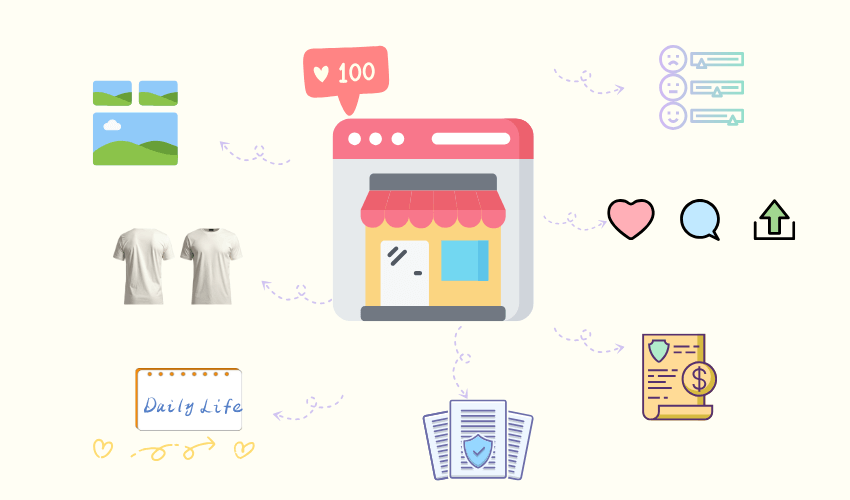
If you use dropshipping with Flowpallet, you can sync products and automate order fulfillment directly from your store. Adding blog content, tutorials, or beauty tips can also improve SEO and increase customer engagement.
Learn more: How to choose an e-commerce platform
# Step 4: Decide how you source products
Choose the product sourcing method that matches your goals, budget, timeline, and customization needs.
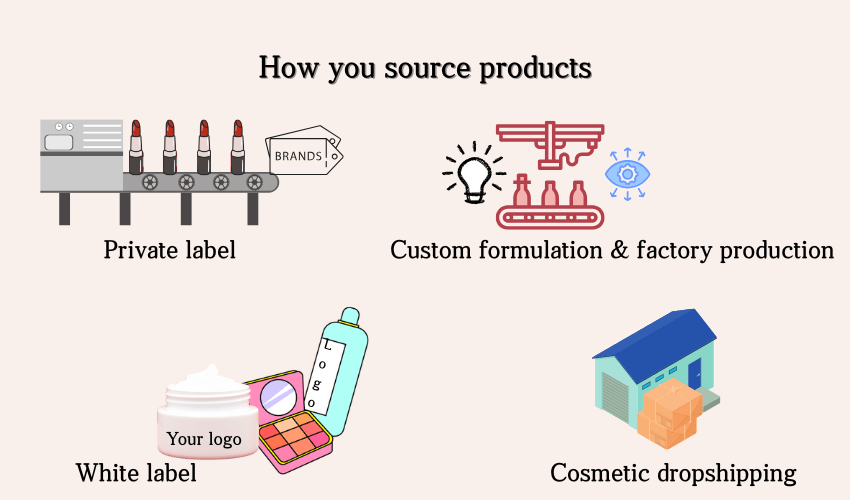
1️⃣Private label
You sell products under your own brand(private labeling), but formulas are pre-developed by the manufacturer. Great for moderate budgets and faster turnaround.
2️⃣White label
Ready-made generic products (white-labled products) you can brand instantly. Factories supply finished items with minimal lead time, perfect for testing the market without high investment.
3️⃣Custom formulation & factory production
For fully unique products, partner directly with a cosmetic factory. You can control formulas, packaging, and ingredient sourcing. Factories also help manage production schedules, batch testing, and quality assurance. This approach requires more time and capital but allows full differentiation and scalability.
4️⃣Cosmetic dropshipping
Sell without inventory or production costs. When integrated with platforms like Flowpallet, it becomes one of the fastest and lowest-risk ways to enter the beauty market since you can test many products with minimal upfront spend.
# Step 5: Develop and package your products
If you're using private label, white label, or custom formulation, work on:
- Packaging design
- Label layout
- Sustainable or premium packaging options
Ensure packaging is practical, attractive, and aligned with your brand identity. Even in dropshipping, product presentation on your store plays a major role in conversion.
# Step 6: Ensure safety & compliance
Cosmetics are regulated in most countries. Make sure you:
- Adhere to ingredient and labeling regulations.
- Prepare safety documents (SDS, COA).
- Include all required claims and disclaimers.
- Register products as mandated by law.
- Build trust and protect your brand through compliance.
For private label and custom formulation products, always request safety documentation from your suppliers. Even dropshipped items must comply with the regulations of the region where they are sold to protect your brand's reputation. Maintaining compliance builds customer trust and helps prevent legal issues.
# Step 7: Launch & promote your store
Once everything is set, start marketing your brand. Effective channels include:
- TikTok, Instagram & YouTube content to show products, tutorials, and reviews
- Influencer collaborations and micro-creators
- Email marketing and loyalty campaigns
- SEO-optimized blog content
- Paid ads for scaling

If you're using Flowpallet's automated dropshipping model, you can launch quicker and test more product ideas without large upfront risks—allowing you to reinvest more into marketing.
Part 3: Final words
Learning how to start a cosmetics business doesn't have to be complex. Whether you choose factory production for full customization or dropshipping for a fast, low-risk launch, the key is understanding your niche, building a clear brand, and choosing the right sourcing model.
With tools like Flowpallet, you can easily access quality beauty products, follow trends, and scale with confidence. Focus on quality, branding, and marketing—and your cosmetic business can grow steadily in a competitive market.
Hope that your cosmetics business can grow into a profitable and sustainable venture.
