'/%3e%3cpath%20d='M59.9558%200H51.6287C51.6287%200%2045.5566%2034.1414%2045.7996%2039.9704C48.4659%20103.923%20122.41%2090.4886%20159.049%2075.7773L159.882%2071.6137C72.4464%20100.759%2053.2939%2059.9557%2054.1268%2039.9704C54.7163%2025.8265%2059.9558%200%2059.9558%200Z'%20fill='url(%23paint1_linear_658_5274)'/%3e%3cpath%20d='M180.7%2050.7959L180.845%2049.8037C184.282%2054.4129%20189.53%2057.458%20195.688%2057.458C206.726%2057.458%20217.339%2046.0121%20217.339%2034.9746C217.339%2023.9371%20211.722%2015.8223%20200.685%2015.8223C195.356%2015.8223%20189.544%2018.1027%20184.957%2021.7031L185.696%2016.6543H177.369L168.209%2075.7773H176.536L180.7%2050.7959ZM194.023%2049.9629C183.198%2049.1302%20183.198%2041.6353%20183.198%2037.4717C183.198%2028.3123%20190.455%2023.3157%20197.354%2023.3154C204.252%2023.3154%20208.18%2027.6155%20208.18%2034.9736C208.18%2044.1334%20200.922%2049.9627%20194.023%2049.9629Z'%20fill='%23FBFBFB'/%3e%3cpath%20d='M221.503%2050.7954C226.722%2063.8433%20244.819%2055.7917%20248.982%2050.7954C247.65%2056.7908%20255.088%2057.1796%20258.974%2056.6245L259.807%2049.1304C258.697%2049.1304%20256.476%2048.6308%20256.476%2046.6323C256.476%2044.1342%20260.451%2031.2297%20258.974%2025.814C253.978%207.49469%20228.164%2015.8221%20225.666%2024.9819L231.495%2028.312C242.32%2016.6545%20253.146%2024.9814%20249.815%2031.6431C239.823%2029.1449%20214.842%2034.1413%20221.503%2050.7954ZM248.982%2038.3052C250.648%2045.7997%20233.994%2056.6248%20229.83%2046.6323C227.054%2039.9706%20241.488%2037.4725%20248.982%2038.3052Z'%20fill='%23FBFBFB'/%3e%3cdefs%3e%3clinearGradient%20id='paint0_linear_658_5274'%20x1='333.92'%20y1='70.601'%20x2='188.194'%20y2='70.601'%20gradientUnits='userSpaceOnUse'%3e%3cstop%20stop-color='%23EB5455'/%3e%3cstop%20offset='0.0001'%20stop-color='%23EF733E'/%3e%3cstop%20offset='1'%20stop-color='%23FFD461'/%3e%3c/linearGradient%3e%3clinearGradient%20id='paint1_linear_658_5274'%20x1='139.897'%20y1='83.2717'%20x2='53.2939'%20y2='3.33085'%20gradientUnits='userSpaceOnUse'%3e%3cstop%20stop-color='%23FFD461'/%3e%3cstop%20offset='0.9999'%20stop-color='%23EF733E'/%3e%3c/linearGradient%3e%3c/defs%3e%3c/svg%3e)


7 Best Spocket Alternatives: 2026 Newest Comparison
FlowpalletAurora ShawJun. 10, 2026

If you have been starting the dropshipping business, chances are you've come across Spocket. But there are so many users who have complained about it - whether it's limited product choices, inventory mix-ups, or just a platform that no longer fits how you run the business.
I was wondering if there are any dropshipping platforms similar to Spocket that may be a better alternative. Any share? -reddit.com
You're far alone. Lots of store owners hit a point where sticking with the same tool holds back growth instead of helping it. That's where exploring Spocket alternatives becomes essential.
In this guide, we'll break down the best alternatives to Spocket in 2026, what makes each one unique, and how to choose the right platform for your business.
1. Spocket overall reviews & why look for alternatives
Spocket is a widely used dropshipping platform focused on US/EU suppliers, with clear strengths in speed and quality, but it's not a perfect fit for everyone.
We research many comments and summarize an overall perspective. Spocket has:
✅Fast delivery (2–7 days) thanks to US/EU warehouses
✅Higher product quality due to pre-vetted suppliers
✅User-friendly interface that's easy for beginners to navigate
✅Branded invoicing, helping stores appear more professional
❌Higher product and subscription costs, which can reduce profit margins
❌Smaller product catalog compared to global platforms like AliExpress
❌Limited flexibility in supplier sourcing, as users are restricted to its ecosystem
❌Mixed customer support experiences, particularly when dealing with supplier or billing issues
❌Lower value-for-money ratings in some review platforms
In short, Spocket is a strong starting point - especially for beginners or niche stores - but it may feel restrictive for sellers who need more competitive pricing, broader product selection, or advanced automation.
2. 🔍How we test and research Spocket alternatives
To provide a fair and practical comparison, we didn't just rely on feature lists or marketing claims. Instead, we evaluated each platform based on real-world usage scenarios that reflect how most dropshippers actually operate.
| Testing time | Each tool was tested for 1–2 weeks |
|---|---|
| Key features to find | Product types, product samples, product sourcing, ease of use, packaging quality, and order fulfillment |
| Cost evaluation | Free and entry-level plans |
| Platform setup | With Shopify, WooCommerce, TikTok Shop |
| Limitations | Short-term, real-world, certain items testing |
In short, this guide is based on hands-on testing and practical considerations to reflect what most dropshippers can realistically expect from the Spocket alternatives.
3. Best Spocket alternatives in 2026
Here are some of the most popular Spocket alternatives in 2026, based on hands-on testing (the table above), market reputation, and overall usability. Each dropshipping platform comes with its own strengths and trade-offs.
# Flowpallet
Flowpallet is quickly gaining attention as a flexible, full-service dropshipping and fulfillment solution. It's closer to a custom fulfillment sourcing, branding, and logistics.
Unlike marketplace-based platforms, Flowpallcet focuses on tailored sourcing and fulfillment workflows, which saves you more time and effort. The key strengths include:
- Custom branding, private labeling, white-label, and packaging support
- Reliable fulfillment with quality control
- Tailored solutions for growing and high-volume stores
- Better margins compared to marketplace suppliers
- Professional beauty supply chain
- Inventory management if you need
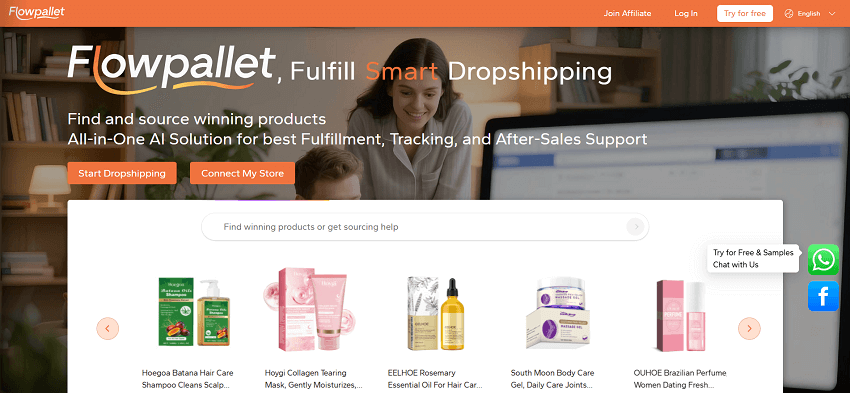
💡Sum: It doesn't support mobile devices. Best for sellers who want to move beyond basic dropshipping and build a scalable, branded ecommerce business.
# AutoDS
AutoDS is designed for sellers who want to automate almost everything. It is one of the most complete automation platforms in the market, designed to manage almost every part of your store. It excels in:
- Product sourcing from multiple platforms(Shopify, eBay, Amazon, etc.)
- Automatic order fulfillment
- Price and stock monitoring
- Built-in product research tools and AI tools
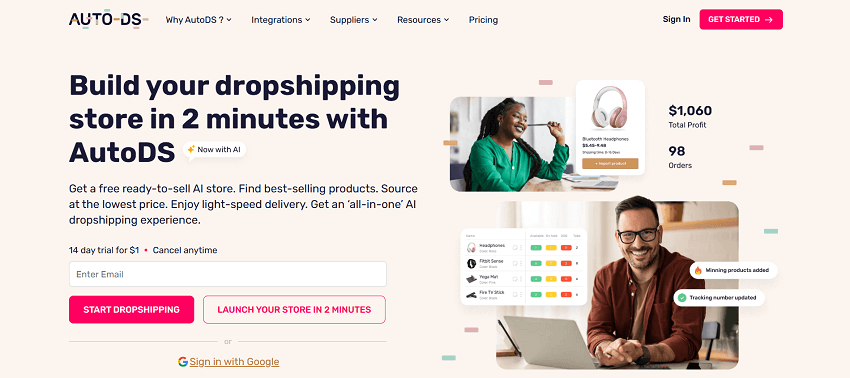
💡Sum: Its setup can feel complex, and subscription cost increases as you scale. Works best for automation-focused sellers who want to scale quickly with minimal manual work.
# Zendrop
Zendrop focuses on simplifying dropshipping with faster delivery and branding options. It works with reliable suppliers and even has its own warehouses, and also supports branding features like custom packaging and invoices. Key strengths:
- US/EU-based warehouses for faster shipping
- Private labeling and custom packaging
- Easy Shopify integration
- Fast shipping (often 3-8 days)
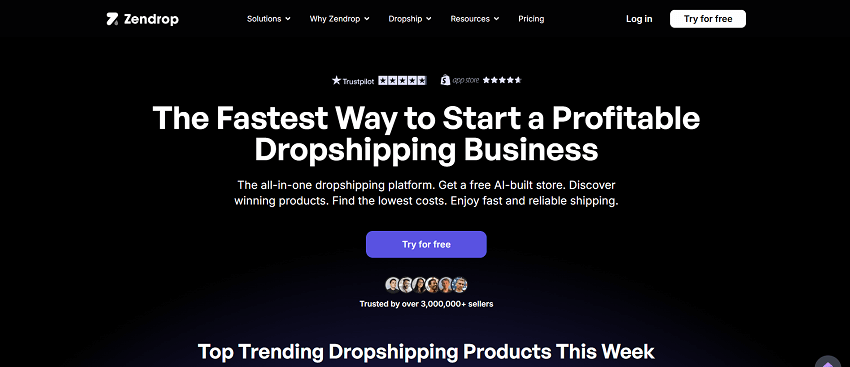
💡Sum: The product catalog is smaller, and its advanced features require paid plans. The prices are higher than other alternatives. Best for beginners and intermediate sellers looking for faster shipping and a simple setup.
# DSers
DSers is a powerful order-management tool best known as the official partner for AliExpress dropshipping. It excels at bulk order processing, multi-store management, and price comparison between suppliers. For it:
- Bulk order processing
- Supplier mapping and optimization
- Free plan available
- Efficient for handling large order volumes
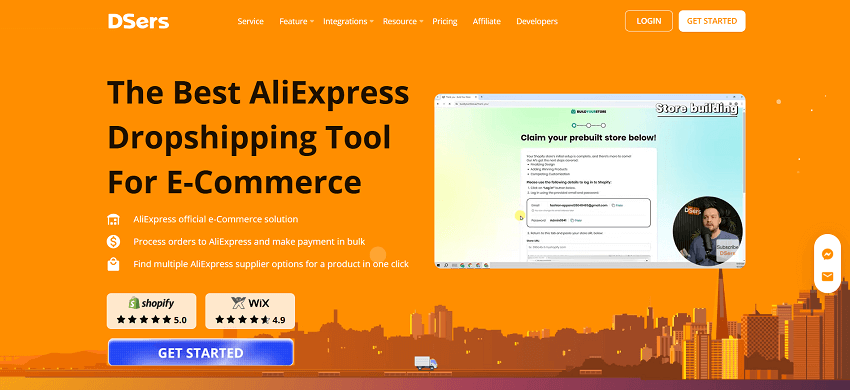
💡Sum: The shipping time is often 10-20+days, and there is a little branding capability. Ideal for beginners who want to start with low upfront costs and test products quickly.
# Syncee
Syncee is a global B2B dropshipping and wholesale platform with a massive catalog of verified suppliers worldwide. It excels at connecting retailers with US/EU/Australian vendors and offers strong automation for product sync, inventory updates, and order tracking. It does well in:
- Integrating seamlessly with Shopify, WooCommerce, and BigCommerce
- Wholesale dropshipping support
- Building long-term partnerships
- Automated inventory sync
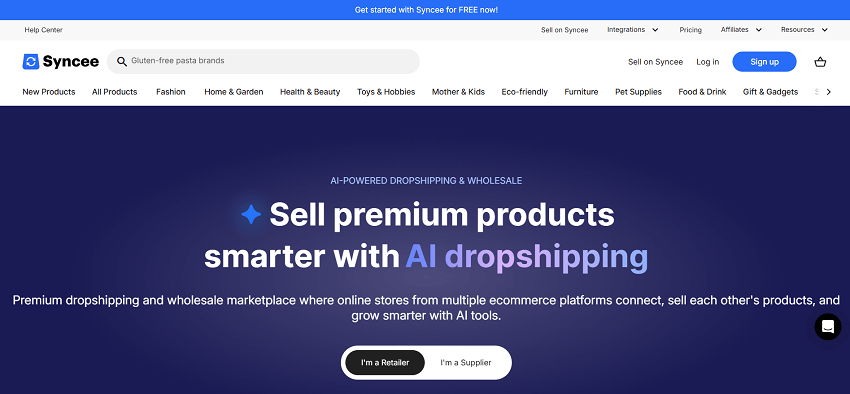
💡Sum: Its free plan limits it to only 25 products and is limited to standalone suppliers. Caters to store owners who prioritize reliability and long-term partnerships.
# EPROLO
EPROLO is an all-in-one dropshipping platform that includes print-on-demand services and a forever-free basic plan. It connects with AliExpress, runs its own warehouses for quality control, and integrates smoothly with Shopify, WooCommerce, and other major platforms. It owns:
- No monthly cost
- Product sourcing and fulfillment
- Branding services available
- Basic branding features
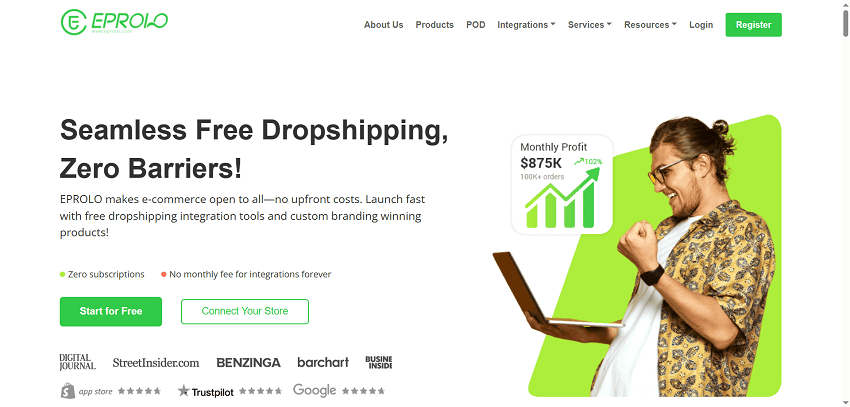
💡Sum: The UI and performance can feel less polished with it, the product selection is less, and the automation feature is relatively basic. Targets new sellers who want to start dropshipping with minimal investment.
# Dropified
Dropified focuses on automated dropshipping and multi-source product importing, allowing users to pull products from AliExpress, Alibaba, eBay, and other sites. It has strong AI-powered product research tools and flexible automation rules for scaling stores. It stands for:
- Advanced automation tools
- Multi-store management
- Product editing tools
- One-click product import
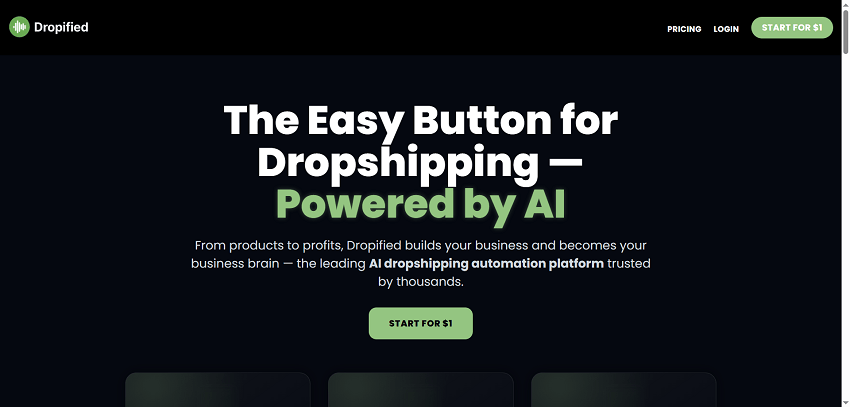
💡Sum: The biggest downside is the high fixed monthly cost, and it does not specialize in fast local US/EU shipping. Designed for scaling businesses that need more control and customization.
Choose the one that meets your needs and budget~
4. Which Spocket alternative is right for you?
The "best" alternative depends on your goals, budget, and experience level.
- For beginners: Flowpallet, DSers, or EPROLO offer low-cost entry points with simple workflows.
- For automation: Flowpallet or AutoDS are ideal if you want to reduce manual work and scale faster.
- For branding: Dropified and Zendrop provide stronger customization and private labeling options.
- For long-term growth: Syncee and Flowpallet are better suited for building sustainable supplier relationships.
Spocket is still a solid platform - but it's no longer the only option. In 2026, dropshippers will have access to more powerful, flexible, and cost-effective tools than ever before.
Instead of looking for a one-size-fits-all solution, focus on what matters most to your business: cost, control, automation, or branding.
Choose the platform that aligns with your strategy—and you'll be in a much better position to scale successfully.
