'/%3e%3cpath%20d='M59.9558%200H51.6287C51.6287%200%2045.5566%2034.1414%2045.7996%2039.9704C48.4659%20103.923%20122.41%2090.4886%20159.049%2075.7773L159.882%2071.6137C72.4464%20100.759%2053.2939%2059.9557%2054.1268%2039.9704C54.7163%2025.8265%2059.9558%200%2059.9558%200Z'%20fill='url(%23paint1_linear_658_5274)'/%3e%3cpath%20d='M180.7%2050.7959L180.845%2049.8037C184.282%2054.4129%20189.53%2057.458%20195.688%2057.458C206.726%2057.458%20217.339%2046.0121%20217.339%2034.9746C217.339%2023.9371%20211.722%2015.8223%20200.685%2015.8223C195.356%2015.8223%20189.544%2018.1027%20184.957%2021.7031L185.696%2016.6543H177.369L168.209%2075.7773H176.536L180.7%2050.7959ZM194.023%2049.9629C183.198%2049.1302%20183.198%2041.6353%20183.198%2037.4717C183.198%2028.3123%20190.455%2023.3157%20197.354%2023.3154C204.252%2023.3154%20208.18%2027.6155%20208.18%2034.9736C208.18%2044.1334%20200.922%2049.9627%20194.023%2049.9629Z'%20fill='%23FBFBFB'/%3e%3cpath%20d='M221.503%2050.7954C226.722%2063.8433%20244.819%2055.7917%20248.982%2050.7954C247.65%2056.7908%20255.088%2057.1796%20258.974%2056.6245L259.807%2049.1304C258.697%2049.1304%20256.476%2048.6308%20256.476%2046.6323C256.476%2044.1342%20260.451%2031.2297%20258.974%2025.814C253.978%207.49469%20228.164%2015.8221%20225.666%2024.9819L231.495%2028.312C242.32%2016.6545%20253.146%2024.9814%20249.815%2031.6431C239.823%2029.1449%20214.842%2034.1413%20221.503%2050.7954ZM248.982%2038.3052C250.648%2045.7997%20233.994%2056.6248%20229.83%2046.6323C227.054%2039.9706%20241.488%2037.4725%20248.982%2038.3052Z'%20fill='%23FBFBFB'/%3e%3cdefs%3e%3clinearGradient%20id='paint0_linear_658_5274'%20x1='333.92'%20y1='70.601'%20x2='188.194'%20y2='70.601'%20gradientUnits='userSpaceOnUse'%3e%3cstop%20stop-color='%23EB5455'/%3e%3cstop%20offset='0.0001'%20stop-color='%23EF733E'/%3e%3cstop%20offset='1'%20stop-color='%23FFD461'/%3e%3c/linearGradient%3e%3clinearGradient%20id='paint1_linear_658_5274'%20x1='139.897'%20y1='83.2717'%20x2='53.2939'%20y2='3.33085'%20gradientUnits='userSpaceOnUse'%3e%3cstop%20stop-color='%23FFD461'/%3e%3cstop%20offset='0.9999'%20stop-color='%23EF733E'/%3e%3c/linearGradient%3e%3c/defs%3e%3c/svg%3e)


Inventory Management Tips: Do's and Don'ts
FlowpalletAurora ShawAug. 28, 2026

Inventory is one of the highest hidden costs in e-commerce and retail. Too much stock ties up cash and warehouse space; Too little stock leads to missed sales and unhappy customers, both are not good for your online store's operation.
Many growing businesses struggle with how to manage inventory, not because they can't sell, but because they can't manage what they store.
Good inventory management is not just about counting products on shelves. It's about controlling cash flow, improving fulfillment efficiency, and reducing operational risks. In this guide, you'll learn six practical inventory management tips that modern online sellers use to stay lean, flexible, and profitable.
What is inventory management?
Inventory management is the process of tracking, controlling, and optimizing the products a business stores and sells. It covers everything from stock tracking and forecasting demand to deciding when to reorder and how much to keep in storage.
Effective inventory management helps you:
- Avoid overstocking and stockouts
- Reduce storage and handling costs
- Improve order fulfillment speed
- Protect your cash flow
- Increase overall operational efficiency
For e-commerce businesses, especially, inventory management directly affects customer experience and profitability. Whether you begin with a basic method or leverage advanced analytics, modern tools, and continuously improving best practices offer valuable ways to enhance efficiency and profitability.
Tip 1: Use Inventory Management Software
Manual tracking with spreadsheets is no longer enough for growing stores. Inventory management software gives you real-time visibility into your stock levels across products, locations, and sales channels. With the right system, you can:
- Track inventory automatically as orders come in
- Reduce human errors in stock counts
- Monitor low-stock alerts
- Generate data for better forecasting
Automation ensures accuracy and saves time, allowing you to focus on sales and marketing instead of constant stock checks.
Tip 2: Set reorder points and safety stock
A reorder point is the minimum stock level that triggers a new purchase order. Safety stock is the extra inventory you keep to prevent stockouts caused by demand spikes or supplier delays. Setting these correctly helps you maintain balance:
- Prevent running out of popular products
- Avoid ordering too early and overstocking
- Keep operations running smoothly during peak seasons
For unpredictable products, safety stock acts as a buffer that protects your sales from disruptions.
Tip 3: Use dropshipping or fulfillment services
Most inventory management tips focus on how to better control stock. This tip is different because it helps you reduce the need to hold stock in the first place. That's to say, not every product needs to sit in your warehouse.
While other tips help you optimize inventory you already have, using dropshipping or fulfillment services changes the structure of your inventory model.
Here's why this approach often delivers greater impact than the rest:
- It directly reduces inventory risk
- It frees up cash flow immediately
- It eliminates the problem of dead stock
- It allows you to expand your product catalog safely
- It works as a "virtual safety stock"
- It pairs perfectly with 3PL warehousing
With a fulfillment partner like Flowpallet, you can:
- List and sell products without committing to bulk purchasing
- Store fast-moving products in a warehouse for quick shipping
- Use dropshipping for long-tail or experimental products
- Avoid tying up cash in uncertain inventory
- Scale your product catalog without increasing storage costs
In short, while other tips teach you how to manage inventory better, this tip helps you need less inventory to manage at all.
Tip 4: Apply ABC analysis
ABC analysis helps you classify products based on their value and importance:
- A items: High-value, fast-moving products
- B items: Moderate value and demand
- C items: Low-value or slow-moving products
This method helps you decide:
- Which products deserve prime warehouse space?
- Which items require strict stock control?
- Which products can be handled through dropshipping instead of storage?
Not all products deserve equal attention or storage cost.
Tip 5: Monitor inventory turnover to eliminate dead stock
Inventory turnover shows how quickly your products sell within a certain period. A low turnover rate often means you are holding dead stock that ties up capital. By monitoring turnover, you can:
- Identify slow-moving products early
- Stop reordering poor performers
- Run promotions to clear old stock
- Adjust purchasing decisions based on real data
This keeps your inventory lean and healthy.
Tip 6: Work with a 3PL supporting both warehousing and dropshipping.
Many inventory tips focus on internal improvements — better tracking, smarter forecasting, or tighter stock control. These are important, but they still assume one thing: you are managing everything yourself. Working with a capable 3PL logistics partner changes that dynamic.
A 3PL fulfillment that supports both warehousing and dropshipping doesn't just help you store and ship products. It gives you a more flexible way to design your entire inventory strategy.
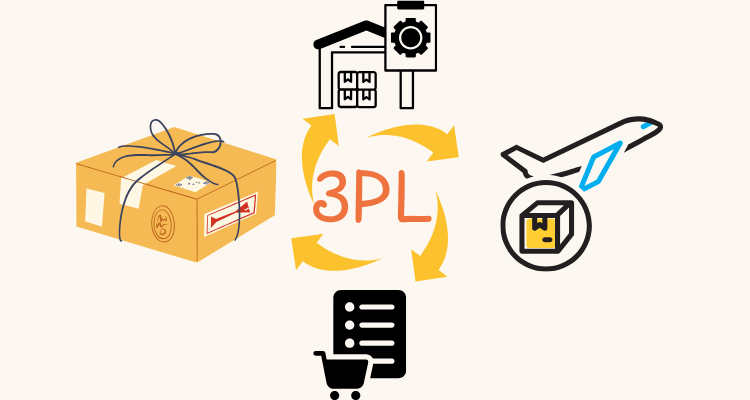
With a partner like Flowpallet, you are not forced to choose between holding stock and avoiding stock. You can do both at the same time, depending on the product.
In simple terms, this means your inventory becomes thinner, more secure, and more flexible. You're not just tweaking how much stock you keep—you're changing the whole setup, so you naturally need to hold less of it, all while still getting orders out quickly and reliably.
Common inventory management mistakes to avoid
Even experienced sellers make these mistakes when trying to implement inventory management tips:
- Overstocking "just in case"
- Ignoring inventory data and relying on guesswork
- Treating all products the same
- Failing to track turnover rates
- Not using fulfillment or dropshipping to reduce stock burden
Avoiding these errors can save high costs and improve operational efficiency. Effective inventory management is not about storing more products. It's about storing smarter, using data, and leveraging fulfillment solutions to reduce risk while maintaining great customer service. Hope you can improve inventory management in the end.
