'/%3e%3cpath%20d='M59.9558%200H51.6287C51.6287%200%2045.5566%2034.1414%2045.7996%2039.9704C48.4659%20103.923%20122.41%2090.4886%20159.049%2075.7773L159.882%2071.6137C72.4464%20100.759%2053.2939%2059.9557%2054.1268%2039.9704C54.7163%2025.8265%2059.9558%200%2059.9558%200Z'%20fill='url(%23paint1_linear_658_5274)'/%3e%3cpath%20d='M180.7%2050.7959L180.845%2049.8037C184.282%2054.4129%20189.53%2057.458%20195.688%2057.458C206.726%2057.458%20217.339%2046.0121%20217.339%2034.9746C217.339%2023.9371%20211.722%2015.8223%20200.685%2015.8223C195.356%2015.8223%20189.544%2018.1027%20184.957%2021.7031L185.696%2016.6543H177.369L168.209%2075.7773H176.536L180.7%2050.7959ZM194.023%2049.9629C183.198%2049.1302%20183.198%2041.6353%20183.198%2037.4717C183.198%2028.3123%20190.455%2023.3157%20197.354%2023.3154C204.252%2023.3154%20208.18%2027.6155%20208.18%2034.9736C208.18%2044.1334%20200.922%2049.9627%20194.023%2049.9629Z'%20fill='%23FBFBFB'/%3e%3cpath%20d='M221.503%2050.7954C226.722%2063.8433%20244.819%2055.7917%20248.982%2050.7954C247.65%2056.7908%20255.088%2057.1796%20258.974%2056.6245L259.807%2049.1304C258.697%2049.1304%20256.476%2048.6308%20256.476%2046.6323C256.476%2044.1342%20260.451%2031.2297%20258.974%2025.814C253.978%207.49469%20228.164%2015.8221%20225.666%2024.9819L231.495%2028.312C242.32%2016.6545%20253.146%2024.9814%20249.815%2031.6431C239.823%2029.1449%20214.842%2034.1413%20221.503%2050.7954ZM248.982%2038.3052C250.648%2045.7997%20233.994%2056.6248%20229.83%2046.6323C227.054%2039.9706%20241.488%2037.4725%20248.982%2038.3052Z'%20fill='%23FBFBFB'/%3e%3cdefs%3e%3clinearGradient%20id='paint0_linear_658_5274'%20x1='333.92'%20y1='70.601'%20x2='188.194'%20y2='70.601'%20gradientUnits='userSpaceOnUse'%3e%3cstop%20stop-color='%23EB5455'/%3e%3cstop%20offset='0.0001'%20stop-color='%23EF733E'/%3e%3cstop%20offset='1'%20stop-color='%23FFD461'/%3e%3c/linearGradient%3e%3clinearGradient%20id='paint1_linear_658_5274'%20x1='139.897'%20y1='83.2717'%20x2='53.2939'%20y2='3.33085'%20gradientUnits='userSpaceOnUse'%3e%3cstop%20stop-color='%23FFD461'/%3e%3cstop%20offset='0.9999'%20stop-color='%23EF733E'/%3e%3c/linearGradient%3e%3c/defs%3e%3c/svg%3e)


Inventory Management: Everything You Should Know
FlowpalletAurora ShawAug. 29, 2026

Whether you run a small online store or manage a large retail operation, inventory plays a central role in your business. Having the right products available at the right time can directly affect sales, customer satisfaction, and profitability.
Too much stock ties up capital and increases storage costs, while too little can lead to missed sales and unhappy customers.
This is where inventory management becomes essential. It helps businesses keep track of what they have in stock, what is selling, and when to reorder products. In today’s fast-paced e-commerce, effective inventory management is no longer optional - it's a key part of running a sustainable and scalable business.
In this guide, we'll explain what inventory management is, why it matters, the different methods and tools available, and how it applies to modern business models like dropshipping and fulfillment.
Read more: What are inventory management tips?
1. What is inventory management? Why does it matter?
Inventory management is the process of tracking, controlling, and organizing a company's stock. This includes raw materials, finished products, and goods that are ready to be sold to customers.
The goal of inventory management is simple: ensure that the right products are available in the right quantity at the right time. A well-managed inventory system allows businesses to:
- Track stock levels in real time
- Avoid overstocking or running out of products
- Reduce storage and operational costs
- Improve order fulfillment speed
- Maintain better cash flow
Here's a common scenario: An online store sells hot items but doesn't track inventory well. They might suddenly run out of stock—this not only means lost sales but also makes customers unhappy. The opposite problem? Ordering too much can lead to products sitting in a warehouse for months without being sold.
Effective inventory management helps businesses find the right balance between supply and demand.
2. Types, methods, and tools of inventory management
Inventory management can be handled in several ways depending on the size of the business and the complexity of operations.
Types of inventory
Most businesses manage several types of inventory, including:
- Raw materials – Components used to manufacture products.
- Work-in-progress (WIP) – Items that are currently being produced.
- Finished goods – Products ready for sale.
- Maintenance, repair, and operations (MRO) – Supplies used for running daily operations.
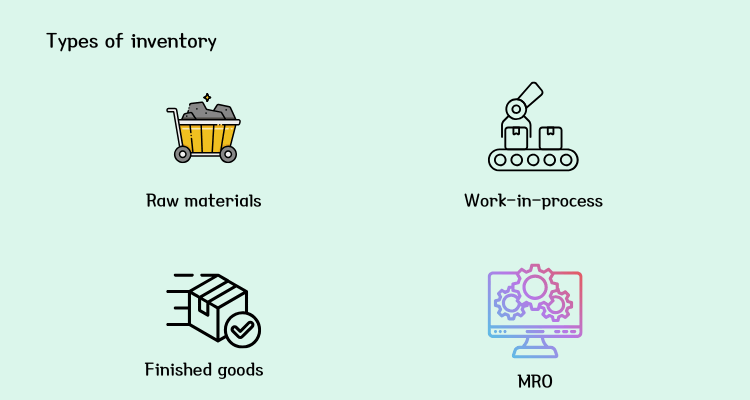
E-commerce stores typically focus on finished goods, since these are the products customers purchase directly.
Common inventory management methods
Businesses use different strategies to manage inventory efficiently:
FIFO (First in, First out)
Older inventory is sold first. This is common for perishable or time-sensitive goods.
LIFO (Last in, First out)
The most recently purchased inventory is sold first. This method is sometimes used for accounting purposes.
Just-In-Time (JIT)
Products are ordered only when needed, reducing storage costs and excess inventory.
ABC analysis
Inventory is categorized into three groups based on value and importance, allowing businesses to prioritize high-value items.
Inventory management tools
Modern businesses often rely on digital tools to automate inventory tracking. These tools may include:
- Inventory management software like 3PL fulfillment
- Warehouse management systems (WMS)
- ERP systems
- E-commerce platform integrations
These solutions provide real-time stock updates, demand forecasting, and automated reordering, helping businesses reduce manual work and errors.
3. Inventory management in dropshipping and fulfillment
Inventory management works differently depending on the business model. Two common e-commerce approaches are dropshipping and third-party fulfillment.
Dropshipping
What is dropshipping? In a dropshipping model, sellers do not keep products in their own warehouse. Instead, when a customer places an order, the product is shipped directly from the supplier.
Because the supplier manages the physical inventory, sellers mainly focus on:
- Monitoring supplier stock levels
- Updating product availability in their store
- Avoiding overselling out-of-stock products
Although dropshipping removes the need to handle physical inventory, accurate stock synchronization with suppliers is still critical. Without it, stores may sell items that are no longer available, leading to canceled orders and poor customer experiences.
Fulfillment services
In a fulfillment model, businesses store their products in a warehouse or fulfillment center. When a customer places an order, the fulfillment provider handles picking, packing, and shipping.
Inventory management in this model involves:
- Tracking warehouse stock levels
- Replenishing inventory before products run out
- Managing orders across multiple sales channels
- Monitoring shipping and delivery performance
Many modern fulfillment platforms also offer integrated inventory systems. For example, services like Flowpallet provide real-time inventory tracking, automated order processing, and multi-channel integration. Its 3PL service is also excellent. This allows e-commerce sellers to manage stock, orders, and shipping in one place while scaling their operations more efficiently.
By combining reliable fulfillment services with proper inventory management tools, businesses can maintain accurate stock visibility and ensure faster, more consistent order delivery.

4. Conclusion
Inventory management is a fundamental part of running any product-based business. It ensures that products are available when customers need them while keeping operational costs under control.
By choosing the right methods, using modern tools, and following proven fulfillment like Flowpallet, businesses can maintain better control over their inventory and create a more reliable customer experience.
