'/%3e%3cpath%20d='M59.9558%200H51.6287C51.6287%200%2045.5566%2034.1414%2045.7996%2039.9704C48.4659%20103.923%20122.41%2090.4886%20159.049%2075.7773L159.882%2071.6137C72.4464%20100.759%2053.2939%2059.9557%2054.1268%2039.9704C54.7163%2025.8265%2059.9558%200%2059.9558%200Z'%20fill='url(%23paint1_linear_658_5274)'/%3e%3cpath%20d='M180.7%2050.7959L180.845%2049.8037C184.282%2054.4129%20189.53%2057.458%20195.688%2057.458C206.726%2057.458%20217.339%2046.0121%20217.339%2034.9746C217.339%2023.9371%20211.722%2015.8223%20200.685%2015.8223C195.356%2015.8223%20189.544%2018.1027%20184.957%2021.7031L185.696%2016.6543H177.369L168.209%2075.7773H176.536L180.7%2050.7959ZM194.023%2049.9629C183.198%2049.1302%20183.198%2041.6353%20183.198%2037.4717C183.198%2028.3123%20190.455%2023.3157%20197.354%2023.3154C204.252%2023.3154%20208.18%2027.6155%20208.18%2034.9736C208.18%2044.1334%20200.922%2049.9627%20194.023%2049.9629Z'%20fill='%23FBFBFB'/%3e%3cpath%20d='M221.503%2050.7954C226.722%2063.8433%20244.819%2055.7917%20248.982%2050.7954C247.65%2056.7908%20255.088%2057.1796%20258.974%2056.6245L259.807%2049.1304C258.697%2049.1304%20256.476%2048.6308%20256.476%2046.6323C256.476%2044.1342%20260.451%2031.2297%20258.974%2025.814C253.978%207.49469%20228.164%2015.8221%20225.666%2024.9819L231.495%2028.312C242.32%2016.6545%20253.146%2024.9814%20249.815%2031.6431C239.823%2029.1449%20214.842%2034.1413%20221.503%2050.7954ZM248.982%2038.3052C250.648%2045.7997%20233.994%2056.6248%20229.83%2046.6323C227.054%2039.9706%20241.488%2037.4725%20248.982%2038.3052Z'%20fill='%23FBFBFB'/%3e%3cdefs%3e%3clinearGradient%20id='paint0_linear_658_5274'%20x1='333.92'%20y1='70.601'%20x2='188.194'%20y2='70.601'%20gradientUnits='userSpaceOnUse'%3e%3cstop%20stop-color='%23EB5455'/%3e%3cstop%20offset='0.0001'%20stop-color='%23EF733E'/%3e%3cstop%20offset='1'%20stop-color='%23FFD461'/%3e%3c/linearGradient%3e%3clinearGradient%20id='paint1_linear_658_5274'%20x1='139.897'%20y1='83.2717'%20x2='53.2939'%20y2='3.33085'%20gradientUnits='userSpaceOnUse'%3e%3cstop%20stop-color='%23FFD461'/%3e%3cstop%20offset='0.9999'%20stop-color='%23EF733E'/%3e%3c/linearGradient%3e%3c/defs%3e%3c/svg%3e)


Warehouse Picking and Packing: Pros and Cons
FlowpalletAurora ShawSep. 4, 2026

As e-commerce continues to grow, fast and accurate order fulfillment has become a key competitive advantage. Customers expect quick delivery, correct orders, and reliable tracking - every single time. That's where pick and pack warehouses come in.
Whether you run a small online store or a scaling dropshipping business, understanding how pick and pack works can help you streamline operations, reduce costs, and improve your customer satisfaction.
1. What is a pick and pack warehouse?
A pick and pack warehouse is a fulfillment center where individual items are selected ("picked") from inventory and then packaged("packed") for shipment to customers.
Unlike traditional bulk shipping, which moves large quantities of goods at once, the pick-and-pack method centers on processing single customer orders. Each order is processed separately, ensuring that customers receive exactly what they bought.
In simple terms:
Pick = retrieving the right items from storage
Pack = preparing those items for delivery
This model is widely used in e-commerce, retail logistics, and third-party fulfillment (3PL) services.
2. How pick and pack warehouse work?
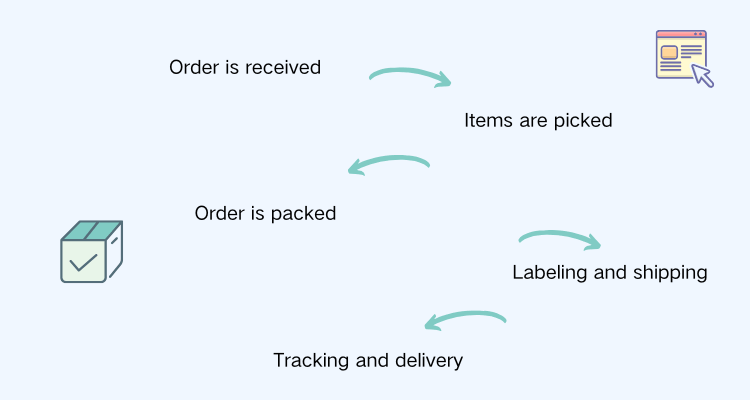
The pick and pack fulfillment typically follows a clear workflow:
1. Order is received
Once a customer places an order on your store, the details are sent to the warehouse system.
2. Items are picked
Warehouse staff (or automated systems) locate and collect the ordered items from storage shelves.
3. Order is packed
The items are carefully packed using suitable materials to prevent damage during shipping.
4. Labeling and shipping
A shipping label is applied, and the package is handed over to a carrier for delivery.
5. Tracking and delivery
Tracking information is shared with the customer, completing the fulfillment cycle.
Advanced warehouses often use software like WMS(Warehouse Management Systems) and barcode scanning to improve speed and accuracy.
3. Benefits and challenges of a pick and pack warehouse
When deciding whether a pick and pack warehouse is right for your business, it's important to look at both sides.
| Shipping delays caused by external carriersBenefits | Challenges |
|---|---|
| Faster order processing and shipping | Inventory management can become complex |
| Higher order accuracy with systemized picking | Costs can increase with volume and services |
| Scalable as your business grows | Occasional picking/packing errors (especially manual) |
| Pay-as-you-go cost structure | Dependence on warehouse operations and performance |
| Supports multi-channel selling | Setup and integration may take time |
| Improved customer satisfaction | Shipping delays caused by external carriers |
In short, the advantages often outweigh the drawbacks - especially if you work with a reliable partner and use the right systems.
4. How to choose a pick and pack warehouse
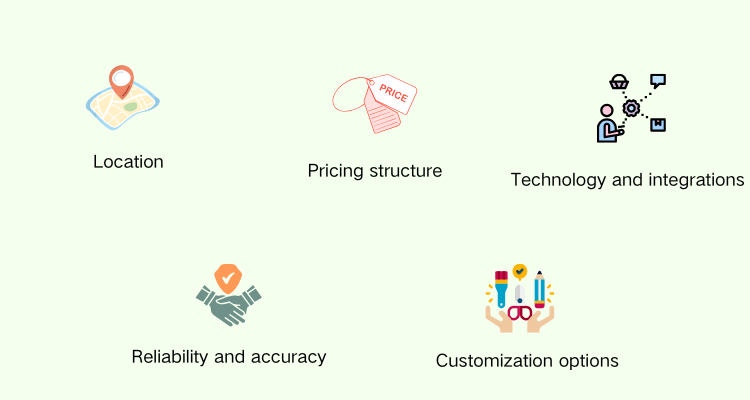
Choosing the right pick and pack warehouse isn't about storage; it's about finding a partner that can support your growth, improve delivery speed, and strengthen your brand. This is especially important if you're starting a dropshipping business and want more control over fulfillment. You can look for:
1️⃣Location
Warehouses closer to your customers can significantly reduce shipping times and costs.
2️⃣Pricing structure
Understand how you'll be charged: per item, per order, storage fees, and any hidden costs.
3️⃣Technology and integrations
Make sure the warehouse integrates smoothly with your e-commerce platform (Shopify, WooCommerce, etc.).
4️⃣Reliability and accuracy
Look for providers with strong performance metrics and positive reviews.
5️⃣Customization options
If branding matters to you, check whether they offer custom packaging, inserts, or labeling.
Where Flowpallet fits in
For dropshipping sellers looking to upgrade their fulfillment solution, Flowpallet combines sourcing, pick and pack, and order fulfillment into one streamlined solution. Instead of relying on multiple suppliers, you can manage everything in one place.
- Reliable pick and pack warehouses
- Faster processing and shipping compared to traditional dropshipping
- Built-in quality control before packing
- Custom packaging options to help you build a real brand
- Seamless integration with your store for automated fulfillment
Why not choose this convenient pick and pack fulfillment?
5. Pick and pack for dropshipping businesses
For dropshipping businesses, pick and pack services can be a game-changer.
Traditional dropshipping often relies on suppliers shipping products directly to customers, leading to long delivery times and inconsistent quality. By using a pick and pack warehouse, you gain more control over the fulfillment process. Here's how it helps:
(1) Better quality control
Products can be inspected before shipping, reducing returns and complaints.
(2) Branding opportunities
You can include custom packaging, logos, or inserts - something traditional dropshipping lacks.
(3) Bulk cost savings
Buying inventory in bulk and using pick and pack can improve your profit margins over time.
For growing dropshipping stores, combining sourcing flexibility with warehouse fulfillment like Flowpallet is often the next step toward building a real, scalable brand.
6. Final thoughts
A pick and pack warehouse is more than just a storage space; it's the backbone of efficient e-commerce operations. By understanding how it works and choosing the right partner, you can deliver faster, reduce errors, and create a better overall experience for your customers.
As your business grows, investing in the right fulfillment strategy can make all the difference. Good luck to you~
