


Is Dropshipping Legal? Yes! Run It without Risks
FlowpalletAurora ShawOct. 15, 2026

💬I am doing a part-time dropshipping business, but my boss told me that I was illegal. Is dropshipping illegal or not? -reddit.com
Dropshipping has become one of the most popular ways to start an e-commerce business. You don't need to buy inventory upfront, rent a warehouse, or handle shipping yourself. That low barrier to entry is exactly why so many beginners choose it.
But there is also one question that keeps coming up: Is dropshipping legal?
The simple answer is yes. In most countries, including the US, UK, Canada, Australia, and across Europe, dropshipping is a perfectly legitimate business model. Countless online stores operate this way every single day.
That said, legality comes down to how you run things. Selling fake products, using copyrighted material without authorization, or failing to disclose key policies can quickly put your business on the wrong side of the law.
In this guide, we'll cover the basics of dropshipping, its advantages and drawbacks, the situations where it can become illegal, and the steps you can take to build a business that's both compliant and trustworthy.
1. What is dropshipping? Pros and cons
Dropshipping is an e-commerce order fulfillment model where you sell products online without stocking inventory yourself.
Instead of storing products in your own warehouse, you purchase items from a supplier only after a customer places an order. The supplier then ships the product directly to the customer. Here's how it usually works:
- A customer places an order in your online store
- You forward the order to your supplier
- The supplier packs and ships the item
- Your customer receives the product
You act as the middleman between the customer and the supplier.
An overview: Pros and cons of dropshipping
Pros:
| Pros | Explanation |
|---|---|
| Low startup cost | No need to buy inventory upfront, making it beginner-friendly. |
| No inventory management | Suppliers handle storage, packing, and shipping for you. |
| Easy to test products | You can quickly try different products and niches with low risk. |
| Flexible location | Run your business from anywhere with an internet connection. |
Cons:
| Cons | Explanation |
|---|---|
| Lower profit margins | High competition often leads to smaller profits. |
| Limited quality control | Poor supplier quality can hurt your brand reputation. |
| Shipping issues | Overseas shipping may cause delays or damaged packages. |
| Supplier dependency | Your business depends heavily on supplier reliability and stock availability. |
Hope the tables could help you.
2. Is dropshipping legal?
Dropshipping is fully legal in the vast majority of countries.
Major ecommerce platforms Shopify, WooCommerce, and Amazon welcome all dropshipping businesses. In fact, many well-known online retailers already use fulfillment models that closely resemble dropshipping.
At its core, the model is straightforward and legal: you act as a retailer, promoting products, processing customer payments, and coordinating delivery through your suppliers. There's nothing inherently unlawful about that.
Where it gets complicated is compliance. Whether your business stays on the right side of the law depends on how well you follow local regulations and e-commerce rules.
A legitimate dropshipping business should tick all of these boxes:
- Sell genuine products - no fakes or knockoffs
- Pay the required taxes - don't cut corners with the government
- Display store policies clearly - returns, shipping, and contact info should be easy to find
- Respect trademarks and copyrights - use only content and brands you're authorized to use
- Avoid misleading advertising - be honest about what you're selling
- Follow consumer protection laws - customers have rights, and you need to honor them
The bottom line? Treat dropshipping like a real business, not a shortcut to quick cash, and you'll generally have nothing to worry about.
3. Please avoid: when is dropshipping illegal?
While dropshipping itself is legal, certain practices are not. Here are the most common situations where dropshipping can become illegal or create legal problems.
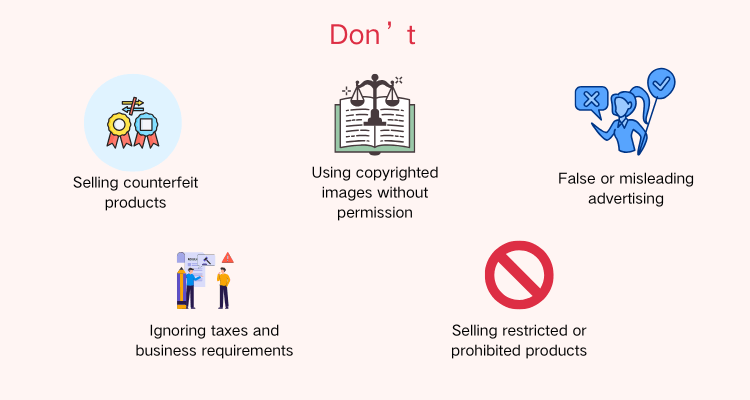
❌Selling counterfeit products
This is one of the biggest risks in dropshipping. Selling fake branded products, such as counterfeit sneakers, luxury bags, electronics, or cosmetics, can lead to lawsuits, payment holds, or store shutdowns.
Even if the supplier claims the products are "inspired by" famous brands, you can still be held responsible as the seller. Always avoid suppliers offering suspiciously cheap branded goods.
❌Using copyrighted images without permission
Many beginners copy product photos directly from other stores or brands. That can create copyright issues.
If you use protected images, videos, logos, or product descriptions without permission, the original owner may file a copyright complaint against your store. Whenever possible:
- Use supplier-approved media
- Create your own product photos
- Rewrite product descriptions in your own words
❌False or misleading advertising
You cannot make fake claims about products. For example:
- Claiming a product cures diseases without proof
- Hiding long shipping times
- Using fake scarcity tactics
- Posting fake customer reviews
Misleading marketing can violate advertising laws and consumer protection regulations. Transparency matters.
❌Ignoring taxes and business requirements
In many countries, dropshipping income is taxable. Depending on your location, you may need:
- A business license
- A sales tax permit
- VAT registration
- Income tax reporting
Failing to comply with tax laws can create legal and financial problems later.
❌Selling restricted or prohibited products
Some products require licenses or have strict regulations. Examples may include:
- Supplements
- Medical devices
- CBD products
- Weapons
- Trademarked goods
- Certain beauty products
Before selling any product, check local regulations in both your country and your customers' countries.
4. How to run a legal dropshipping business
The good news is that staying compliant is usually straightforward if you learn how to do dropshipping professionally from the beginning.
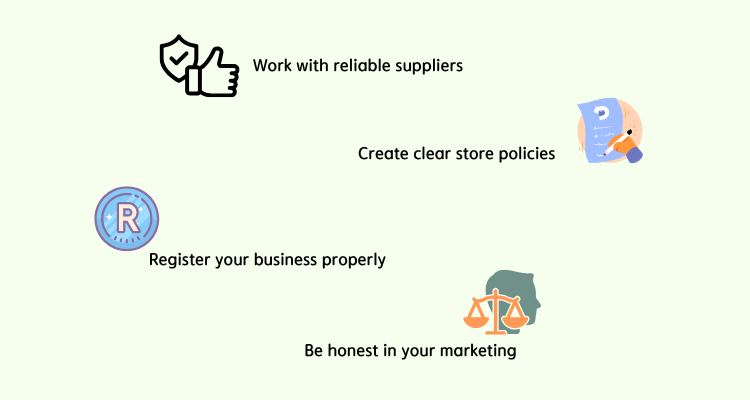
✅Work with reliable suppliers
Choosing the right supplier is one of the most important parts of running a legal and sustainable dropshipping business. Instead of simply picking the cheapest option, focus on suppliers that are reliable, transparent, and experienced in e-commerce fulfillment.
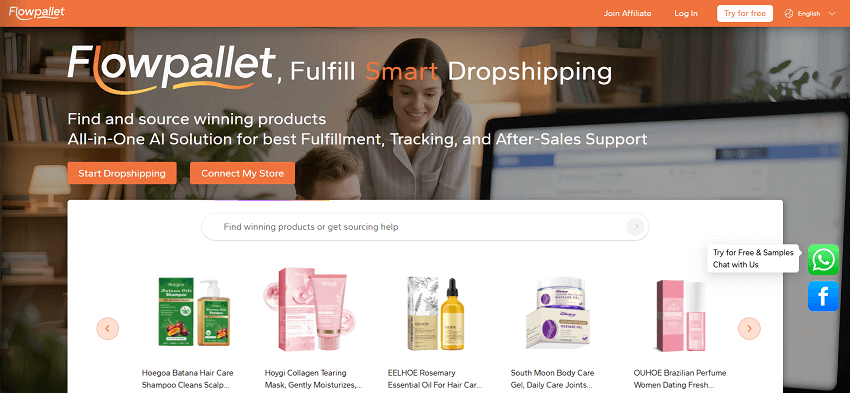
Platforms like Flowpallet can help simplify this process by connecting sellers with more stable sourcing and fulfillment solutions.
It can provide you with: legitimate products, consistent product quality, accurate inventory updates, 3PL logistics, faster and stable shipping, better communication, and so on…
✅Create clear store policies
Every professional e-commerce store should include:
- Shipping policy
- Return and refund policy
- Privacy policy
- Terms and conditions
Clear policies help protect both your customers and your business. They also make your store look more trustworthy.
✅Register your business properly
Depending on your country, registering your business can help you:
- Pay taxes legally
- Open business bank accounts
- Work with payment providers more easily
- Build long-term credibility
Many dropshippers eventually register an LLC or similar business structure as they grow.
✅Be honest in your marketing
Avoid exaggerated claims and unrealistic promises. Instead of trying to "hack" customers into buying, focus on:
- Accurate product descriptions
- Real product benefits
- Honest shipping estimates
- Good customer support
Long-term e-commerce brands are built on trust.
5. Bottom line
So, is dropshipping legal?
Absolutely, as long as you run your business responsibly and operate within e-commerce regulations, dropshipping is completely legal.
The model itself isn't the issue. Most legal trouble stems from poor practices - things like selling counterfeit goods, using copyrighted content without permission, or misleading your customers.
Focus on the right fundamentals: reliable suppliers, clear and transparent policies, honest marketing, and consistent order fulfillment - and dropshipping can become a genuinely sustainable, long-term business.
