'/%3e%3cpath%20d='M59.9558%200H51.6287C51.6287%200%2045.5566%2034.1414%2045.7996%2039.9704C48.4659%20103.923%20122.41%2090.4886%20159.049%2075.7773L159.882%2071.6137C72.4464%20100.759%2053.2939%2059.9557%2054.1268%2039.9704C54.7163%2025.8265%2059.9558%200%2059.9558%200Z'%20fill='url(%23paint1_linear_658_5274)'/%3e%3cpath%20d='M180.7%2050.7959L180.845%2049.8037C184.282%2054.4129%20189.53%2057.458%20195.688%2057.458C206.726%2057.458%20217.339%2046.0121%20217.339%2034.9746C217.339%2023.9371%20211.722%2015.8223%20200.685%2015.8223C195.356%2015.8223%20189.544%2018.1027%20184.957%2021.7031L185.696%2016.6543H177.369L168.209%2075.7773H176.536L180.7%2050.7959ZM194.023%2049.9629C183.198%2049.1302%20183.198%2041.6353%20183.198%2037.4717C183.198%2028.3123%20190.455%2023.3157%20197.354%2023.3154C204.252%2023.3154%20208.18%2027.6155%20208.18%2034.9736C208.18%2044.1334%20200.922%2049.9627%20194.023%2049.9629Z'%20fill='%23FBFBFB'/%3e%3cpath%20d='M221.503%2050.7954C226.722%2063.8433%20244.819%2055.7917%20248.982%2050.7954C247.65%2056.7908%20255.088%2057.1796%20258.974%2056.6245L259.807%2049.1304C258.697%2049.1304%20256.476%2048.6308%20256.476%2046.6323C256.476%2044.1342%20260.451%2031.2297%20258.974%2025.814C253.978%207.49469%20228.164%2015.8221%20225.666%2024.9819L231.495%2028.312C242.32%2016.6545%20253.146%2024.9814%20249.815%2031.6431C239.823%2029.1449%20214.842%2034.1413%20221.503%2050.7954ZM248.982%2038.3052C250.648%2045.7997%20233.994%2056.6248%20229.83%2046.6323C227.054%2039.9706%20241.488%2037.4725%20248.982%2038.3052Z'%20fill='%23FBFBFB'/%3e%3cdefs%3e%3clinearGradient%20id='paint0_linear_658_5274'%20x1='333.92'%20y1='70.601'%20x2='188.194'%20y2='70.601'%20gradientUnits='userSpaceOnUse'%3e%3cstop%20stop-color='%23EB5455'/%3e%3cstop%20offset='0.0001'%20stop-color='%23EF733E'/%3e%3cstop%20offset='1'%20stop-color='%23FFD461'/%3e%3c/linearGradient%3e%3clinearGradient%20id='paint1_linear_658_5274'%20x1='139.897'%20y1='83.2717'%20x2='53.2939'%20y2='3.33085'%20gradientUnits='userSpaceOnUse'%3e%3cstop%20stop-color='%23FFD461'/%3e%3cstop%20offset='0.9999'%20stop-color='%23EF733E'/%3e%3c/linearGradient%3e%3c/defs%3e%3c/svg%3e)


Private Label Dropshipping: Get Started Now
FlowpalletAurora ShawAug. 30, 2026

You may know private label and dropshipping, but do you know that now they can combine? Private label dropshipping has become one of the most attractive business models in modern e-commerce.
It combines the flexibility of dropshipping with the power of branding, allowing you to sell products under your own brand name without handling inventory or logistics directly.
Unlike traditional dropshipping, where sellers rely entirely on generic products from suppliers, private label dropshipping focuses on building a recognizable brand. This makes it a long-term strategy rather than a quick-profit approach. To start private label dropshipping, you can:
- Choose the right niche and items
- Validate your product idea
- Find a private label supplier
- Build your online store and product listings
- Partner with a fulfillment solution
- Launch and market your brand
As competition in e-commerce continues to grow and changeable e-commerce trends, more sellers are shifting toward private labeling to stand out and increase profit margins.
1. What is private label dropshipping & is it profitable?
Private label dropshipping is a business model where you sell products manufactured by a third-party supplier but branded with your own logo, packaging, and identity. Instead of selling the same generic item as hundreds of other stores, you create a unique brand around it.
So is it worth it and profitable?
The short answer is yes, but it largely depends on how you approach it.
Private label dropshipping can be very profitable if you build a real brand, not just sell random products. It does take more work, though. You'll need to invest more time and money in branding, packaging, and sometimes customizing products, and some suppliers have minimum order rules.
In exchange, you control your business more and build long-term, sustainable growth - that's where the real profit is.
2. How private label dropshipping works
The process of private label dropshipping is straightforward but involves several key steps:
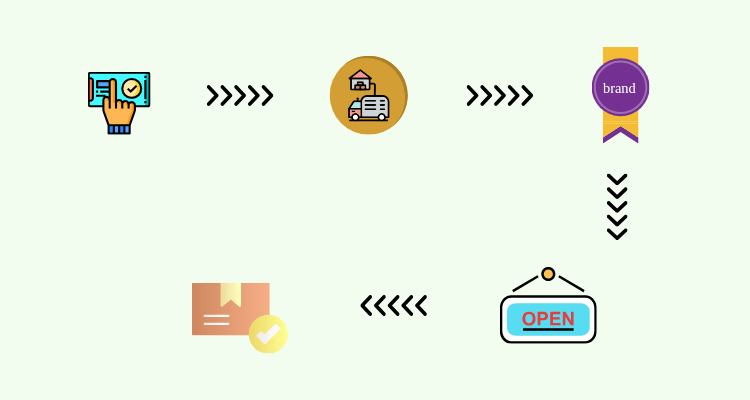
1. Pick a niche
Choose a product category with demand and branding potential.
2. Find a supplier
Work with a supplier that offers private labeling.
3. Add your branding
Customize logo, packaging, or product details.
4. Launch your store
List the product with strong images and clear copy.
5. Fulfill orders
The supplier ships products directly to customers.
This model allows you to focus on marketing and brand building while the supplier manages logistics.
3. Best products for private label dropshipping
Not all products are suitable for private labeling. The best options are usually products that are:
- Consumed frequently
- Visually brandable
- Not overly complex or regulated
Here are some of the most popular categories:
- Beauty and skincare products (serums, creams, facial tools)
- Fitness and wellness products (resistance bands, supplements, yoga accessories)
- Home and kitchen items (storage solutions, tools, organizers)
- Pet products (grooming tools, accessories, toys)
- Eco-friendly lifestyle products (reusable bottles, bamboo items)
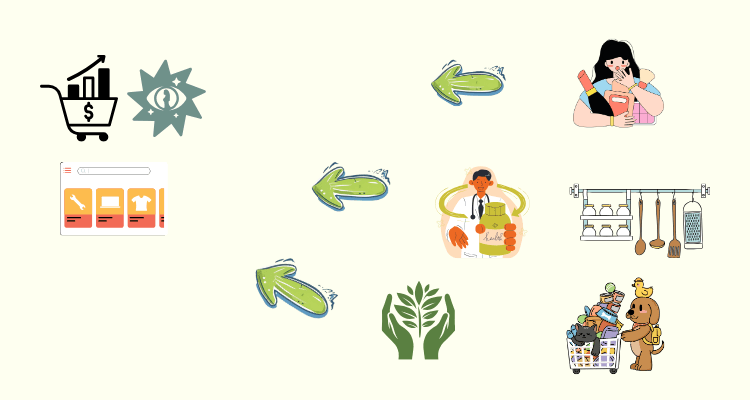
These items perform really well because branding strongly influences what people decide to buy.
4. How to start private label dropshipping
Starting a private label dropshipping business isn't complicated, but doing it well takes a bit of planning. Here is a practical step-by-step approach:
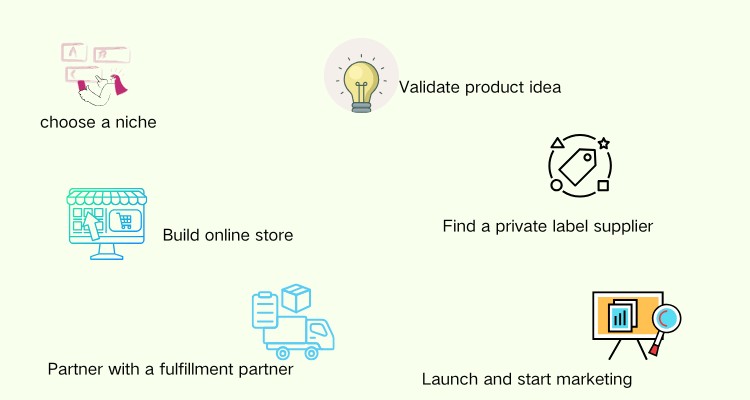
Step 1: Choose a niche
Don't try to sell everything. Pick a niche with clear demand and a specific audience - like skincare, pet products, or fitness. A focused niche makes it much easier to build a brand people actually remember.
Step 2: Validate your product idea
Before you commit, make sure people actually want what you're selling. Check TikTok trends, search demand, and competitor stores. If you're seeing consistent interest (now just a one-week trend), that's usually a good sign.
Step 3: Find a private label supplier
Look for suppliers that support custom branding, not just generic products. Always order samples first - this is something many beginners skip, and it often leads to problems later. Product quality and packaging will directly impact how customers see your brand.
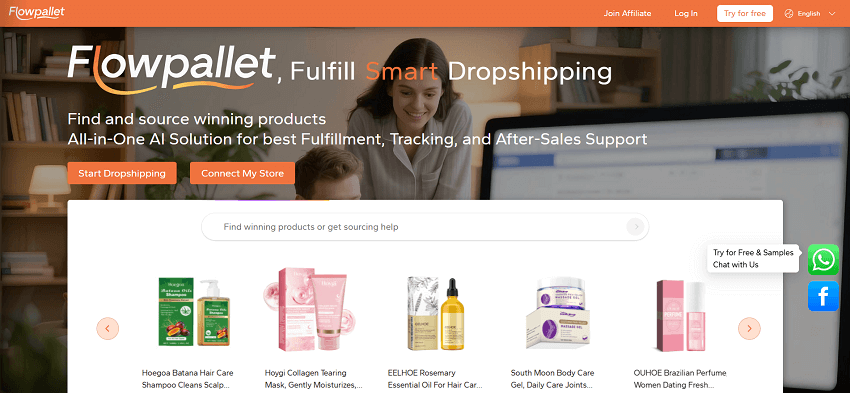
If you want to speed things up, using a tool like Flowpallet can make the process much easier. One of its key advantages is that it already supports private label features, so you're not just sourcing products - you can also handle your own branding, packaging, and fulfillment in one place.
Instead of going back and forth with different suppliers, Flowpallet lets you find products that are suitable for private labeling, chat for the final customized pattern, and sync everything directly to your store. It's a much smoother setup, especially if you want to launch faster without dealing with too many moving parts.
Log in to it and have a try now~
Step 4: Build your online store
Use Shopify or a similar platform to set up your store. Keep it clean and simple. Focus on good product images, clear descriptions, and a brand style that feels consistent, such as colors, tone, and messaging that all match.
![How to Start Dropshipping on Shopify? [Guide Here]](https://cdn.flowpallet.com/blog/default/Mar_Tue/summary-how-to-start-dropshipping-shopify.png)
Step 5: Partner with a fulfillment solution
To scale efficiently, you need a reliable fulfillment system. This is where Flowpallet can help streamline your operations. With it, you can:
- Automate order fulfillment
- Source products from various suppliers directly
- Simplify product customization and fulfillment
- Reduce manual work and human error
- Scale your private label brand faster
- One-click monitoring of store operations
Instead of spending time coordinating between multiple suppliers and logistics steps, Flowpallet helps centralize your operations so you can focus on marketing and brand growth.
Step 6: Launch and start marketing
This is where most of your results come from. Test different marketing channels like social media marketing (TikTok, Instagram, Facebook), influencer content, paid ads (Meta Ads, Google Ads), organic posts, or Email marketing for retention.
With private label, you're not just selling a product: you're selling a brand, so storytelling really matters.
5. Bonus: branding tips for private label dropshipping
A strong brand is what separates you from other dropshipping stores. It doesn't need to be complicated - just clear and consistent. You can try to:
✨Create a unique brand name and logo: Pick a simple, easy-to-remember name. Keep the logo clean so it's easy to recognize.
✨Design custom packaging: Even basic custom packaging can make your product feel more premium and less generic.
✨Build a brand story: Give your brand a clear angle - what you stand for and why it matters to your audience.
✨Keep a consistent visual identity: Use the same colors, fonts, and style across your store and ads so everything feels connected.
✨Optimize the customer experience: Fast shipping, clear updates, and good support make people more likely to come back.
Hope these tips can help you during the process.
6. Conclusion
Private label dropshipping is one of the most powerful ways to build a sustainable e-commerce brand. While it requires more effort than traditional dropshipping, it offers long-term benefits, such as higher margins, stronger branding, and customer loyalty. make it a worthwhile strategy.
With the right product, supplier, and fulfillment partner like Flowpallet, you can turn a simple online store into a scalable brand.
