'/%3e%3cpath%20d='M59.9558%200H51.6287C51.6287%200%2045.5566%2034.1414%2045.7996%2039.9704C48.4659%20103.923%20122.41%2090.4886%20159.049%2075.7773L159.882%2071.6137C72.4464%20100.759%2053.2939%2059.9557%2054.1268%2039.9704C54.7163%2025.8265%2059.9558%200%2059.9558%200Z'%20fill='url(%23paint1_linear_658_5274)'/%3e%3cpath%20d='M180.7%2050.7959L180.845%2049.8037C184.282%2054.4129%20189.53%2057.458%20195.688%2057.458C206.726%2057.458%20217.339%2046.0121%20217.339%2034.9746C217.339%2023.9371%20211.722%2015.8223%20200.685%2015.8223C195.356%2015.8223%20189.544%2018.1027%20184.957%2021.7031L185.696%2016.6543H177.369L168.209%2075.7773H176.536L180.7%2050.7959ZM194.023%2049.9629C183.198%2049.1302%20183.198%2041.6353%20183.198%2037.4717C183.198%2028.3123%20190.455%2023.3157%20197.354%2023.3154C204.252%2023.3154%20208.18%2027.6155%20208.18%2034.9736C208.18%2044.1334%20200.922%2049.9627%20194.023%2049.9629Z'%20fill='%23FBFBFB'/%3e%3cpath%20d='M221.503%2050.7954C226.722%2063.8433%20244.819%2055.7917%20248.982%2050.7954C247.65%2056.7908%20255.088%2057.1796%20258.974%2056.6245L259.807%2049.1304C258.697%2049.1304%20256.476%2048.6308%20256.476%2046.6323C256.476%2044.1342%20260.451%2031.2297%20258.974%2025.814C253.978%207.49469%20228.164%2015.8221%20225.666%2024.9819L231.495%2028.312C242.32%2016.6545%20253.146%2024.9814%20249.815%2031.6431C239.823%2029.1449%20214.842%2034.1413%20221.503%2050.7954ZM248.982%2038.3052C250.648%2045.7997%20233.994%2056.6248%20229.83%2046.6323C227.054%2039.9706%20241.488%2037.4725%20248.982%2038.3052Z'%20fill='%23FBFBFB'/%3e%3cdefs%3e%3clinearGradient%20id='paint0_linear_658_5274'%20x1='333.92'%20y1='70.601'%20x2='188.194'%20y2='70.601'%20gradientUnits='userSpaceOnUse'%3e%3cstop%20stop-color='%23EB5455'/%3e%3cstop%20offset='0.0001'%20stop-color='%23EF733E'/%3e%3cstop%20offset='1'%20stop-color='%23FFD461'/%3e%3c/linearGradient%3e%3clinearGradient%20id='paint1_linear_658_5274'%20x1='139.897'%20y1='83.2717'%20x2='53.2939'%20y2='3.33085'%20gradientUnits='userSpaceOnUse'%3e%3cstop%20stop-color='%23FFD461'/%3e%3cstop%20offset='0.9999'%20stop-color='%23EF733E'/%3e%3c/linearGradient%3e%3c/defs%3e%3c/svg%3e)


Best Shopify Fulfillment Strategies for E-commerce in 2026
FlowpalletAurora ShawJul. 24, 2026

Are you running a Shopify store? Running an online business isn't just about putting products up online and sitting back to wait for orders. The real behind-the-scenes work actually starts right after a customer checks out. You need to process orders fast, pack items properly, and make sure buyers get timely shipping notifications. This whole end-to-end process is what we call order fulfillment.
For Shopify store owners, fulfillment plays a major role in customer satisfaction, operational efficiency, and long-term growth. Slow shipping, inventory mistakes, or delayed tracking updates can quickly lead to refunds and negative reviews. On the other hand, a smooth fulfillment system helps stores build trust and encourage repeat purchases.
In this guide, we'll explain how Shopify order fulfillment works, the different fulfillment methods available, key features to look for, and practical ways to improve your workflow as your business grows.
1. What is Shopify order fulfillment & its types
Shopify order fulfillment refers to the process of receiving, processing, packing, and shipping customer orders placed through a Shopify store. It also includes inventory management, tracking updates, and handling returns when necessary.
Depending on the size and business model of a store, fulfillment can be handled in different ways.
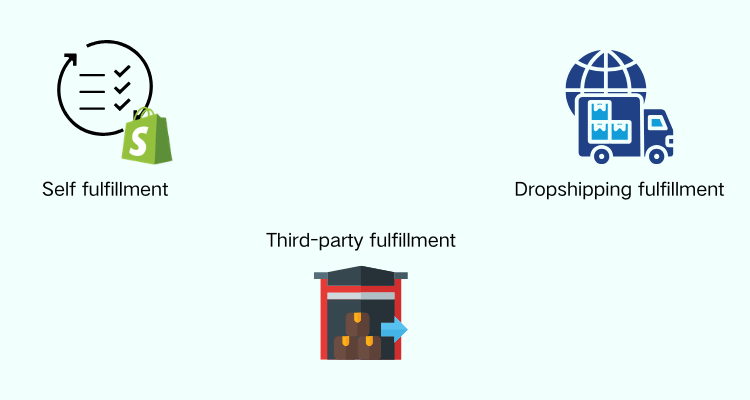
1️⃣Self-fulfillment
Self-fulfillment means the store owner manages inventory and shipping independently. Products may be stored at home, in a small warehouse, or in a rented storage space.
This option is common for new e-commerce businesses because it offers more control and lower upfront costs. However, as order volume increases, self-fulfillment can become time-consuming and difficult to scale.
| Pros | Cons |
|---|---|
| Full control over packaging and branding | Requires manual labor |
| Lower starting costs | Harder to scale during peak seasons |
| Flexible inventory management | Increased risks of packing errors |
2️⃣Third-party fulfillment
Third-party logistics (3PL logistics) providers, commonly called 3PL companies, store inventory and handle shipping on behalf of e-commerce businesses.
When a customer places an order, Shopify automatically sends the order information to the fulfillment center. The provider then picks, packs, and ships the item directly to the customer.
This method is popular among growing Shopify stores because it reduces operational workload and speeds up delivery times.
| Pros | Cons |
|---|---|
| Faster shipping | Storage and fulfillment fees |
| Reduced operational stress | Less direct control over packaging |
| Easier scaling | Possible communication delays |
3️⃣Dropshipping fulfillment
What is dropshipping? With it, the seller does not keep inventory in stock. Instead, your dropshipping partner ships products directly to customers after an order is placed.
This model lowers startup costs and reduces inventory risks, making it attractive for beginners. However, shipping speed and product quality can vary depending on suppliers.
| Pros | Cons |
|---|---|
| Low startup investment | Lower profit margins |
| No inventory storage required | Less control over shipping |
| Large product selection | Supplier reliability issues |
Overall, each Shopify fulfillment method has its own advantages depending on a store's size, budget, and operational goals. Self-fulfillment offers more control, 3PL services improve scalability, while dropshipping provides a lower-cost way to start selling online without managing inventory directly.
Solutions like Flowpallet aim to simplify this process by helping merchants source various products, streamline pick and pack fulfillment workflows, and improve order handling as stores scale.
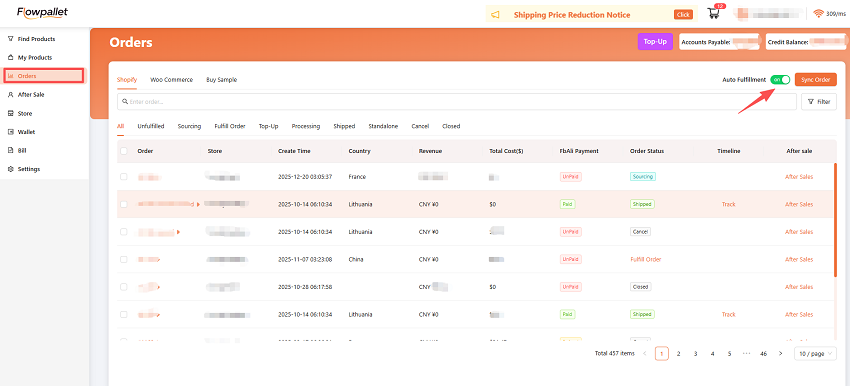
Learn more: How to start dropshipping on Shopify?
2. Shopify order fulfillment workflows
Although fulfillment methods differ, most Shopify stores follow a similar workflow:
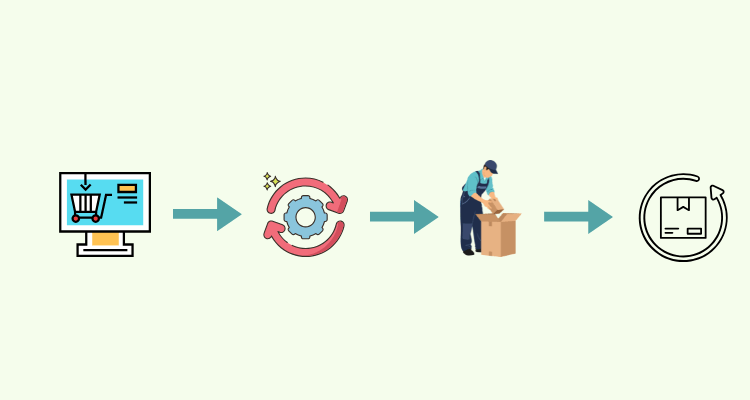
1. Customer places an order
A customer purchases products through the Shopify store. Payment is processed automatically, and the order appears in the Shopify dashboard.
2. Order processing
The store reviews the order details, confirms inventory availability, and prepares the order for shipment. (Some automated system can receive orders automatically.)
3. Picking, packing, and shipping
Products are picked from inventory shelves, packaged securely, and labeled for shipping. The order is handed over to a shipping carrier. Customers receive tracking information through email or SMS notifications. (Automated dropshipping can slove all the process itself, have a try.)
4. Delivery and returns
Once the package arrives, the fulfillment process continues through customer support and returns management if needed.
3. How to improve Shopify order fulfillment
As e-commerce stores grow, fulfillment problems often become more noticeable. Improving efficiency can help reduce costs while creating a batter experience. You can consider:
Tip 1: Automate repetitive tasks
Automation reduces manual errors and saves time. Shopify apps can automate order routing, inventory updates, shipping notifications, and label generation.
Tip 2: Use better inventory forecasting
Running out of stock can hurt sales, while overstocking ties up cash flow. Monitoring sales trends and seasonal demand helps stores maintain healthier inventory levels.
Tip 3: Optimize packaging
Using smaller and lighter packaging can lower shipping costs significantly, especially for international orders.
At the same time, packaging should still protect products during delivery.
Tip 4: Work with a reliable partner
Fast shipping and stable quality have become major expectations for online shoppers. Choosing reliable carriers and fulfillment providers can improve delivery speed, reduce lost packages, and create a more consistent customer experience.
For growing Shopify stores, sourcing multiple items and shipping workflows manually can quickly become inefficient. Some merchants use fulfillment platforms like Flowpallet to help coordinate sourcing, inventory management, and order fulfillment more efficiently, especially when scaling to larger order volumes.
Tip 5: Monitor fulfillment metrics
Key metrics such as shipping time, order accuracy, return rates, and fulfillment costs help businesses identify operational issues early.
Optimizing your Shopify order fulfillment isn't something you set up once and forget about- it's a continuous effort. As your order volume ramps up, stores that invest in automation tools, dependable fulfillment providers, and solid inventory planning can deliver a far better customer experience, all while keeping operating expenses in check. Order errors, and set your business up for long-term growth and scalability.
4. Recommended Shopify order fulfillment tools
There are many order fulfillment tools available for Shopify, depending on the business size and fulfillment model. Choose the one you need most:
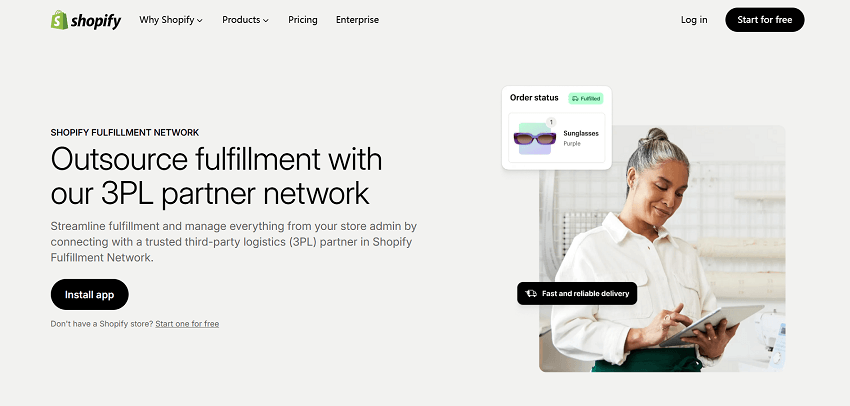
✨Shopify Fulfillment Network
Shopify Fulfillment Network is Shopify's built-in fulfillment solution designed to help merchants outsource warehousing and shipping operations. It integrates directly with Shopify stores, allowing businesses to manage orders, inventory, and fulfillment data from a centralized dashboard.
The platform is mainly suited for brands that want a more streamlined fulfillment experience without relying on multiple disconnected tools.
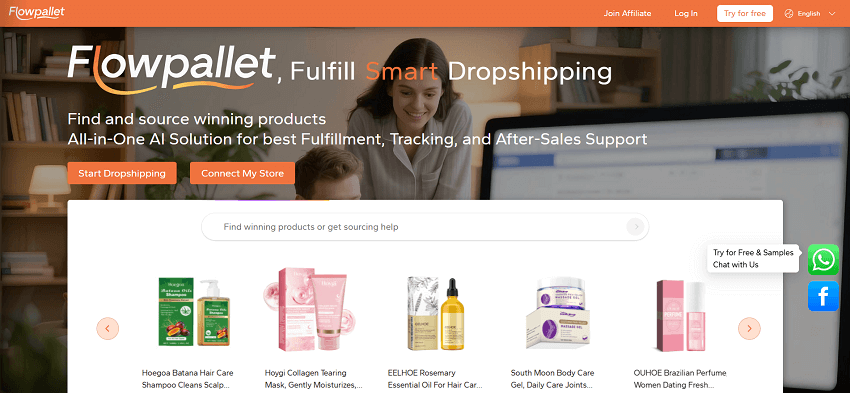
✨Flowpallet
Flowpallet is designed for ecommerce businesses looking for sourcing and fulfillment support in one platform. Besides order fulfillment, it also helps merchants with product sourcing, supplier communication, inventory coordination, shipping management, branding options like white labeling, and a data summary dashboard.
For Shopify sellers running dropshipping or private label businesses, Flowpallet can simplify operations by reducing the need to manage multiple suppliers separately.
It may be especially useful for stores scaling beyond the beginner stage and looking for more stable fulfillment workflows.
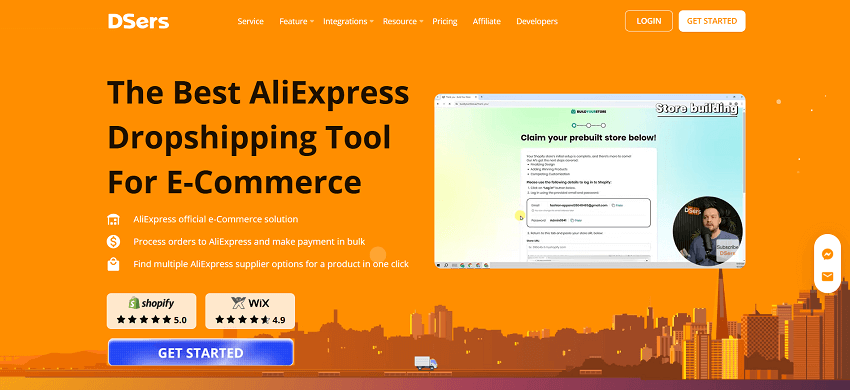
✨Dsers
Dsers is one of the most widely used fulfillment apps for Shopify dropshipping stores, letting store owners source goods directly from AliExpress sellers. Merchants can use it to import product listings, manage multiple suppliers, and auto-place orders without leaving their Shopify dashboard.
A standout benefit of DSers is its bulk order processing feature. It drastically cuts down manual workload for dropshipping stores that receive a high volume of orders every day. The platform also comes with built-in supplier optimization tools, allowing you to compare different vendors and steadily boost your overall fulfillment reliability.
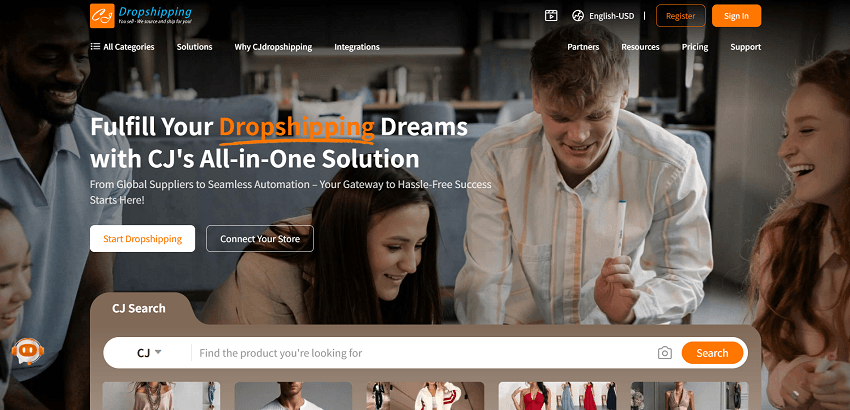
✨CJdropshipping
CJdropshipping brings product sourcing, warehousing, order fulfillment, and shipping all together in one single platform. Lots of sellers choose it over standard AliExpress fulfillment, thanks to its faster delivery choices and more dependable supplier support.
The platform also offers product sourcing help. Store owners can submit product requests straight through the system, which is perfect for Shopify sellers who want to expand their product range and make their fulfillment more consistent.
Besides regular dropshipping, CJdropshipping also supports private labeling and custom packaging.
As your e-commerce business grows, using the right fulfillment tools can help reduce manual workload, improve shipping efficiency, and create a more reliable customer experience across the entire order process.
5. Conclusion
Shopify order fulfillment service is one of the most important parts of running a successful e-commerce business. Reliable fulfillment tools help stores deliver orders faster, reduce operational problems, and improve customer satisfaction.
The right fulfillment method depends on the size of the business, order volume, budget, and long-term goals. Some stores may start with self-fulfillment, while others rely on dropshipping or third-party logistics providers to scale more efficiently.
Hopefully this guide has helped you better understand how Shopify order fulfillment works and grow a profitable Shopify store.
