


What Is Bulk Ordering? Pros and Cons of It
FlowpalletAurora ShawNov. 16, 2026

With online shopping and global sourcing products to sell online on the rise, businesses are searching for smarter ways to cut costs, boost efficiency, and grow quickly. Buying in bulk is one of the most popular strategies to achieve this.
If you've ever shopped online or worked with suppliers, you've probably come across phrases like "bulk purchase," "bulk buying," or "bulk order discounts." But what does a bulk order actually mean, and why does it matter so much in e-commerce and wholesale?
Simply put, a bulk order means buying a large number of products in one go, usually at a lower price per unit. This approach is commonly used by wholesalers, retailers, e-commerce brands, manufacturers, and even dropshipping businesses.
What does bulk order mean?
A bulk order simply means buying a large quantity of products in a single purchase - typically straight from a supplier, manufacturer, or wholesaler. Because you're ordering more, sellers usually offer lower prices per unit compared to buying items one at a time.
Here are a few everyday examples:
- A clothing retailer ordering 1,000 T-shirts from a manufacturer
- A café stocking up on coffee cups in large quantities
- An e-commerce seller importing hundreds of phone cases ahead of peak season
Bulk ordering is especially common in industries where businesses need a steady supply of inventory or want to bring their product costs down.
It's worth noting that what counts as a "bulk" quantity isn't the same across every industry. Some suppliers may consider 50 units a bulk order, while others — particularly manufacturers - may set minimum order quantities (MOQs) of 500 units or more.
Key characteristics of bulk orders
- Large product quantities
- Lower cost per unit
- Often includes wholesale pricing
- May involve supplier negotiations
- Usually requires inventory planning
For growing businesses, bulk ordering can significantly improve profit margins when managed correctly.
How does bulk order work?
The bulk ordering process is relatively simple, but it typically requires more planning than a regular retail purchase. Here's how a typical bulk order unfolds:
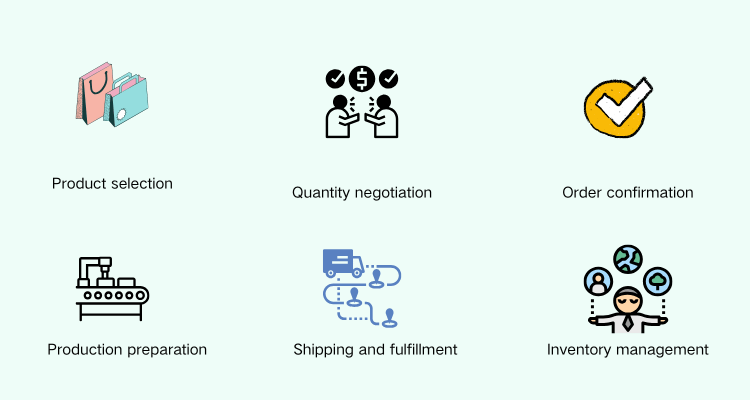
1️⃣Product selection
The buyer identifies the products they want to order in large quantities. This may involve comparing different suppliers, requesting product samples, or evaluating quality before committing.
2️⃣Quantity negotiation
Most suppliers offer tiered pricing based on order volume — the more you buy, the less you pay per unit. For example:
| Quantity | Price per unit |
|---|---|
| 100 units | $10 |
| 500 units | $8 |
| 1,000 units | $5 |
3️⃣Order confirmation
Once both parties agree on pricing, product specifications, and shipping terms, the supplier officially confirms the order.
4️⃣Production or inventory preparation
Depending on the product, the supplier will either pull from existing stock or begin the manufacturing process.
5️⃣Shipping and fulfillment
The goods are then shipped to a warehouse, shipping fulfillment service center, or retailer - or in some business models, directly to the end customer.
6️⃣Inventory management
Once the products arrive, businesses handle storage, packaging, and distribution to keep operations running smoothly.
Effective bulk order management becomes especially critical during peak seasons, major product launches, and high-traffic ecommerce periods.
Common types of bulk types
Bulk orders can take different forms depending on the business and industry.
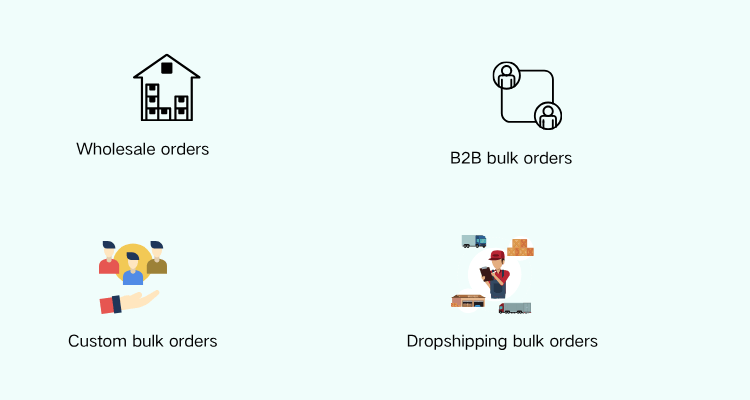
Wholesale orders
Wholesale bulk ordering is one of the oldest and most established forms of bulk purchasing. Retailers buy products in large volumes directly from wholesalers or manufacturers, then sell them individually to end consumers. Common examples include:
- Grocery stores are buying packaged food products
- Fashion boutiques restocking seasonal clothing lines
- Electronics shops sourcing accessories in large quantities
🔑Best For: Retail stores; Online resellers; Marketplace sellers
B2B bulk orders
B2B (business-to-business) bulk orders occur when one company purchases large quantities of products or materials from another. These transactions are common across industries such as manufacturing, hospitality, healthcare, and office supply distribution.
Common examples include:
- Hotels furnishing properties with bulk furniture orders
- Restaurants are stocking up on kitchen equipment and supplies
- Factories sourcing raw materials for production
🔑Best For: Enterprise buyers; Manufacturers; Corporate procurement teams
Custom bulk orders
Custom bulk orders involve products that are made or modified to meet a business's specific requirements. These orders might include:
- Custom logos or branding
- Private label packaging
- Unique product colors or finishes
- Branded inserts
- Customized sizing or dimensions
For instance, a skincare brand might place a bulk order for packaging designed entirely around its own logo and visual identity.
🔑Best For: Branding-focused businesses; Private label sellers; Subscription box companies
Dropshipping bulk orders
While dropshipping is traditionally associated with fulfilling orders one item at a time, bulk ordering is playing an increasingly important role in modern dropshipping operations.
As stores grow, many sellers start purchasing inventory in bulk to speed up shipping, reduce supplier-related issues, and improve profit margins. Rather than depending entirely on suppliers for every individual order, sellers begin stocking fast-moving products in fulfillment warehouses.
Platforms like Flowpallet help ecommerce businesses streamline product sourcing, inventory storage, and order fulfillment - particularly when managing high order volumes after you market your store.
Benefits of bulk ordering for dropshipping:
- Faster shipping times
- Better inventory control
- Lower product costs (the more you buy, the lower the price you have)
- Improved customer experience
- Less reliance on individual suppliers
🔑Best For: Scaling dropshipping stores; High-volume ecommerce sellers; Multi-channel brands
Tips for managing bulk orders
Managing bulk orders successfully requires organization, forecasting, and supplier coordination. Here are some practical tips:
- Forecast demand carefully: Use historical sales data, market trends, and seasonal insights to estimate inventory needs accurately.
- Work with reliable suppliers: Supplier reliability becomes even more important when handling large orders. Flowpallet is a good choice. Request samples before committing to large purchases whenever possible.
- Use inventory management software: Inventory tracking tools help businesses monitor stock levels, incoming shipments, and reorder timing.
- Negotiate better terms: Bulk buyers often have room to negotiate pricing discounts, shipping costs, payment terms, packaging options…
- Plan warehouse space in advance: Before placing large orders, ensure you have enough storage capacity or fulfillment support. Third-party logistics providers (3PLs) can help manage warehousing and shipping if internal storage is limited.
- Start small before scaling: If you're testing a new product, avoid placing massive bulk orders immediately. Start with manageable quantities, validate demand, then scale gradually.
Final thoughts
Understanding bulk order meaning is essential for businesses involved in e-commerce, wholesale, manufacturing, or dropshipping.
Bulk ordering helps companies reduce costs, improve inventory stability, and scale more efficiently. However, it also requires careful planning, reliable suppliers, and strong inventory management practices.
Whether you're running a Shopify store, sourcing products internationally, or expanding a dropshipping business, learning how to manage bulk orders properly can make a huge difference in profitability and long-term growth.
